

JavaScript, math, maps, etc
The web should remain anonymous by default | The Mozilla Blog
The unique architecture of the web enables a much higher degree of user privacy than exists on other platforms. Many factors contribute to this, but an ess


Real-Name Policies: The War Against Pseudonymity
Real-name policies have existed for over a decade, but these problems have become exponentially harmful in today's world. It's time to fight back against this unsafe and discriminatory privacy-invasive practice.

The Open Anonymity Project
The Open Anonymity Project is a research & engineering effort building tools, infrastructure, and user-facing software for AI user privacy.

Anonymity, Pseudonymity, and Deliberation: Why Not Everything Should Be Connected
Click on the article title to read more.

Anonymity, Pseudonymity, and Deliberation: Why Not Everything Should Be Connected
Click on the article title to read more.

Am I Unique ?
Check if your browser has a unique fingerprint, how identifiable you are on the Internet
The Tor Project | Privacy & Freedom Online
Defend yourself against tracking and surveillance. Circumvent censorship.

The Right to Anonymity is Vital to Free Expression: Now and Always
“There are myriad reasons why individuals may wish to use a name other than the one they were born with. They may be concerned about threats to their lives or livelihoods, or they may risk political

Web Crypto’s SubtleCrypto: A Masterclass in Developer Hostility and How It Strangles the Modern Web
Not Subtle, Just Sabotage — An API Against the Web
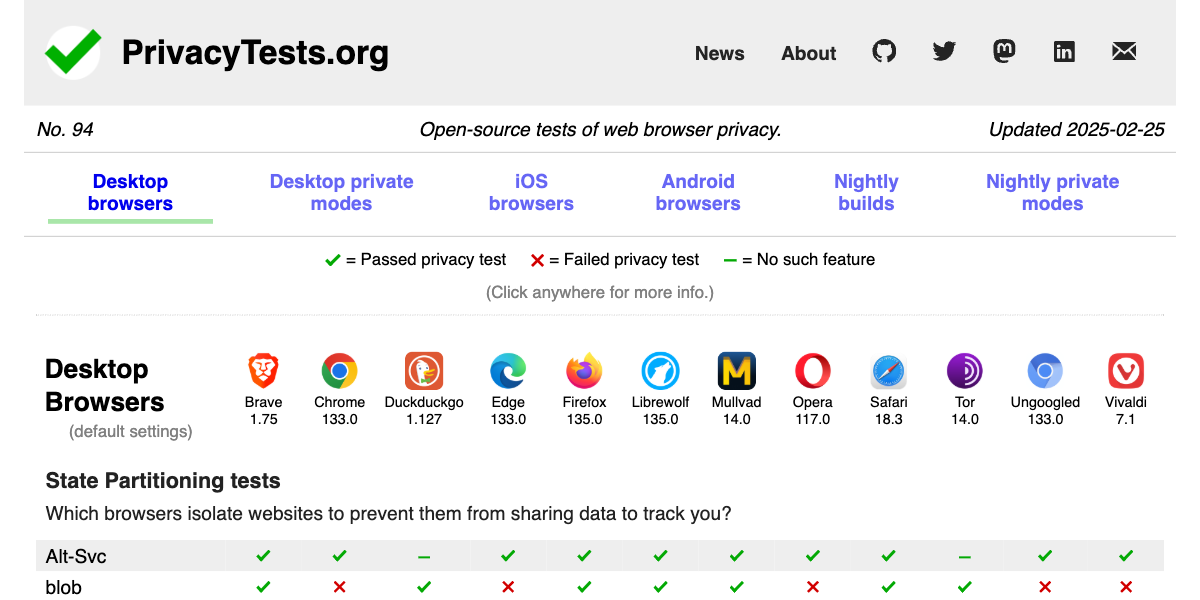
Which browsers are best for privacy?
An open-source privacy audit of popular web browsers.

Ian Preston (@ianopolous.bsky.social)
Mathematician/particle physicist turned privacy researcher. Java Rockstar #Oxford Building a better web - private, self-sovereign identity, p2p, social - with @peergos.org. Public social media undermines democracy. #covidisairborne #maskswork #cleantheair

Privacy Principles
Privacy is an essential part of the web. This document provides definitions for privacy and related concepts that are applicable worldwide as well as a set of privacy principles that should guide the development of the web as a trustworthy platform. People using the web would benefit from a stronger relationship between technology and policy, and this document is written to work with both.