


In a previous post, we described the details of NSynth (Neural Audio Synthesis), a new approach to audio synthesis using neural networks. We hinted at furthe...
Learning Synths | Hacker News
It teaches you step by step all the aspects of a synth engine: oscillators, wave shapes, amplitude, filters, modulation, unison, FM… But most of all it trains your ear, which allows you to replicate the sound in your head and build it from scratch.
Neural Translation of Musical Style
Can we teach a neural network to perform like a human?

lfnoise/sapf
Sound As Pure Form - a Forth-like language for audio synthesis using lazy lists and APL-like auto-mapping.
Composing Music With Recurrent Neural Networks
Writeup for my first major machine learning project.
Deep learning for assisting the process of music composition (part 1)
This is part 1 of my explorations of using deep learning for assisting the process of music composition. In this part, I look at some almost-winning output of a model trained by deep learning metho…


Our New SAM Audio Model Transforms Audio Editing
We're introducing SAM Audio, a state-of-the-art AI model that enables you to segment sound.
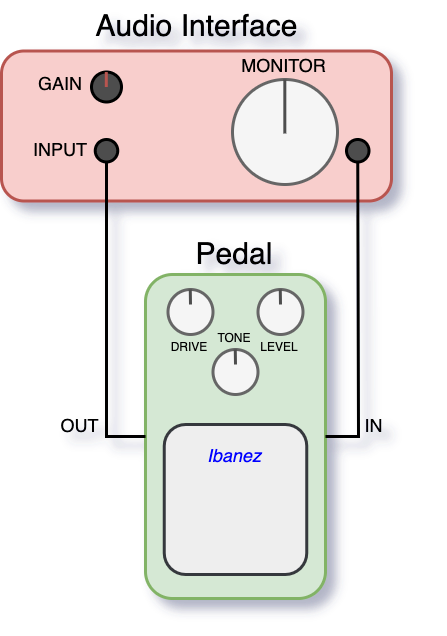
Deep Learning for Guitar Effect Emulation
Since the 1940s, electric guitarists, keyboardists, and other instrumentalists have been using effects pedals, devices that modify the sound of the original audio source. Typical effects include distortion, compression, chorus, reverb, and delay. Early effects pedals consisted of basic analog circuits, often along with vacuum tubes, which were later replaced with transistors. Although many pedals today apply effects digitally with modern signal processing techniques, many purists argue that the sound of analog pedals can not be replaced by their digital counterparts. We’ll follow a deep learning approach to see if we can use machine learning to replicate the sound of an iconic analog effect pedal, the Ibanez Tube Screamer. This post will be mostly a reproduction of the work done by Alec Wright et al. in Real-Time Guitar Amplifier Emulation with Deep Learning (Wright et al., 2020).
How Much AI Is in This Track? Quantifying the Proportion of AI-Generated Stems in Hybrid Music Mixtures
AI-generated music is increasingly used at the stem level, with producers integrating synthetic drums, basslines, or vocals alongside human-performed instruments. However, current AI music detection systems are binary, treating tracks as either fully AI or fully human. In this paper, we reformulate AI music detection as a regression problem on a continuous AI energy ratio, alpha in [0, 1]. We propose a methodology that leverages a multi-track music dataset to assemble mixtures of human-performed and AI-reconstructed stems (obtained using a neural audio codec) with known proportions of each content type. Using this approach, we first show that a CNN-based model trained on fully AI-generated or human-performed tracks, which achieves >99% accuracy as a binary detector, when faced with mixed content, yields an output that rises with the AI stems' energy contribution, acting as a noisy and miscalibrated estimator. Our analysis of the influence of different stems shows that detection sensitivity depends on the instrument and reflects its frequency content: drums and guitar carry strong codec-artifact signatures, while vocals and bass are less detectable. Based on these insights, we train a similar CNN-based model for regression of alpha, achieving MAE = 0.076 and R^2 = 0.85 on held-out mixtures from the same pipeline. These results suggest that the regression formulation is an initial promising step towards AI-music detection in realistic music production workflows.

Devices | Audiotool
Explore Audiotool's collection of synthesizers, drum machines, and effects. From powerful synths like Heisenberg and Pulverisateur to classic drum machines and professional effects.
The Millions of Songs Mashed Into AI-Generated Music
Explore the astonishing amount of music available to AI developers.

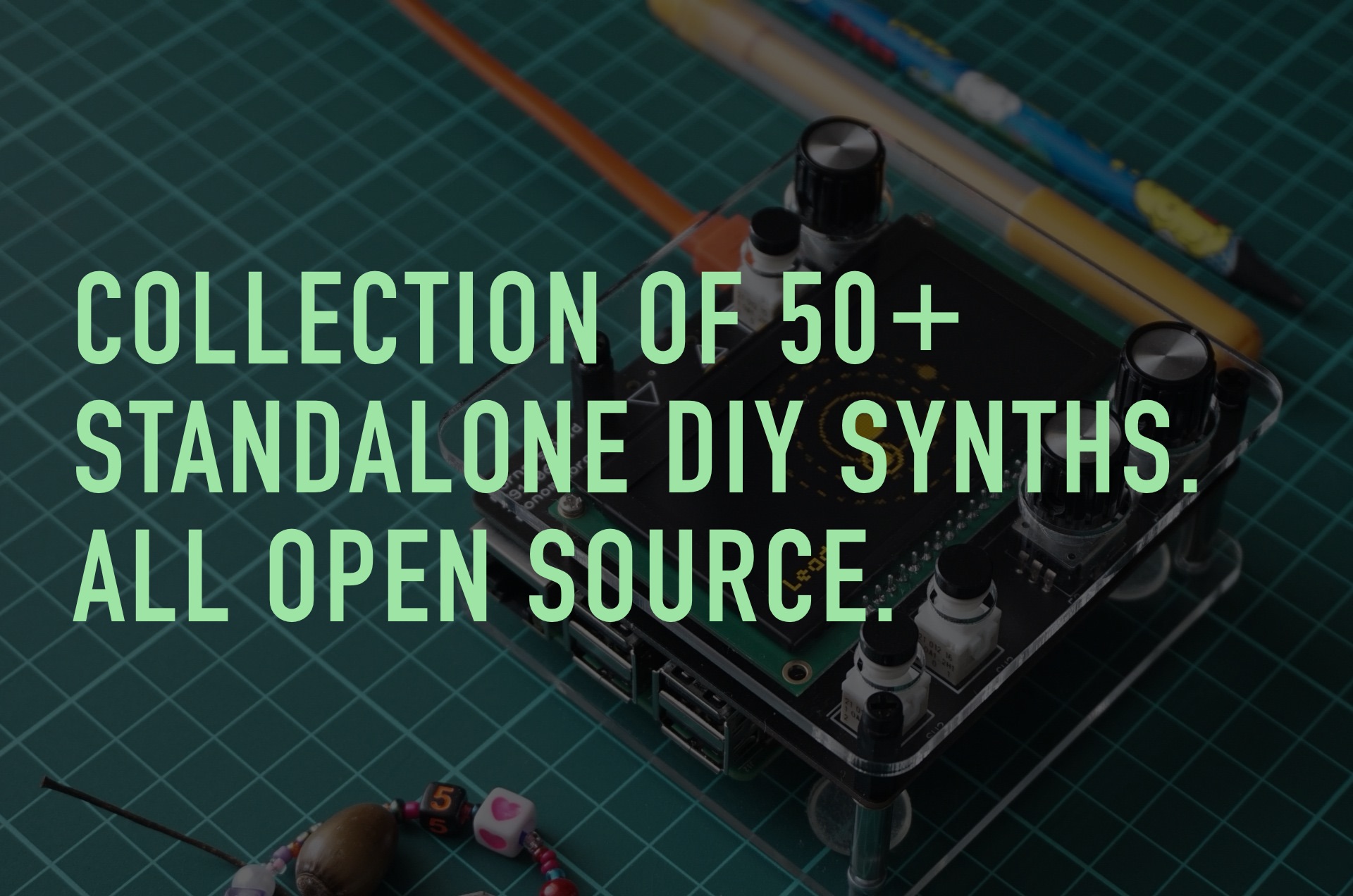
DIY synths database
Curated collection of DIY-friendly hardware synthesizers and related musical equipment you can build on your own. All open source.
I have added sequencer modules to Atmosynth. Now you can create not just synth patches, but entire grooves. I recommend watching with headphones or good speakers. atmosynth.at #music #synth #atproto
