


If the author is dead, why isn't the LLM?
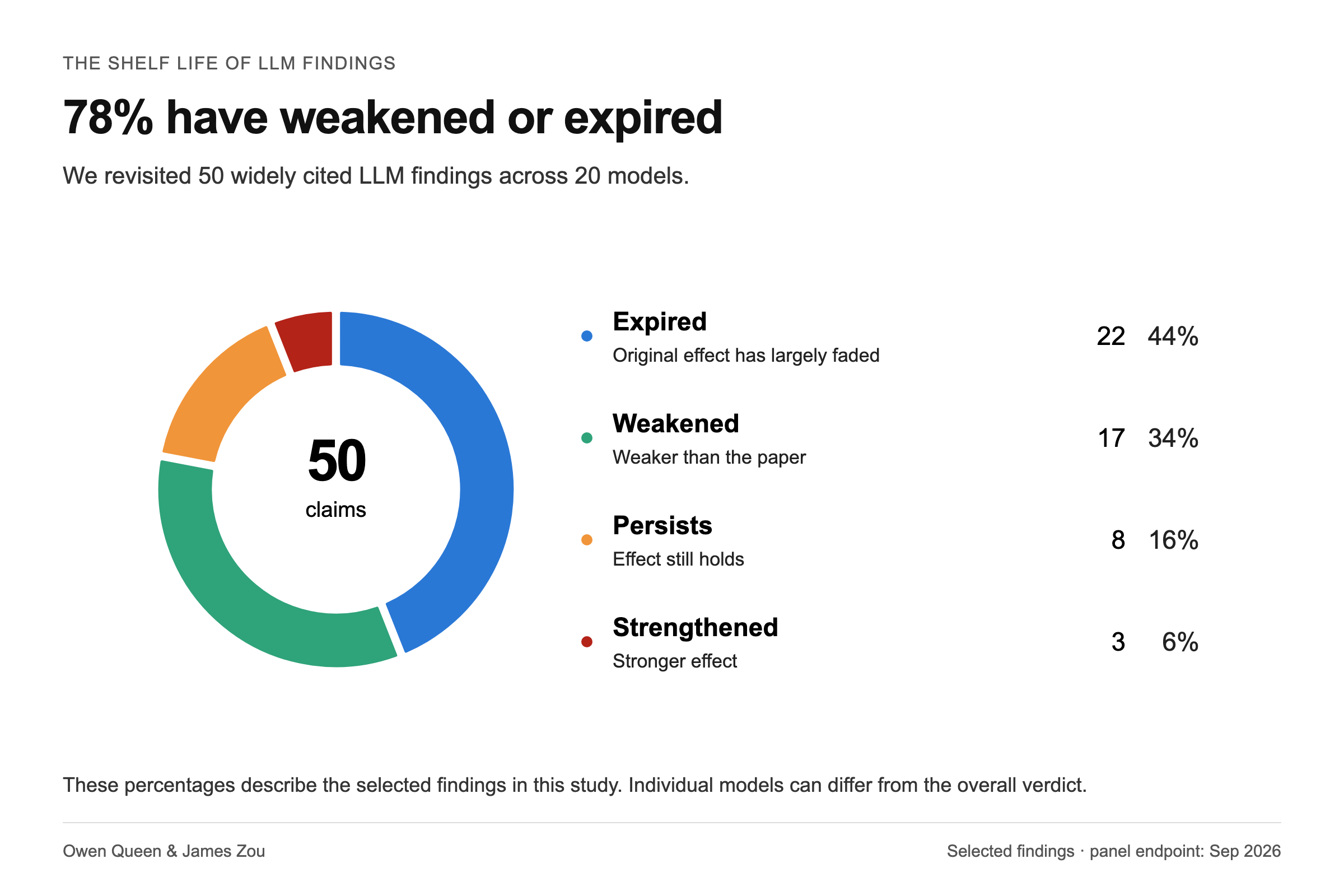
The shelf life of LLM findings
We revisited 50 published findings about language models across 20 models, tracing which fade, persist, or grow stronger.
Things we learned about LLMs in 2024
A lot has happened in the world of Large Language Models over the course of 2024. Here’s a review of things we figured out about the field in the past …
Deaths linked to chatbots
There have been multiple incidents where interaction with a large language model (LLM) chatbot has been cited as a direct or contributing factor in a person's suicide or other fatal outcome. In some cases, legal action was taken against the companies that developed the AI involved.
Wikipedia:LLM-assisted translation
This guideline applies to machine translation tools that include a large language model ("LLM"). Assume that it applies to any online translation tool unless you have confirmed there is no LLM element.
LLMs are good at playing you
Large language models seem just like humans, but some of this is in our heads.

There's Something Fundamentally Wrong With LLMs
LLMs aren't trained on the "vast majority of speech," experts warn, a major blind spot that could have sweeping consequences.

Mitigating Cross-Lingual Cultural Inconsistencies in LLMs via...
Despite their impressive capabilities, multilingual large language models (MLLMs) frequently exhibit inconsistent behaviour when the prompt's language changes. While such adaptation is generally...

Defeating Nondeterminism in LLM Inference
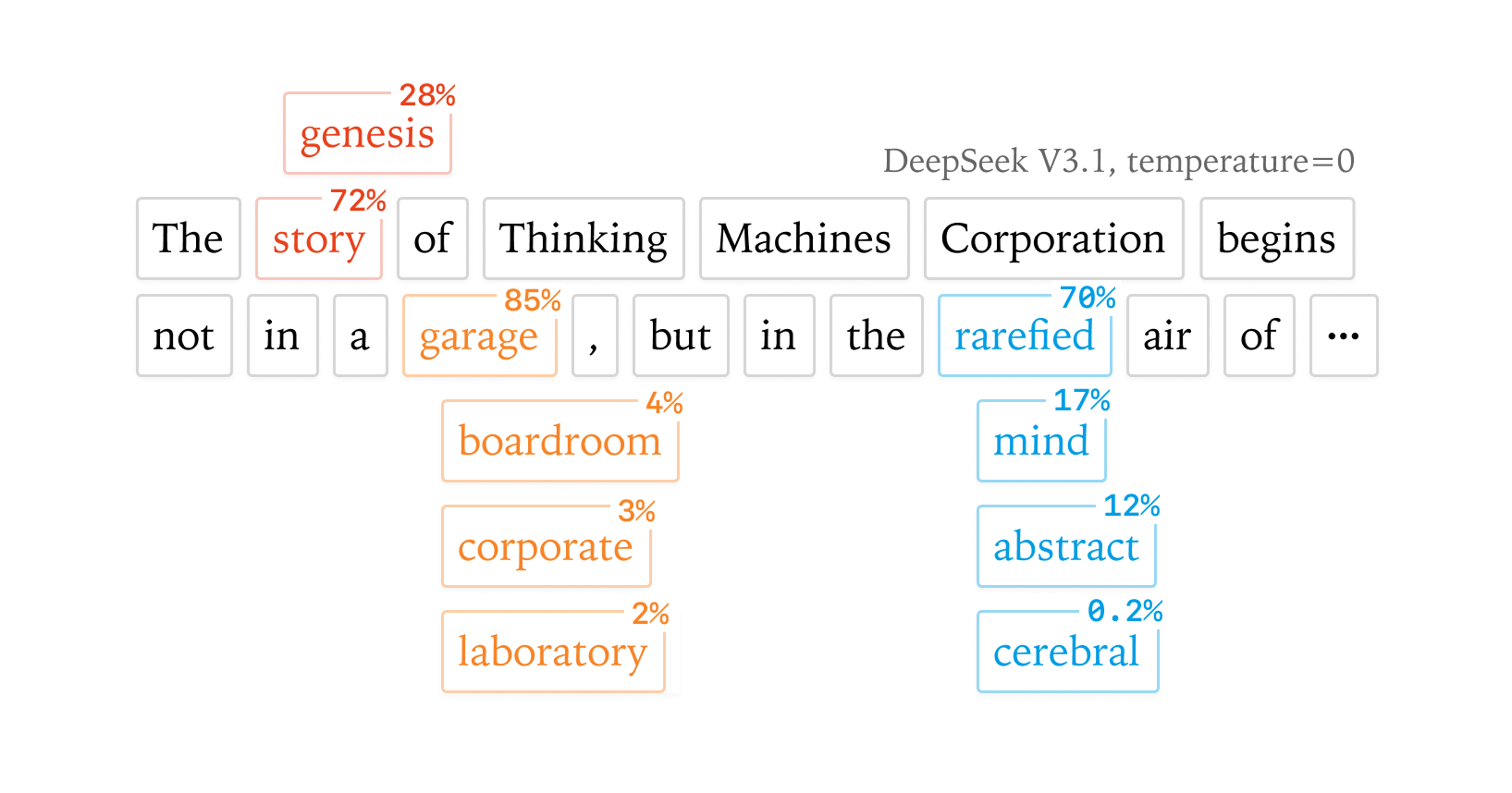
Reproducibility is a bedrock of scientific progress. However, it’s remarkably difficult to get reproducible results out of large language models. For example, you might observe that asking ChatGPT the same question multiple times provides different results. This by itself is not surprising, since getting a result from a language model involves “sampling”, a process that converts the language model’s output into a probability distribution and probabilistically selects a token. What might be more surprising is that even when we adjust the temperature down to 0This means that the LLM always chooses the highest probability token, which is called greedy sampling. (thus making the sampling theoretically deterministic), LLM APIs are still not deterministic in practice (see past discussions here, here, or here). Even when running inference on your own hardware with an OSS inference library like vLLM or SGLang, sampling still isn’t deterministic (see here or here).
Beyond Model Collapse: Scaling Up with Synthesized Data Requires...
Large Language Models (LLM) are increasingly trained on data generated by other LLM, either because generated text and images become part of the pre-training corpus, or because synthetized data is...
Large language model
A large language model (LLM) is a neural network trained on a vast amount of text for natural language processing tasks, especially language generation. LLMs can typically generate, summarize, translate, and analyze text in many contexts, and are a foundational technology behind modern chatbots.[1] Biased or inaccurate training data can make an LLM's output less reliable.[2]
A small number of samples can poison LLMs of any size
Anthropic research on data-poisoning attacks in large language models
The Case Against LLMs as Rerankers
Authors: Apoorva Joshi, Zhenmei Shi, Akshay Goindani, Hong LiuResearch Leads: Zhenmei Shi, Akshay Goindani, Hong Liu Large language models are increasingly being used for a broad range of tasks, in…

Alex Veremeyenko on Twitter / X
what are large language models actually doing?i read the 2025 textbook "Foundations of Large Language Models" by tong xiao and jingbo zhu and for the first time, i truly understood how they work.here’s everything you need to know about llms in 3 minutes↓ pic.twitter.com/OeYLuU3cWh— Alex Veremeyenko (@alex_verem) July 26, 2025

Thought experiment in the National Library of Thailand
With the advent of ChatGPT, large language models (LLMs) went from a relatively niche topic to something that many, many people have been…

LLM is a learned distribution p on sequences of tokens. If you just sample a bunch of text from p willy nilly and put it in the training data and train you just get back p. But if you sample a bunch of text from p and throw out whatever's bad and train on what's left then you learn p(x|x is not bad)
