Cross-Border Collaboration for IP ProtectionCross-border collaboration in IP protection occurs when multiple countries, corporations, or ins...
How To Protect Your Intellectual Property Across Borders
Protect Your Intellectual Property with strong IP rights. Safeguard patents, trademarks, designs, and trade secrets to stay competitive in global markets.

Law and Borders - the Rise of Law in Cyberspace
Global computer-based communications cut across territorial borders, creating a new realm of human activity and undermining the feasibility--and legitimacy--of

The Internet Coup: A Technical Analysis on How a Chinese Company is Exporting The Great Firewall to Autocratic Regimes | InterSecLab
This research reveals groundbreaking findings on how Geedge Networks is selling an extensive suite of next-generation digital repression tools to client governments around the world.

Connect, protect, and build everywhere
Make employees, applications and networks faster and more secure everywhere, while reducing complexity and cost.

A new project tackling transparency in the VPN ecosystem
We are kicking off the development of a new methodology to assess the policies and practices of VPN providers through a human rights lens.

Privacy and/or Trade
International privacy and trade law developed together, but are now engaged in significant conflict. Current efforts to reconcile the two are likely to fail, an
Crossing the U.S. Border? Here’s How to Protect Yourself
Searches of phones and other electronics are on the rise for those entering the U.S. Take these steps to help secure your devices.

The Case for Open Sovereignty in a Fragmenting Internet
Once, the Internet promised to dissolve borders. It was humanity’s great experiment in connection — a place where ideas, innovation, and communities could move freely, unburdened by geography or...

Decentralized Technology in Practice: An analysis of socio-technical resilience in IPFS
The “Interplanetary File System” (IPFS) refers to a peer-to-peer content addressing protocol that is designed to be “upgradeable, resilient, and more open”. [1]
CloudNativeSecurityCon North America 2024: ⚡ Lightning Talk: Securing Your Systems...
View more about this event at CloudNativeSecurityCon North America 2024
Privacy as EU Tech advantage - The LeafPlaza Blog
Online crime loves legal massive data collection, grey systems, and jurisdictional gaps. Privacy-first design can actually reduce crime exposure and build trust in digital services. It is also central to the EU's tech autonomy: build systems aligning with European rights and risk models. Do not rely on foreign platforms or copy outside practices that might go against the EU values and needs.
Designing a multi-sided data platform: findings from the International Data Spaces case
The paper presents the findings from a 3-year single-case study conducted in connection with the International Data Spaces (IDS) initiative. The IDS represents a multi-sided platform (MSP) for secure and trusted data exchange, which is governed by an institutionalized alliance of different stakeholder organizations. The paper delivers insights gained during the early stages of the platform’s lifecycle (i.e. the platform design process). More specifically, it provides answers to three research questions, namely how alliance-driven MSPs come into existence and evolve, how different stakeholder groups use certain governance mechanisms during the platform design process, and how this process is influenced by regulatory instruments. By contrasting the case of an alliance-driven MSP with the more common approach of the keystone-driven MSP, the results of the case study suggest that different evolutionary paths can be pursued during the early stages of an MSP’s lifecycle. Furthermore, the IDS initiative considers trust and data sovereignty more relevant regulatory instruments compared to pricing, for example. Finally, the study advances the body of scientific knowledge with regard to data being a boundary resource on MSPs.

Protocol: How Control Exists after Decentralization
How Control Exists after DecentralizationIs the Internet a vast arena of unrestricted communication and freely exchanged information or a regulated, highly


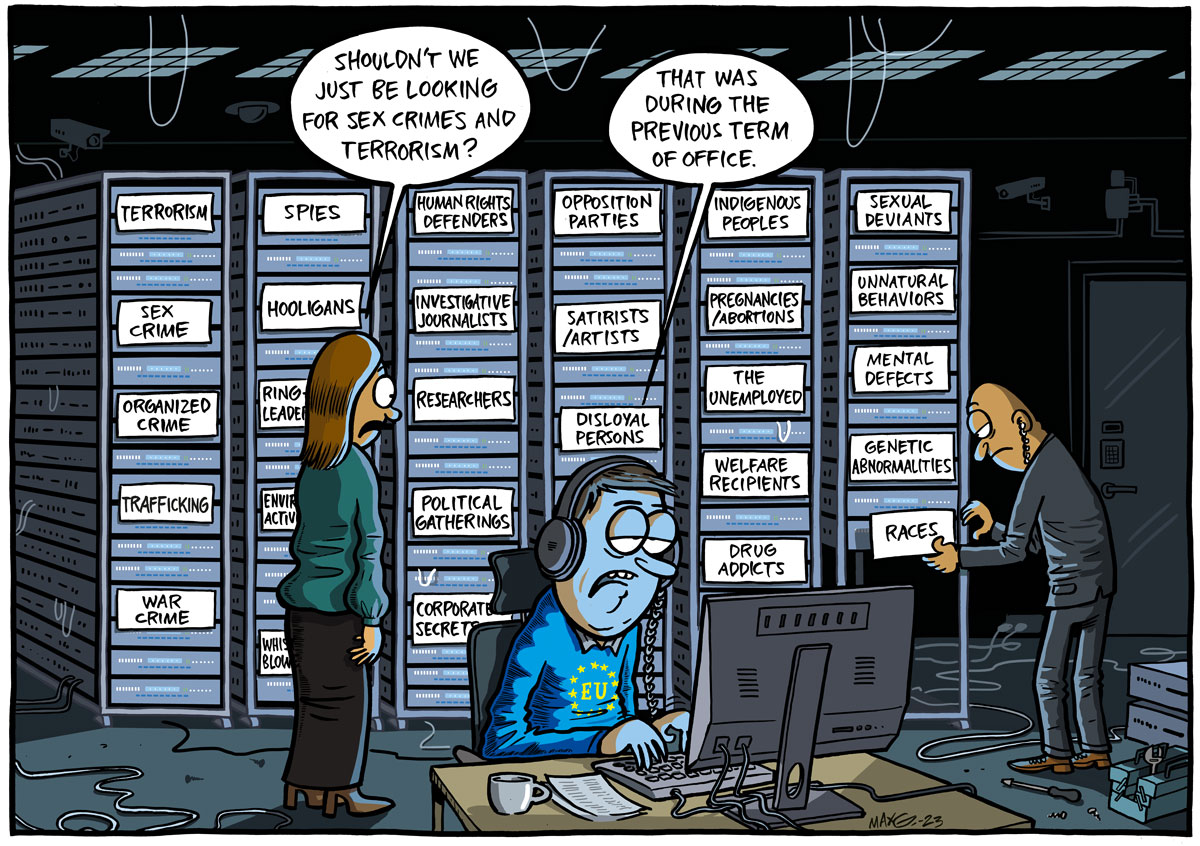
Chat Control & Going Dark: The war on encryption is on the rise. Through a shady collaboration between the US and the EU.
After Snowden’s whistleblowing in 2013, large parts of the internet became encrypted, enabling private and secure communication. Not everyone has welcomed this change. Most notably, the FBI and other U.S. government agencies have fought what is often called the “crypto wars”, the war on encryption. In recent years, they have been joined by the European Commission. Under the slogan “what about the children,” they try to introduce total mass surveillance of all EU citizens — first through the proposed Chat Control legislation, and later via the Going Dark and ProtectEU initiatives. The goal is to legally mandate spy tools on every European smartphone and computer. The forces behind these efforts have turned out to be American tech companies and intelligence agencies.