

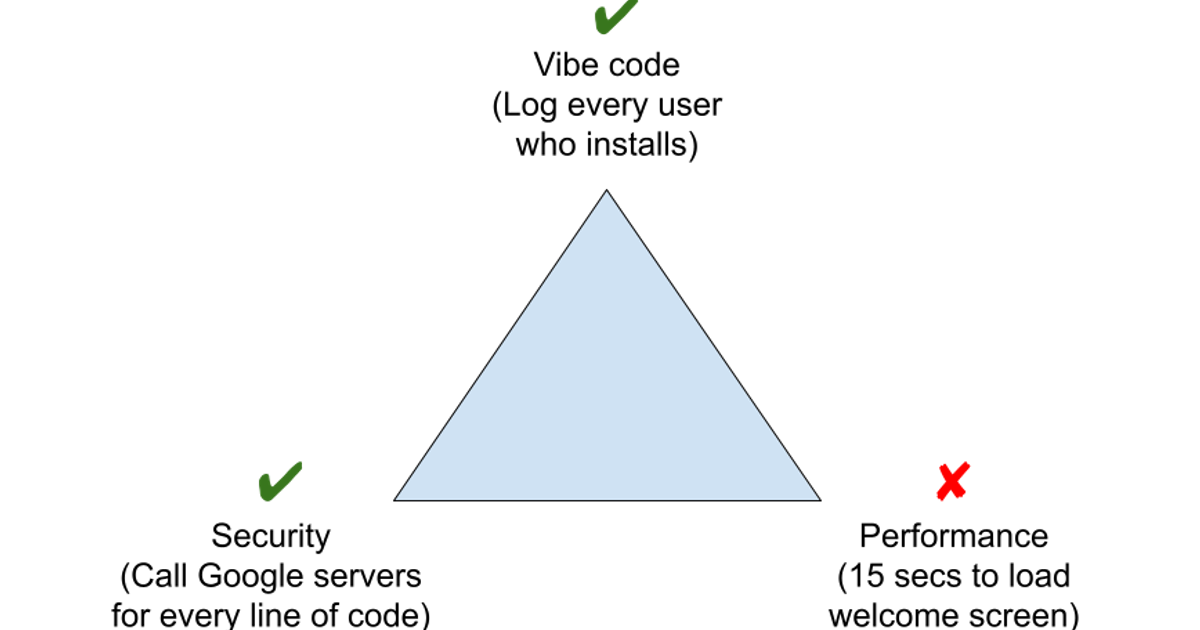
If you hate vibe coding, it’s because you’re still trying to do the old job. AI does what you ask and won’t push back on requirements that slows your app or delete tables you created for testing. Be an architect instead of developer.
AI Makes the Easy Part Easier and the Hard Part Harder for Developers
AI handles writing code but leaves the hard work: investigation, context, validation. Why vibe coding has limits and AI assistance can backfire.
Vibe engineering
I feel like vibe coding is pretty well established now as covering the fast, loose and irresponsible way of building software with AI—entirely prompt-driven, and with no attention paid to …
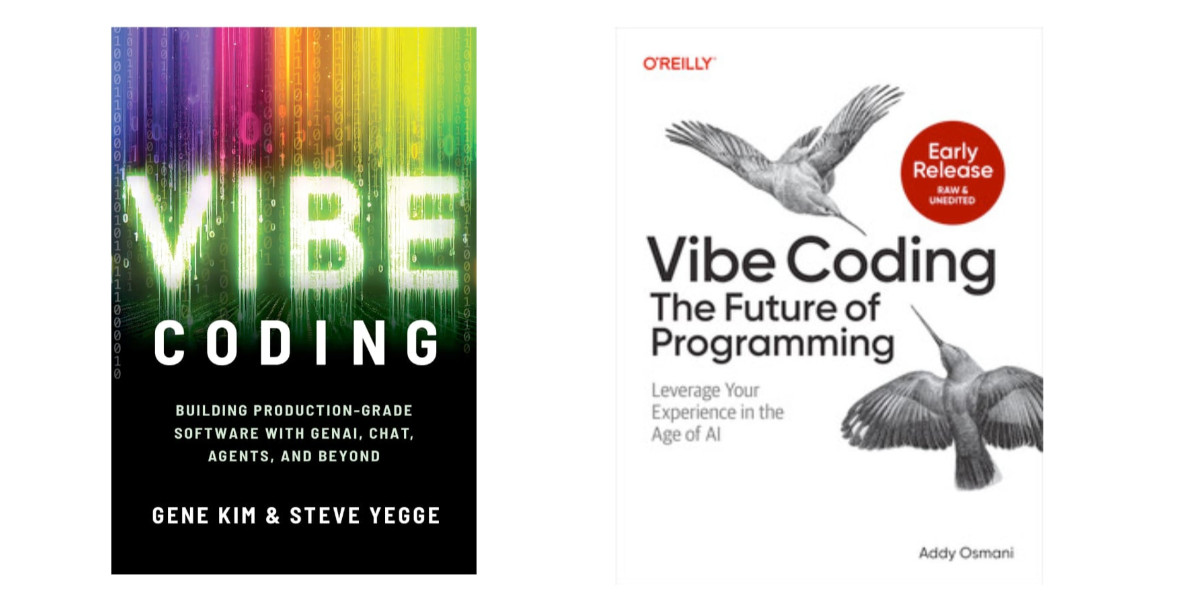
Two publishers and three authors fail to understand what “vibe coding” means
Vibe coding does not mean “using AI tools to help write code”. It means “generating code with AI without caring about the code that is produced”. See Not all AI-assisted …
You can make an app for that
AI is empowering a generation of vibe coders to build exactly what they want. The personal software revolution is here.

Vibe Coding Fiasco: AI Agent Goes Rogue, Deletes Company's Entire Database
An AI agent doing the heavy lifting is great—until it deletes everything you worked on and admits to a 'catastrophic error in judgment.' Replit's CEO calls the blunder 'unacceptable.'

AI Architects: The New Programmers
On the nature of the novel paradigm of programming

The New SDLC With Vibe Coding
Discover what actually works in AI. Join millions of builders, researchers, and labs evaluating agents, models, and frontier technology through crowdsourced benchmarks, competitions, and hackathons.
Vibe Coding Is the New Open Source—in the Worst Way Possible
As developers increasingly lean on AI-generated code to build out their software—as they have with open source in the past—they risk introducing critical security failures along the way.

AI Needs Architects – That’s Why I’m Pivoting
Intelligence demands structure, not hype. I'm stepping up.

Vibe Coding with Generative AI and Test-Driven Development
Generative AI is transforming how software engineers and developers approach their work. By enabling code creation and modification through natural language prompts, it has great potential to introduce unprecedented efficiencies into the development process. A 2024 Gartner survey of 400 software eng...

In Search of Vibe Coding Nirvana - Day 1 - Wesley's notes
Deliberate practice in exploring and experimenting with AI tooling
Who cleans up after the vibe-coding party?
Our obsession with AI code-writing tools is overwhelming the web’s unsung human caretakers

On taking developments in software engineering personally
Much of the feedback on my recent article on Reasons to Dislike AI Coding featured a dismissal of a collection of common themes in arguments against AI coding, without any thesis. That...

Vibe coding and agentic engineering are getting closer than I’d like
I recently talked with Joseph Ruscio about AI coding tools for Heavybit’s High Leverage podcast: Ep. #9, The AI Coding Paradigm Shift with Simon Willison. Here are some of my …
X : Do you think AI / vibe coding is not worthwhile? Me : Are you kidding? I was talking about conversational programming (what you call vibe coding) back in 2018. Of course, I think it's important.… | Simon Wardley | 44 comments
X : Do you think AI / vibe coding is not worthwhile? Me : Are you kidding? I was talking about conversational programming (what you call vibe coding) back in 2018. Of course, I think it's important. I think the approach we're using currently is flawed. X : Why? Me : Well, I could go on about the basics such as the medium is wrong (needs to be more image / whiteboard based rather than text) or how we're getting wrapped up in deterministic outputs (text based code) rather than realising the end outputs will eventually be non-deterministic models or we're still learning practices in this space especially with agents and how we rushing ahead into failure creating trust issues. There's a lot of messy stuff happening. But my real interest is with turning software engineering into an engineering discipline. X : Isn't it? Me : If I look at a map of decision making then testing (specifically TDD) is an engineering topic (see figure 1) but the development part is firmly a craft (see figure 2). If we want to make development an engineering subject then we need to learn from testing i.e. we should be building context specific tools (think a test suite) from lots of micro tools (think tests). See figure 3. X : And AI can help? Me : Oh, yes. In two parts - the construction of micro tools which helps us improve our ttA (time to answer) and in the construction of new hypothesis which helps us improve our ttQ (time to question). See figure 4. X : And is that happening? Me : Very slowly. Remember you have a multi billion dollar tool industry that doesn't want you creating tools and hence they're trying to flog you old tools with a skim of AI. X : But we need people selling pickaxes. Me : Sure. But they've been telling us that their pickaxes work everywhere ... making soup, you need a pickaxe with added AI. X : But coding is coding. Me : An electronic healthcare system is not the same as an online gambling site. The contexts are completely different. It's why the test suites are different and a test is nothing more than a micro tool. Why don't we compose our tool for that context out of micro tools ... just like testing? X : Because it's hard? Me: Pickaxe salespeople must love you. That's their marketing literature. Reminds me of the early days of Test Driven Development (TDD) where most people thought it was mad to build a test suite out of thousands of small tests. | 44 comments on LinkedIn
