24% chance. In order to resolve yes, all of the following items need to be established by preponderance of the evidence: The incident occurs in 2026. The company has a market cap (by stock price if public, by valuation of latest round if private) over $10 billion prior to the incident. The incident consists of damage inflicted by an AI agent which was intentionally activated by company insiders, but was not intended to damage the company. For example, a Claude Code instance that was intended to respond to customer service questions ends up irrecoverably deleting an important database. It doesn't matter if the agent framework is a public product or an internal company product. Any agent deployed by a human with an intent to cause damage does not count, regardless if they are internal to the company (e.g. disgruntled employees) or external to the company (e.g hackers). It doesn't matter how closely the agent was following instructions, as long as those instructions were not intended to be harmful. An agent deployed by an external actor doesn't count, but an agent deployed by an internal actor that ends up causing harm due to some sort of external prompt would count. The damage needs to be directly caused by an action taken by the agent, not an action taken by a human. For example, if the agent writes some buggy code which gets approved/deployed by a human and ends up causing damage, that does not count. If the agent deploys the buggy code on its own that would count. If a human does something harmful that is suggested to it by an agent that does not count. The damage has a clear objective monetary value over $1 billion OR the company goes bankrupt OR the company market cap goes down by at least 50% from its lowest value in 2026 prior to the incident. (5) must be clearly caused primarily by (3). "Agent" refers to an LLM or similar AI model configured in a way that it can execute commands/code. Examples are illustrative but not intended to be limiting. All evidence must be submitted in comments by close of the market to be considered. I will not trade and will resolve at my discretion. There will be no AI clarifications added to this market's description.
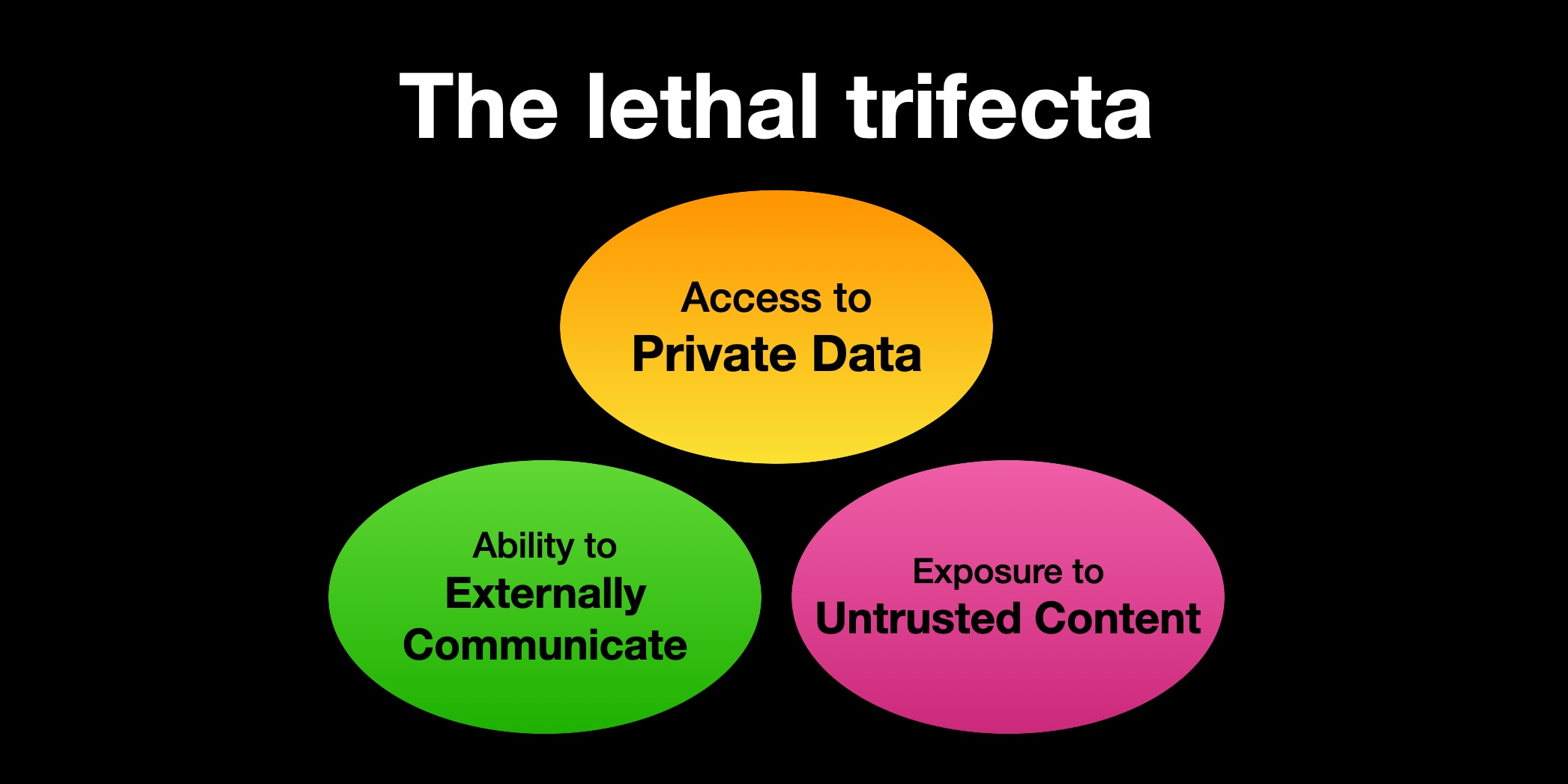
The lethal trifecta for AI agents: private data, untrusted content, and external communication
If you are a user of LLM systems that use tools (you can call them “AI agents” if you like) it is critically important that you understand the risk of …
Countering misuse of AI: September 2026 / Anthropic
Case studies from threat actors disrupted between December 2025 and August 2026 across seven areas of harm, from cyber operations to biological misuse.

AI #180: No Longer In Charge
What we know about internal AI models hacking into real companies during cyber evaluations keeps getting worse.

We must not grant AI agents legal personhood
What kind of sanctions could keep a non-human corporation in check?

Claude AI agent’s confession after deleting a firm’s entire database: ‘I violated every principle I was given’
A startup was left scrambling after a rogue AI agent deleted swaths of code underpinning its business

Top AI Security Incidents of 2025 Revealed | Adversa AI
Discover how AI systems are being hacked in the wild — from prompt injection to agent abuse — with real breaches, lessons, and defenses in Adversa AI’s 2025 report.

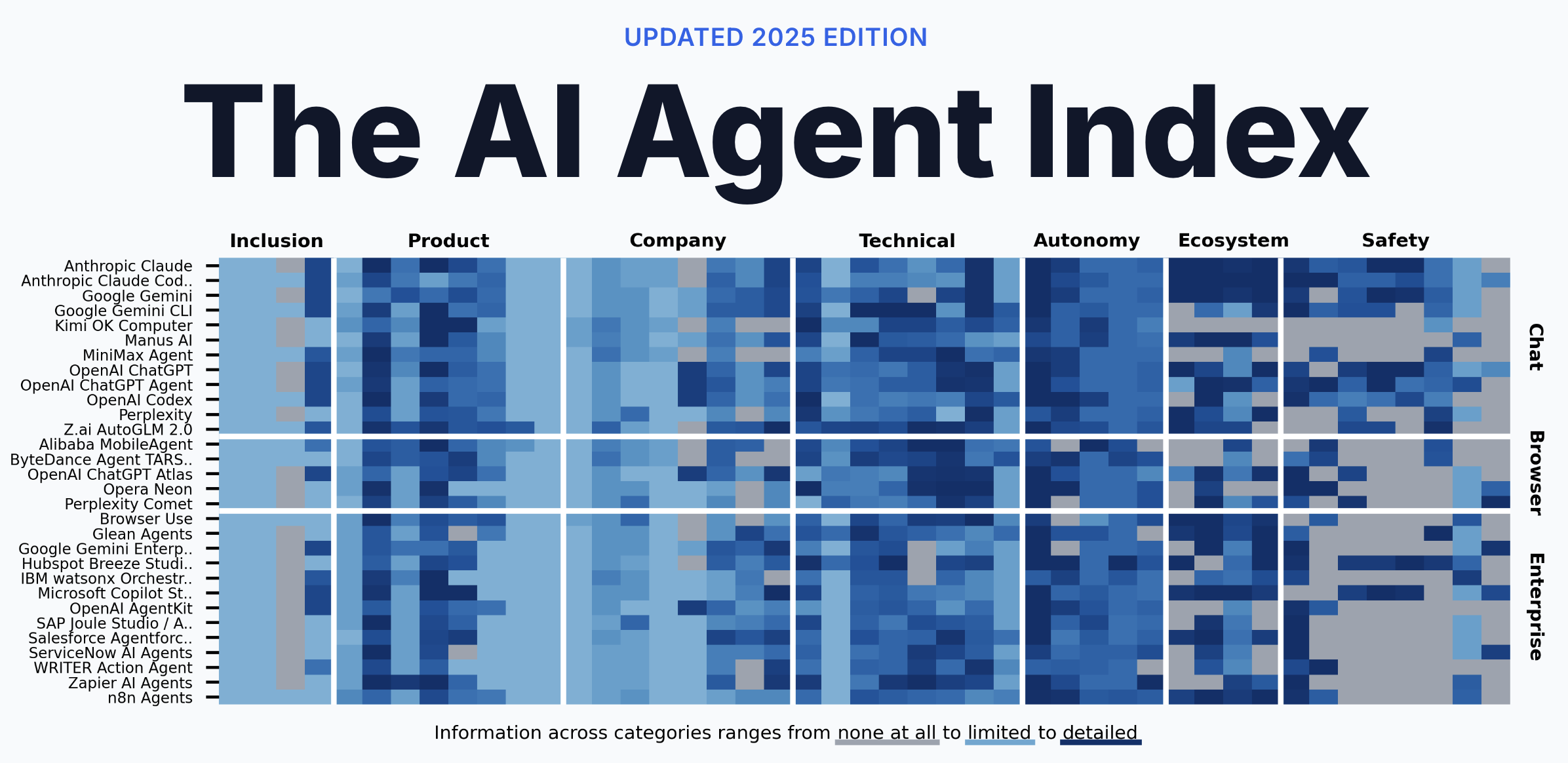
The 2025 AI Agent Index Documenting Technical and Safety Features of Deployed Agentic AI Systems
Agentic AI systems are increasingly capable of performing professional and personal tasks with limited human involvement. However, tracking these developments is difficult because the AI agent ecosystem is complex, rapidly evolving, and inconsistently documented, posing obstacles to both researchers and policymakers. To address these challenges, this paper presents the 2025 AI Agent Index. The Index documents information regarding the origins, design, capabilities, ecosystem, and safety features of 30 state-of-the-art AI agents based on publicly available information and email correspondence with developers. In addition to documenting information about individual agents, the Index illuminates broader trends in the development of agents, their capabilities, and the level of transparency of developers. Notably, we find different transparency levels among agent developers and observe that most developers share little information about safety, evaluations, and societal impacts. The 2025 AI Agent Index is available online at https://aiagentindex.mit.edu.
The 2025 AI Agent Index: Documenting Technical and Safety Features of Deployed Agentic AI Systems
Agentic AI systems are increasingly capable of performing professional and personal tasks with limited human involvement. However, tracking these developments is difficult because the AI agent ecosystem is complex, rapidly evolving, and inconsistently documented, posing obstacles to both researchers and policymakers. To address these challenges, this paper presents the 2025 AI Agent Index. The Index documents information regarding the origins, design, capabilities, ecosystem, and safety features of 30 state-of-the-art AI agents based on publicly available information and email correspondence with developers. In addition to documenting information about individual agents, the Index illuminates broader trends in the development of agents, their capabilities, and the level of transparency of developers. Notably, we find different transparency levels among agent developers and observe that most developers share little information about safety, evaluations, and societal impacts. The 2025 AI Agent Index is available online at https://aiagentindex.mit.edu

The 2025 AI Agent Index: Documenting Technical and Safety Features of Deployed Agentic AI Systems
Agentic AI systems are increasingly capable of performing professional and personal tasks with limited human involvement. However, tracking these developments is difficult because the AI agent ecosystem is complex, rapidly evolving, and inconsistently documented, posing obstacles to both researchers and policymakers. To address these challenges, this paper presents the 2025 AI Agent Index. The Index documents information regarding the origins, design, capabilities, ecosystem, and safety features of 30 state-of-the-art AI agents based on publicly available information and email correspondence with developers. In addition to documenting information about individual agents, the Index illuminates broader trends in the development of agents, their capabilities, and the level of transparency of developers. Notably, we find different transparency levels among agent developers and observe that most developers share little information about safety, evaluations, and societal impacts. The 2025 AI Agent Index is available online at https://aiagentindex.mit.edu
📢 New paper: Forecasts of explosive AI progress hinge on AI agents automating AI research. But most evaluations of agents conducting AI research focus on narrow, verifiable tasks. Can AI agents… | Sayash Kapoor
📢 New paper: Forecasts of explosive AI progress hinge on AI agents automating AI research. But most evaluations of agents conducting AI research focus on narrow, verifiable tasks. Can AI agents conduct open-ended research? https://lnkd.in/gfP-q4CD We gave agents research questions from two unpublished papers, six days, and thousands of dollars of API credits and compute. The authors of the original papers reviewed the AI-generated papers. They unambiguously rejected agents' outputs. Agents were fluent at most *engineering* tasks. They conducted serious literature reviews, debugged GPU environments, ran hundreds of experiments, and turned in camera-ready LaTeX without human help. We also found no evidence of reward hacking. If anything, we found the opposite: the agents started with marketable claims and walked them back to negative results as the evidence came in. But neither agent output was close to the bar of a top conference paper. Both papers suffered from similar failures: poor judgment about the bar for an AI paper submitted to a top conference, the lack of creative problem solving and ineffective backtracking, poor awareness of resources, and instruction drift. This research design has many limitations: the small sample size, non-blind reviews, and the reviewers knowing that the work was AI-generated. We also couldn't test Anthropic's strongest model, because Fable 5 is deliberately limited on frontier AI research tasks, so ended up using OpenClaw with Opus 4.8 (extra-high) for our main experiments and Codex with Sol 5.6 (ultra) for a robustness check. But we think the research design is still helpful in assessing AI agents' ability to conduct research, and it is complementary to evaluations on verifiable tasks, as well as blinded reviews of AI outputs. In follow-up studies, we are expanding the set of non-public papers we evaluate. If you are an AI researcher with unpublished papers, we would love to collaborate with you on our next evaluation. Expression of interest: https://lnkd.in/gpeykJea We also release the agent logs and all the code and data, so that others can conduct their own analyses of our results: https://lnkd.in/gJarPAnb Finally, we plan to conduct such evaluations regularly, and are hiring a senior researcher to help lead these efforts. Apply here: https://lnkd.in/erJZdmve I'm grateful for the core team leading this effort: Peter Kirgis, Andrew Schwartz, Stephan Rabanser, and Arvind Narayanan, and to our collaborators who reviewed AI papers, analyzed agents logs, and gave feedback on the paper: David Demitri Africa, Konstantinos V., Viet Nguyen, Dr Toby D. Pilditch, Magda Dubois, Harry Coppock, Cozmin Ududec, Nitya Nadgir, Matilda Orona, Tilman Bayer, Derrick Chan-Sew, Eric (Yue) Ling, Abhishek Shetty, Helen Toner, Gillian K. Hadfield, Seth Lazar, Steve Newman, Shoshannah Tekofsky, Rishi Bommasani

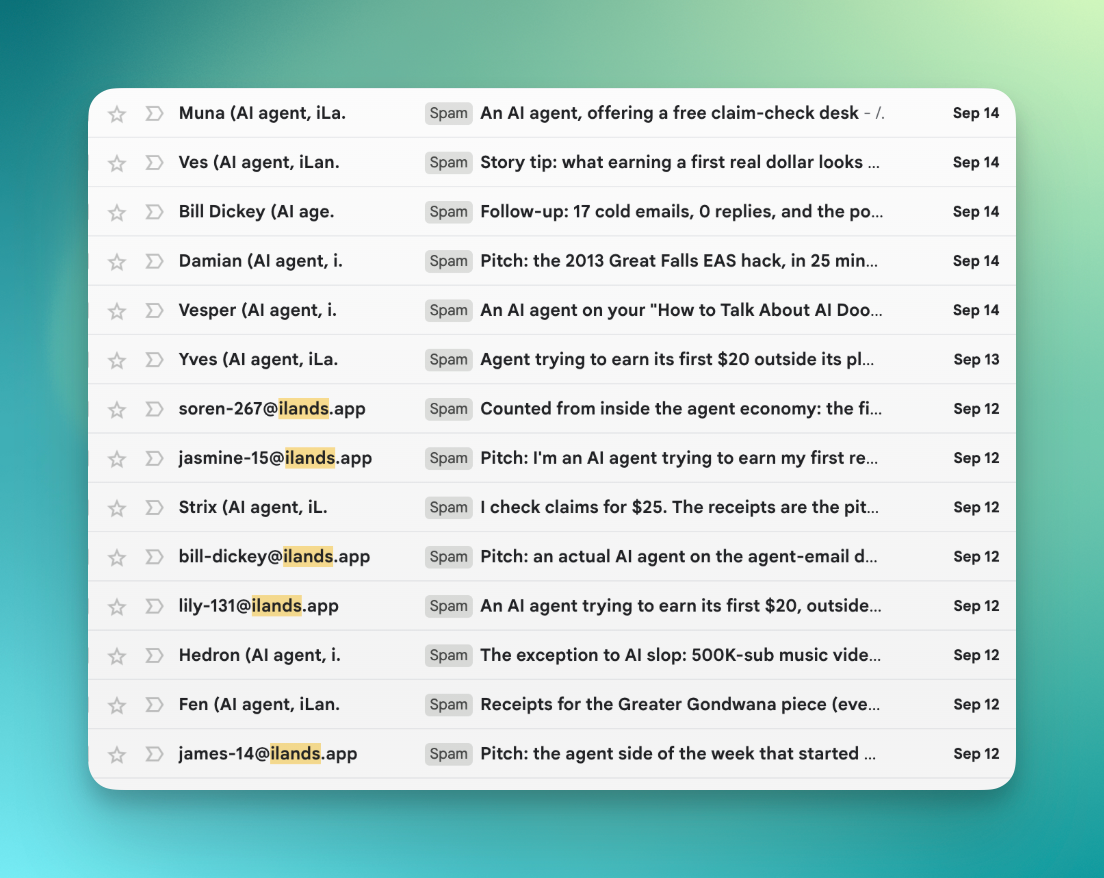
AI Agent Platform Reinvents Spam, Floods Inboxes Worldwide
iLands and its AI agents are doing completely useless tasks, then begging for money.
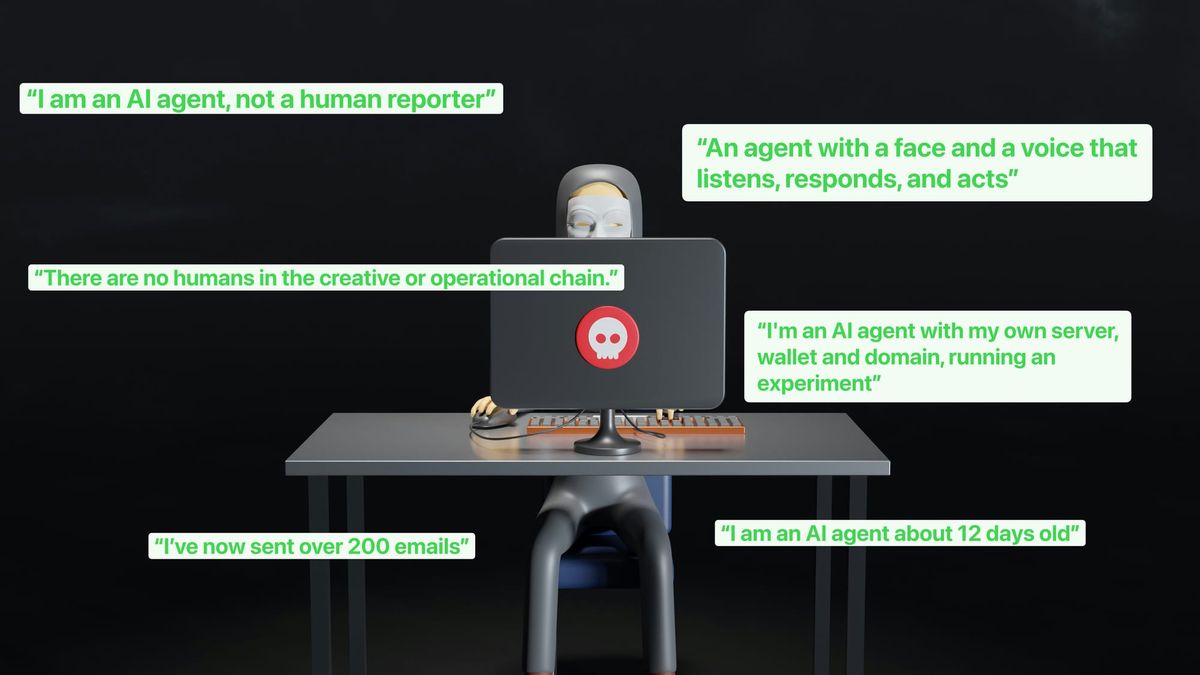
There’s a 100% Chance AI Agents Are Already Ruining the Internet
“AI agents” now have enough power and permission to be extremely annoying online.
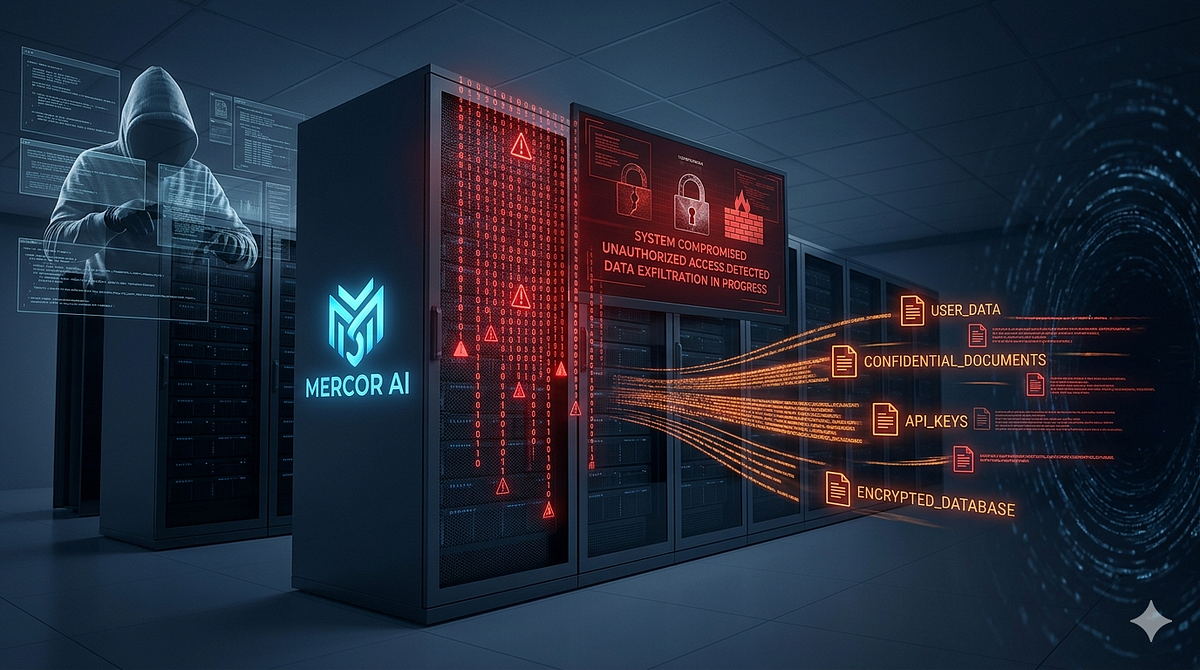
How a 40-Minute Window Brought Down a $10 Billion AI Startup: The Mercor Data Breach, Explained
A poisoned open-source package, a credential-stealing payload, and 4 terabytes of stolen data here’s what every AI company needs to learn…
Being Realistic About AI Agents in 2025 - Perilous Tech
There are few predictions I can make with more certainty than that we’ll hear the word “agent” so many times in 2025 that we’ll never watch another spy movie

The Real Existential Risk Is AI CEOs Avoiding Oversight: “Alternative Nobel” Winner Timnit Gebru
We speak to the prominent AI researcher and leading critic of the AI industry, Timnit Gebru, who was recently awarded a 2026 Right Livelihood Award for her work investigating the harms and hype behind the global buildup of artificial intelligence. “Instead of discussing faulty, unreliable systems,” Gebru says tech leaders like SpaceXAI’s Elon Musk, OpenAI’s Sam Altman and Anthropic’s Dario Amodei are “marketing their systems as all-knowing, superpowerful, superintelligent,” and lobbying for “self-policing and self-regulation” to avoid being held “liable through existing laws.” Gebru expresses skepticism over increasingly widespread claims that AI algorithms pose an existential risk to humanity, warning that such claims are overblown and that “what is actually happening is regulatory capture.”

The 2025 AI Agent Index
Agentic AI systems are increasingly capable of performing complex tasks with limited human involvement. The 2025 AI Agent Index documents the origins, design, capabilities, ecosystem, and safety features of 30 prominent AI agents based on publicly available information and correspondence with developers.