


It is hard to do better than Alex’s video on Romer, pretty much definitive and Romer liked it too. Most importantly, Romer won the Prize for seeing how the non-rival nature of ideas can boost ongoing and indeed “endogenous” economic growth. Romer also showed mathematically that this process of growth is bounded, namely that it […]
The Nobel for Econsplaining
Acemoglu, Johnson and Robinson won a prize for applying economics to the very things economics is inherently bad at figuring out

annotations: Que récompense réellement un prix Nobel sur la « croissance économique tirée par l’innovation » ?
traduction française du billet de blog "What does a Nobel Prize on ‘innovation-driven economic growth’ actually reward?" de Beatrice Cherrier
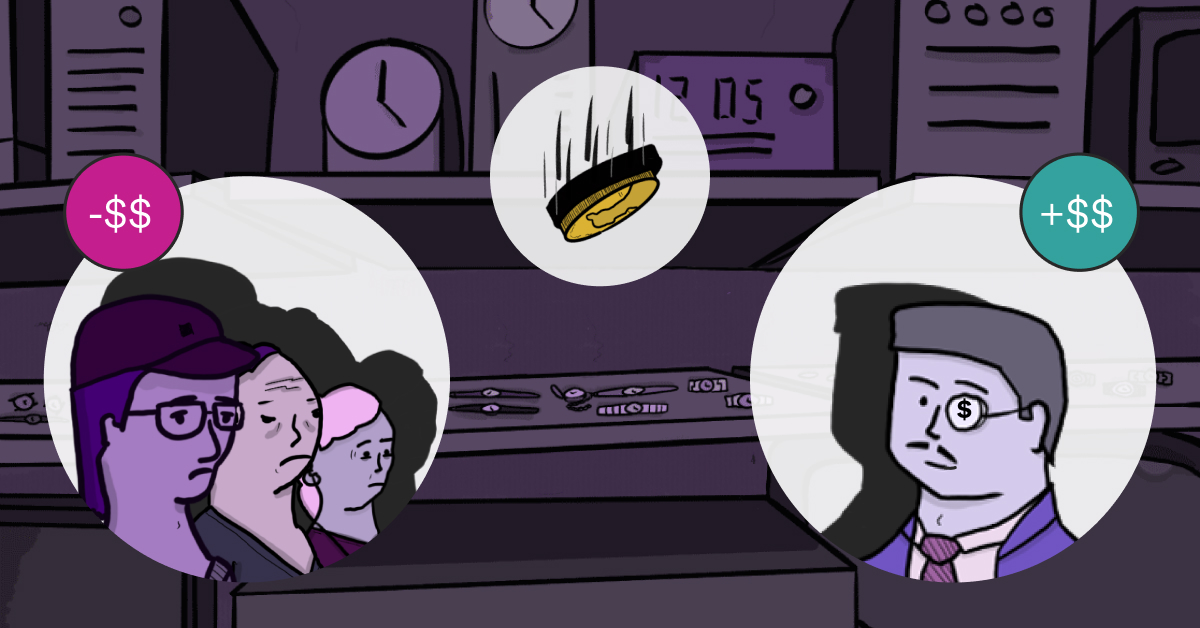
Why the super rich are inevitable
Why some mathematicians argue the economy is designed to create a few super rich people – unless we stop it.
Global Inequality — Harvard University Press
Winner of the Bruno Kreisky Prize, Karl Renner InstitutA Financial Times Best Economics Book of the Year An Economist Best Book of the Year A Livemint Best Book of the YearOne of the world’s leading economists of inequality, Branko Milanovic presents a bold new account of the dynamics that drive inequality on a global scale. Drawing on vast data sets and cutting-edge research, he explains the benign and malign forces that make inequality rise and fall within and among nations. He also reveals who has been helped the most by globalization, who has been held back, and what policies might tilt the balance toward economic justice.“The data [Milanovic] provides offer a clearer picture of great economic puzzles, and his bold theorizing chips away at tired economic orthodoxies.”—The Economist“Milanovic has written an outstanding book…Informative, wide-ranging, scholarly, imaginative and commendably brief. As you would expect from one of the world’s leading experts on this topic, Milanovic has added significantly to important recent works by Thomas Piketty, Anthony Atkinson and François Bourguignon…Ever-rising inequality looks a highly unlikely combination with any genuine democracy. It is to the credit of Milanovic’s book that it brings out these dangers so clearly, along with the important global successes of the past few decades.—Martin Wolf, Financial Times
On the Ersatz Nobel: The Old Monetary Policy is Dying, and The New Monetary Policy Struggles to be Born
Yesterday the Nobel Prize fake Nobel Prize the Sveriges Riksbank Prize in Economic Sciences in Memory of Alfred Nobel was again awarded. For the unique and bizarre history of this prize, see the piece I wrote five years ago pointing out that this prize was a form of “central bank
Even Perfect Liberal Governance Could Not Have Stopped Reactionary Populism
A British author gets it. An economics Nobel laureate doesn’t.
This year’s Nobel prizes prompt soul-searching among economists
The rise of randomised controlled trials looks to some like a retreat from the biggest questions

Book review: Elinor Ostrom’s Rules for Radicals, by Derek Wall
Elinor Ostrom was the first and so far the only woman to win the Nobel prize for economics*. She received the award in 2009 for her work on the commons. Ostrom died three years later, leaving behin…
Misbehaving: the making of behavioral economics
Nobel laureate Richard H. Thaler has spent his career s…

annotations: Institutions et prospérité : zoom sur les travaux des lauréats du Nobel 2024
Blog de sciences économiques et sociales de Martin Anota. Traductions, revues de presse.
Acemoglu, Johnson et Robinson ont expliqué pourquoi certains pays sont riches et d’autres pauvres
traduction française du résumé des travaux de Daron Acemoglu, Simon Johnson et James A. Robinson (prix Nobel d'économie 2024)

Maurice Allais, premier prix Nobel d’économie français
En 1998, le jury du Nobel a récompensé l’économiste Maurice Allais. Une première alors pour un français qui se présentait comme un « socialiste concurrentiel ». Que reste-t-il de cette œuvre riche ?
Les contributions de Gabriel Zucman à l'économie des inégalités et de la fiscalité
Traduction française d'Emmanuel Saez (2024), "Gabriel Zucman: Winner of the 2023 Clark medal", in Journal of Economic Perspectives, 2024.

David Graeber: "Spotlight on the financial sector did make apparent just how bizarrely skewed our economy is in terms of who gets rewarded"
David Graeber explains why the more your job helps others, the less you get paid

The Profit Paradox
"ATProto could usher in one of the largest redistributions of wealth in modern history" is an eye opening and not unrealistic claim to make if we all make this thing work.

Exploring the Frontier of Feeds - The Open Garden
jshaked.leaflet.pub