

OK, yet more people likely to be coming over to #Mastodon, so again I’m highlighting the #LawFedi list, now with over 800 lawyers, including practitioners and academics from around the world. The list is here: https://docs.google.com/spreadsheets/d/1nE8WxgwTFCuVeFA8ZfOW0qonJTSnI_d6EBSJ4E9JqtI/edit If you would like to join, here’s how: https://forms.gle/LkXSmvkTPPEsFJft7 I keep an eye on the list for spam, trolls, and errors. #law #lawyers #lawProfs
Ars subscriber chat: Law professor James Grimmelmann
Ask a law professor anything! Ars subscribers have the chance to grill …

Law.com | The Premier Source for Global Legal News & Analysis
Law.com delivers news, insights and resources that allow legal professionals to anticipate opportunities, adapt to change, and prepare for future success.
Homepage - Current Shift Legal
Innovation for a Just Economy Strategic legal counsel for cooperatives, nonprofits, mission-driven businesses, and values-led leaders shaping the future of ownership and enterprise. Our Services What we do Legal services for organizations building with purpose From formation to succession to ongoing counsel, we advise on
The MyPillow guy’s lawyers got fined for using false AI-generated citations.
The attorneys defending MyPillow founder Mike Lindell in a defamation case (which he lost) were ordered to pay $3,000 each for putting AI-generated misquotes and “citations of cases that do not exist” in a brief submitted in February, as reported by ArsTechnica. More and more lawyers are getting caught — and punished — for including AI hallucinations in their work, and this trend will likely only continue to grow. [Link: Why do lawyers keep using ChatGPT? | https://www.theverge.com/policy/677373/lawyers-chatgpt-hallucinations-ai | The Verge]

CiviCRM - National Lawyers Guild
Homepage photo: NLG Legal Observer and police at Columbus, OH protest, May 2020. Credit: Katie Forbes / @krforbesphotography
Hallucination-Free? Assessing the Reliability of Leading AI Legal Research Tools
Legal practice has witnessed a sharp rise in products incorporating artificial intelligence (AI). Such tools are designed to assist with a wide range of core legal tasks, from search and summarization of caselaw to document drafting. But the large language models used in these tools are prone to "hallucinate," or make up false information, making their use risky in high-stakes domains. Recently, certain legal research providers have touted methods such as retrieval-augmented generation (RAG) as "eliminating" (Casetext, 2023) or "avoid[ing]" hallucinations (Thomson Reuters, 2023), or guaranteeing "hallucination-free" legal citations (LexisNexis, 2023). Because of the closed nature of these systems, systematically assessing these claims is challenging. In this article, we design and report on the first preregistered empirical evaluation of AI-driven legal research tools. We demonstrate that the providers' claims are overstated. While hallucinations are reduced relative to general-purpose chatbots (GPT-4), we find that the AI research tools made by LexisNexis (Lexis+ AI) and Thomson Reuters (Westlaw AI-Assisted Research and Ask Practical Law AI) each hallucinate between 17% and 33% of the time. We also document substantial differences between systems in responsiveness and accuracy. Our article makes four key contributions. It is the first to assess and report the performance of RAG-based proprietary legal AI tools. Second, it introduces a comprehensive, preregistered dataset for identifying and understanding vulnerabilities in these systems. Third, it proposes a clear typology for differentiating between hallucinations and accurate legal responses. Last, it provides evidence to inform the responsibilities of legal professionals in supervising and verifying AI outputs, which remains a central open question for the responsible integration of AI into law.

Legal Language Is Deliberately Arcane To Signal Power, Study Finds - Slashdot
A new MIT study reveals why legal documents are so hard to read: Both lawyers and non-lawyers instinctively use complex language to signal authority, similar to how magic spells use archaic terms. The research, published in PNAS, found that even laypeople default to convoluted "center-embedded" clau...

Application Information | Stanford Law School
Early-stage non-profit or for-profit entities that are focused on climate, sustainability, and impact and who have fundraised less than $500,000 may be eligible for pro bono legal help. Priority will be given to Stanford-affiliated teams. Entities can be pre-formation. We are not currently assisting entities based outside of the United States. Direct any questions about the application to Molly Melius at loughney@stanford.edu.
Future of Corporate Law: The Company Smart Contract
“The Justice System works swiftly in the future, now that they have abolished all lawyers” … Doc Brown

Timothy Caulfield | Faculty of Law
Open data: decentralising and democratising social justice
Chris Worman writes about Open Courts, the dataset which provides a model for others interested in data-driven advocacy
How Police Make Up The Law (ft. LegalEagle)
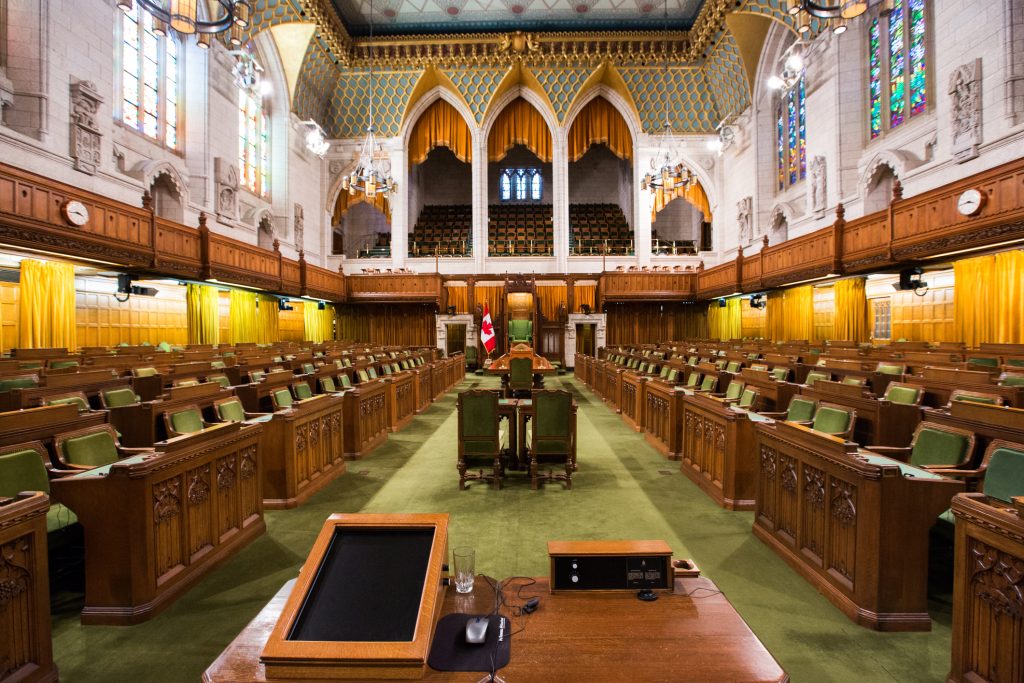
Reading the Digital Safety Act with My Mastodon Admin Hat On
Back in 2024, I published a reading of the Online Harms Act from my perspective as an admin of a Mastodon instance. The Online Harms Act was a proposed Canadian bill meant to regulate social media to prevent harmful content, particularly hate speech and child abuse materials. While the Online Harms Act ultimately did not come to pass (due the proroguing of Parliament later that year), the Carney Liberal government is bringing much of it back with a new Digital Safety Act. In this post, I am also giving the new Act a look from the perspective of a Mastodon admin.
Meet the Author: Alicia Solow-Niederman
Alicia Solow-NiedermanAssociate Professor of LawGeorge Washington University Law School

Judge slams lawyers for ‘bogus AI-generated research’
The law firms involved must pay $31,000.


Where Is Developer Advocacy? by The API Evangelist
apievangelist.com