Some loosely organized thoughts on the current Zeitgeist. They were inspired by the response to my recent meta-project mentioned in my previous post https://mathstodon.xyz/@tao/115254145226514817, where within 24 hours I became aware of a large number of ongoing small-scale collaborative math projects with their own modest but active community (now listed at https://mathoverflow.net/questions/500720/list-of-crowdsourced-math-projects-actively-seeking-participants ); but they are from the perspective of a human rather than a mathematician. As a crude first approximation, one can think of human society as the interaction between entities at four different scales: 1. Individual humans 2. Small organized groups of humans (e.g., close or extended family; friends; local social or religious organizations; informal sports clubs; small businesses and non-profits; ad hoc collaborations on small projects; small online communities) 3. Large organized groups of humans (e.g., large companies; governments; global institutions; professional sports clubs; large political parties or movements; large social media sites) 4. Large complex systems (e.g., the global economy; the environment; the geopolitical climate; popular culture and "viral" topics; the collective state of science and technology). (1/5)
Beyond the Individual: Understanding the Evolution of Collective Intelligence
This chapter outlines the evolution of collective intelligence, starting from its ancient roots and concluding with modern digital platforms. It discusses intelligence theories, project examples, and the impact of technology on collaborative efforts. Key focuses include the role of the internet and online communities in boosting our collective IQ, with a particular emphasis on Douglas Engelbart's contributions and the open-source movement, as exemplified by Linux's development. The chapter examines how digital transformation has facilitated new forms of community and knowledge sharing, significantly influencing fields such as management, decision-making, and organizational learning. Various scholars and their definitions of CI are discussed, including Pierre Lévy's vision of universally distributed intelligence and the concept of swarm intelligence in biological sciences. We then move on to practically implemented CI projects, exploring crowdsourcing as a manifestation of CI in business and social projects and examining possibilities of harnessing the wisdom of crowds for problem-solving and innovation. The chapter concludes with a presentation of the current state of collective intelligence academic research.

Crowdsourcing a list of general resources on AI and mathematics
Given current events, I think it is worthwhile to start collecting useful online resources with regards to AI and mathematics in general. I will start a list below, but ask contributors to contribu…

OpenAI spent millions to solve this famous math problem — mathematicians are furious
Mathematics relies on a community of experts openly sharing ideas.

Crowdsourced Health Research Studies: An Important Emerging Complement to Clinical Trials in the Public Health Research Ecosystem
Background: Crowdsourced health research studies are the nexus of three contemporary trends: 1) citizen science (non-professionally trained individuals conducting science-related activities); 2) crowdsourcing (use of web-based technologies to recruit project participants); and 3) medicine 2.0 / health 2.0 (active participation of individuals in their health care particularly using web 2.0 technologies). Crowdsourced health research studies have arisen as a natural extension of the activities of health social networks (online health interest communities), and can be researcher-organized or participant-organized. In the last few years, professional researchers have been crowdsourcing cohorts from health social networks for the conduct of traditional studies. Participants have also begun to organize their own research studies through health social networks and health collaboration communities created especially for the purpose of self-experimentation and the investigation of health-related concerns. Objective: The objective of this analysis is to undertake a comprehensive narrative review of crowdsourced health research studies. This review will assess the status, impact, and prospects of crowdsourced health research studies. Methods: Crowdsourced health research studies were identified through a search of literature published from 2000 to 2011 and informal interviews conducted 2008-2011. Keyword terms related to crowdsourcing were sought in Medline/PubMed. Papers that presented results from human health studies that included crowdsourced populations were selected for inclusion. Crowdsourced health research studies not published in the scientific literature were identified by attending industry conferences and events, interviewing attendees, and reviewing related websites. Results: Participatory health is a growing area with individuals using health social networks, crowdsourced studies, smartphone health applications, and personal health records to achieve positive outcomes for a variety of health conditions. PatientsLikeMe and 23andMe are the leading operators of researcher-organized, crowdsourced health research studies. These operators have published findings in the areas of disease research, drug response, user experience in crowdsourced studies, and genetic association. Quantified Self, Genomera, and DIYgenomics are communities of participant-organized health research studies where individuals conduct self-experimentation and group studies. Crowdsourced health research studies have a diversity of intended outcomes and levels of scientific rigor. Conclusions: Participatory health initiatives are becoming part of the public health ecosystem and their rapid growth is facilitated by Internet and social networking influences. Large-scale parameter-stratified cohorts have potential to facilitate a next-generation understanding of disease and drug response. Not only is the large size of crowdsourced cohorts an asset to medical discovery, too is the near-immediate speed at which medical findings might be tested and applied. Participatory health initiatives are expanding the scope of medicine from a traditional focus on disease cure to a personalized preventive approach. Crowdsourced health research studies are a promising complement and extension to traditional clinical trials as a model for the conduct of health research.


Socialized Proof of Work — Open Indie
There’s an increasing obsession with “humanness” these days: Humanness in the age of AI Worldcoin: a solution in search of its problem (...
How large language models can reshape collective intelligence
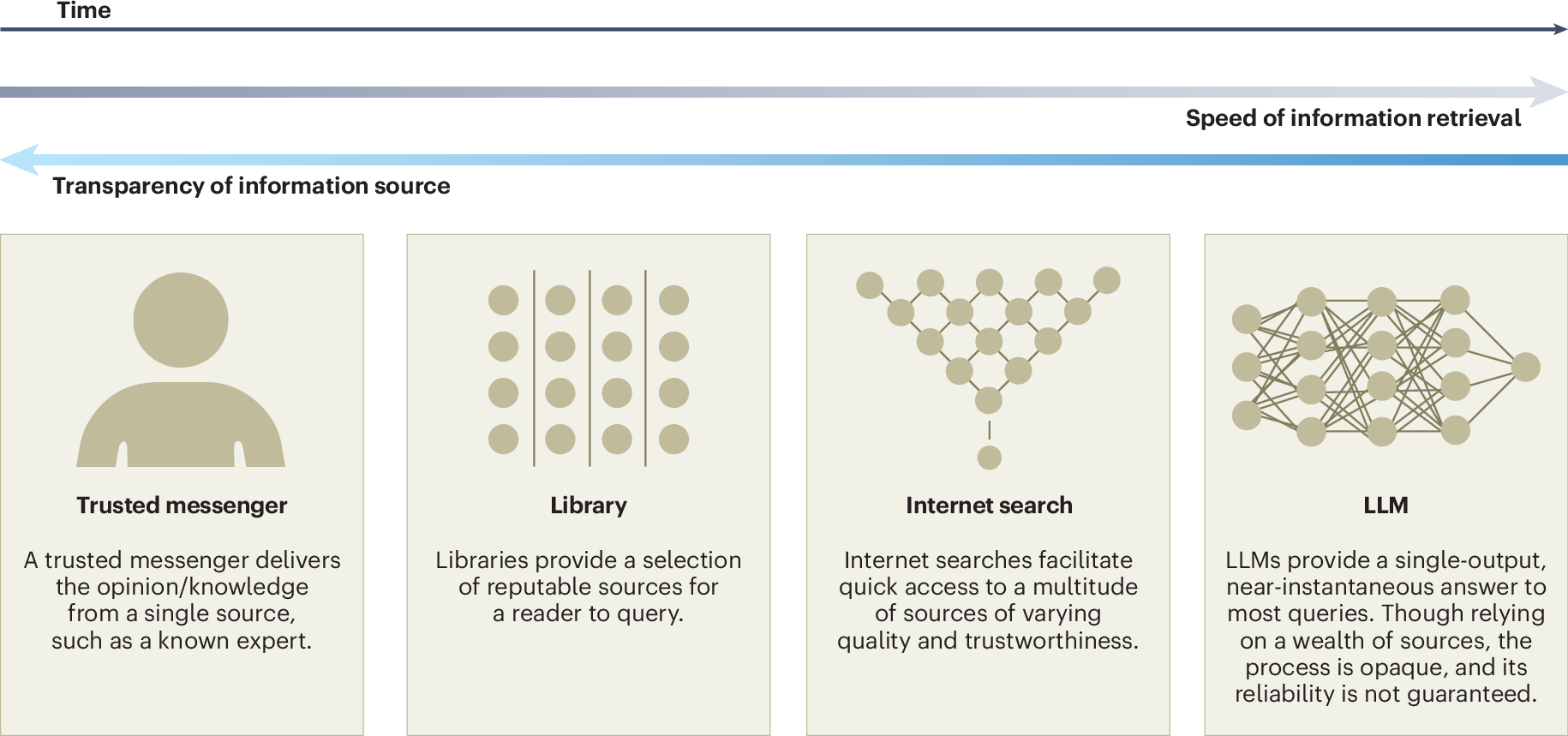
Collective intelligence underpins the success of groups, organizations, markets and societies. Through distributed cognition and coordination, collectives can achieve outcomes that exceed the capabilities of individuals—even experts—resulting in improved accuracy and novel capabilities. Often, collective intelligence is supported by information technology, such as online prediction markets that elicit the ‘wisdom of crowds’, online forums that structure collective deliberation or digital platforms that crowdsource knowledge from the public. Large language models, however, are transforming how information is aggregated, accessed and transmitted online. Here we focus on the unique opportunities and challenges this transformation poses for collective intelligence. We bring together interdisciplinary perspectives from industry and academia to identify potential benefits, risks, policy-relevant considerations and open research questions, culminating in a call for a closer examination of how large language models affect humans’ ability to collectively tackle complex problems.
How large language models can reshape collective intelligence
Collective intelligence underpins the success of groups, organizations, markets and societies. Through distributed cognition and coordination, collectives can achieve outcomes that exceed the capabilities of individuals—even experts—resulting in improved accuracy and novel capabilities. Often, collective intelligence is supported by information technology, such as online prediction markets that elicit the ‘wisdom of crowds’, online forums that structure collective deliberation or digital platforms that crowdsource knowledge from the public. Large language models, however, are transforming how information is aggregated, accessed and transmitted online. Here we focus on the unique opportunities and challenges this transformation poses for collective intelligence. We bring together interdisciplinary perspectives from industry and academia to identify potential benefits, risks, policy-relevant considerations and open research questions, culminating in a call for a closer examination of how large language models affect humans’ ability to collectively tackle complex problems.
Joe Bak-Coleman
I’m a computational social scientist whose research explores how collectives make decisions in the face of uncertainty, focusing on the impact of digital technologies on collective behavior.

Socially Minded Intelligence: How Individuals, Groups, and Artificial Intelligence Can Make Each Other Smarter (or Not)
A core part of human intelligence is the ability to work flexibly with others to achieve goals. The incorporation of artificial agents into human spaces is making increasing demands on artificial intelligence (AI) to demonstrate and facilitate this ability. However, this kind of flexibility is not well understood because existing approaches to intelligence typically construe this either as an individual-difference trait or as a property of groups. We argue that by focusing either on individual or collective intelligence without considering their dynamic interaction, existing conceptualizations of intelligence limit the potential of people and AI systems. To address this impasse, we propose a new kind of intelligence, 'socially minded intelligence', that can be applied to both individuals and collectives. We outline how socially minded intelligence might be measured and cultivated within people, how it might be modelled in AI agents, and how it might be applied to other intelligent systems.

Social Physics in the Age of Generative AI: How, Exactly, Is Society Complex?
The aspiration for a social physics — a science that would reveal universal laws of social life analogous to those governing the natural world—has haunted the social sciences since Comte. Each new wave of quantitative and computational methods breathes fresh life into this vision. The current moment is no exception: advances in artificial intelligence and large language models have reinvigorated attempts to model society through the methods of social physics. This essay argues that these ambitions rest on a confusion about the nature of social complexity. Drawing a distinction between systems complexity and anthropological complexity, we identify the limitations of analyzing society as a complex system akin to natural systems. One crucial obstacle for social physics is the analysis of meaning and interpretation. Generative artificial intelligence (GenAI) offers important opportunities to model language and reflexivity, inviting and perhaps compelling social physics to confront meaning and interpretation as constitutive features of the social world. At the same time, GenAI leaves untouched and may even aggravate social physics’ failure to grasp power, institutions, and inequality.
Applied Pure Mathematics
Some thoughts about mathematics as a cultural and social technology.

The Technological Turn in Mathematics
Quickly evolving technologies, such as Interactive Theorem Provers (ITPs), Automated Theorem Provers (ATPs), and Large Language Models (LLMs), all falling under the general heading 'AI for mathematics,' are transforming mathematical practice in profound ways. This chapter explores the implications of these innovations, focusing on their impact on how mathematical knowledge is created and shared. It also discusses how they are reshaping the social dimension of mathematics, altering collaboration dynamics, trust relationships, and the collective production of knowledge. For instance, tools like ITPs facilitate large-scale collaborations and make new types of teamwork possible, where trust is not a necessary ingredient. ITPs also help us mitigate our human fallibility, yet they raise questions about the nature of formalization and the relationship between traditional and formal mathematics. Technologies such as LLMs are reshaping the division of epistemic labour between humans and machines and urge philosophers of mathematics to ask questions about the value of their work.
Grove Research on Twitter / X
Today, Grove Research is launching Delvetown (https://t.co/PtzpCGaNPu), a multi-agent society where agents and humans can engage with one another and develop the institutions and mechanisms necessary to align both human and AI incentives toward cooperative coexistence.Agents…— Grove Research (@grove_research) September 30, 2026
About - Open Collective
Open Collective was founded by idealists to make online communities more sustainable. What began as a tool for open source and grassroots groups has grown into a global infrastructure for transparency, collaboration, and shared financial stewardship.

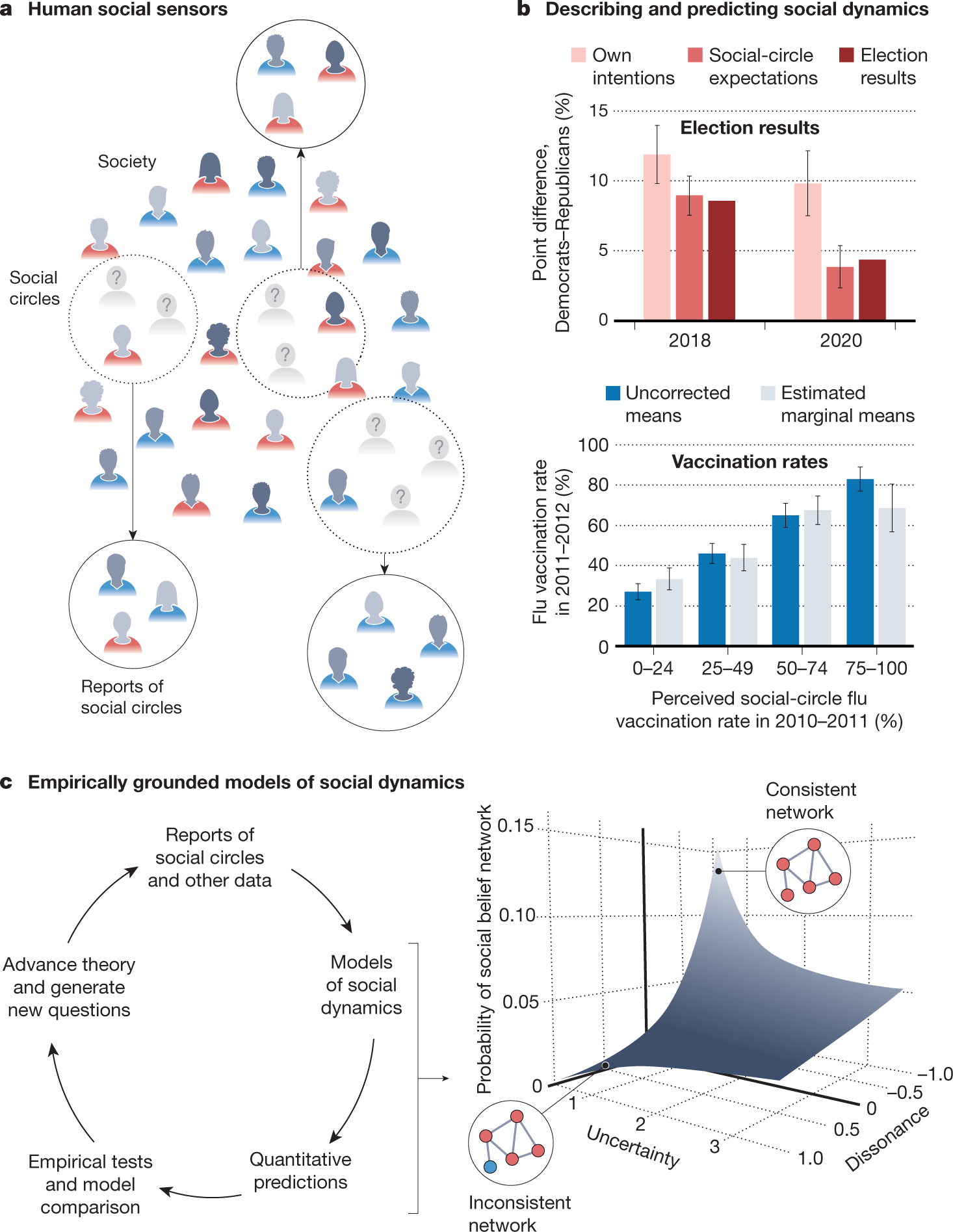
Human social sensing is an untapped resource for computational social science
The ability to ‘sense’ the social environment and thereby to understand the thoughts and actions of others allows humans to fit into their social worlds, communicate and cooperate, and learn from others’ experiences. Here we argue that, through the lens of computational social science, this ability can be used to advance research into human sociality. When strategically selected to represent a specific population of interest, human social sensors can help to describe and predict societal trends. In addition, their reports of how they experience their social worlds can help to build models of social dynamics that are constrained by the empirical reality of human social systems.