I wrote recently about how the collection of good, fruitful open problems is now being mined in a non-renewable fashion, leading to the potential scenario of these problems becoming scarce. This may seem unintuitive at first, since the set of possible problems one could ask is infinite. Perhaps the following analogy can help: a country or region can suffer a critical shortage of drinking water while simultaneously being surrounded by a massive ocean. One can easily generate any number of open problems in mathematics at will, such as working out the 10^10^10th digit of pi. But the vast majority of such problems are not worth focusing attention on: they show no particular propensity to reveal any further insights or connections to other questions, or may either be too easy or too impossible relative to known techniques to learn anything from the exercise. (1/4)
Ten advances in mathematics and theoretical computer science
OpenAI shares new results on long-standing open problems in mathematics and theoretical computer science, including advances in geometry, cryptography, and complexity.
OpenAI's Unreleased Model Astra Solves Ten Major Open Mathematics Problems
Math is hard.

Terence Tao (@tao@mathstodon.xyz)
In basic research, such as pure mathematics, one might naively expect that the natural question to ask with regards to a given problem X in a field is "What is the answer to X?". But in many cases the more valuable question is "What can be learned from studying X?" The answer to X itself can of course be one of the things learned in this process of study; but one can learn far more useful information besides, such as * What are the main difficulties to overcome to resolve X? * What new techniques can one discover in order to solve X? * Why are existing techniques insufficient to solve the problem by itself? * How does X relate to results in prior literature? * Can one uncover new connections between X and other topics Y, Z, ...? * What are some natural related or followup questions X', X'', ... to study? Nevertheless, until recently the two questions were closely aligned, to the point where it was not really necessary to distinguish the two: the only practical route to solving a difficult problem was to first address many of the subquestions listed above. (1/3)
Przemek Chojecki | PC on Twitter / X
The Growing Map of Open Mathematical Problems.We mapped 15,000+ conjectures from UnsolvedMath to show potential links between concepts.It also shows how under formalized the frontier is (less than 10%). pic.twitter.com/nm0PCpXVPf— Przemek Chojecki | PC (@prz_chojecki) August 28, 2026

Open models in perpetual catch-up
The open-closed gap, distillation, innovation timescales, how open models win, specialized models, what’s missing, etc.
The Meaning of Open
There are a lot of misconceptions about what open means, when it is the right strategy to apply, and the fundamental tradeoffs that go…
Timothy Gowers @wtgowers on Twitter / X
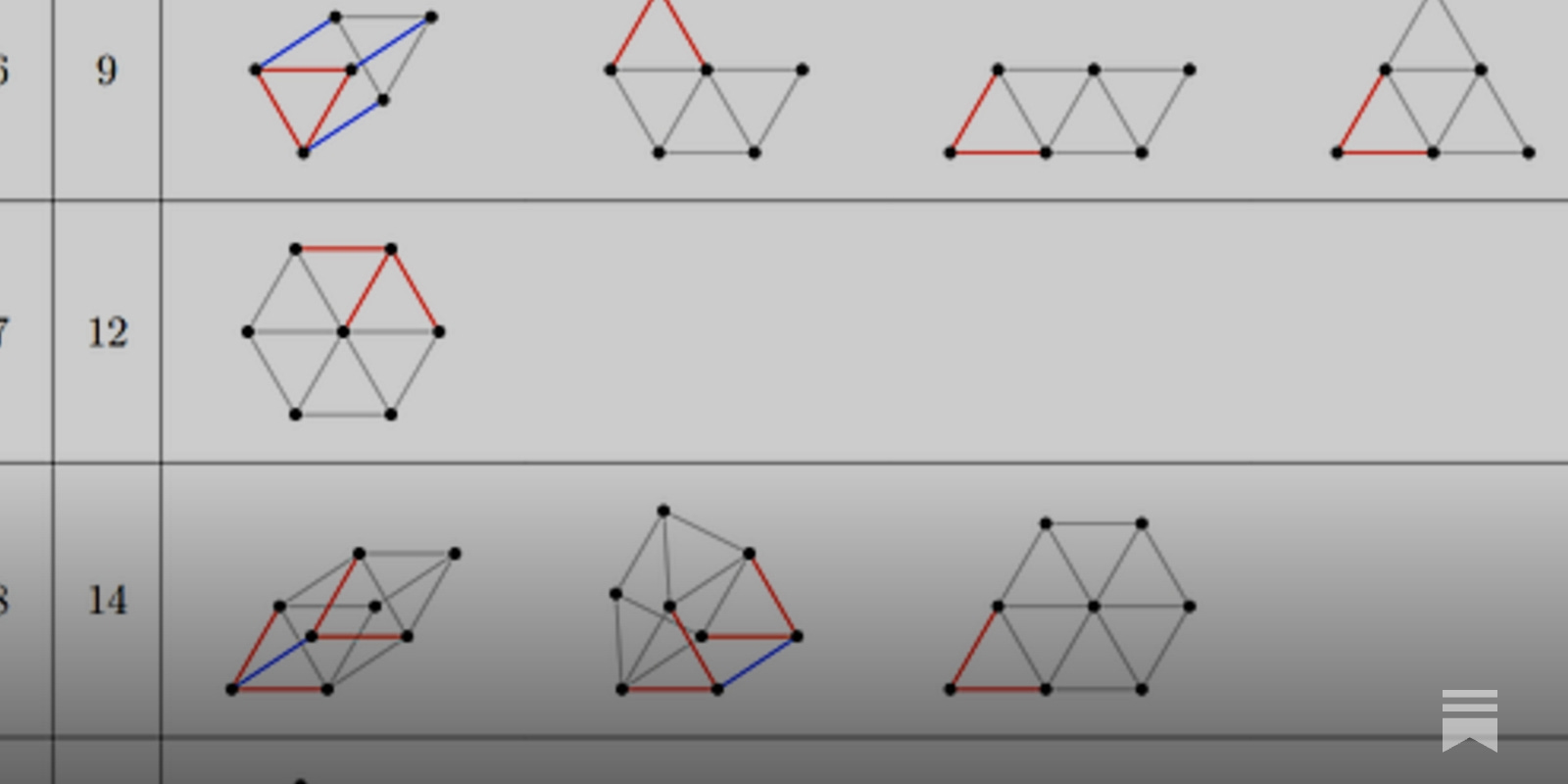
AI has now solved a major open problem -- one of the best known Erdos problems called the unit distance problem, one of Erdos's favourite questions and one that many mathematicians had tried.https://t.co/SD1vVPkrHR— Timothy Gowers @wtgowers (@wtgowers) May 20, 2026
OpenAI’s math breakthrough played to AI’s strengths
I tried to explain OpenAI’s solution more clearly than OpenAI did.
Terence Tao (@tao@mathstodon.xyz)
An elaboration of the previous post mentioning the bounded gaps between primes problem as an illustration of the opportunity cost of converting a fruitful problem such as this solely into a competitive benchmark. [Indeed, as I point out below, this already came close to happening back in 2013.] As with most other problems worth studying in pure mathematics, the particular bound one gets on these gaps is not of much intrinsic importance. Improving Zhang's bound of 70 million, to 246, 188, or 6 would not, in itself, have significant impact on any other mathematical problem, let alone any real-world application, except for a small number of other analytic number theory problems in which a related numerical bound would also similarly improve. Even the twin prime conjecture, which asserts that the bound can be chosen to be 2, would only unlock a small number of immediate applications if the result is taken as a "black box", although the significantly more general and quantitative prime tuples conjecture of Hardy and Littlewood would be more useful in this regard. But again: the value of this problem lies not in the numerical bound _per se_, but rather in what the quest to study this problem and improve the bound reveals. Let me first quickly review some key moments in the timeline on this problem. The Quanta articles https://www.quantamagazine.org/mathematicians-team-up-on-twin-primes-conjecture-20131119/ and https://www.quantamagazine.org/a-new-generation-of-mathematicians-pushes-prime-number-barriers-20231026/ in 2013 and 2023 respectively also do a good job of covering these events. (1/8)
You don't have to be smart if you can think clearly
When you’re on fire, problems are transparent: they’re solved simply by the act of looking at them. Even complicated layers of multiple problems can simply be glanced through like stacked panes of glass. But nobody can work that way all the time.
Itai Sher on Twitter / X
I think there should be a norm that when a set of AI solutions to mathematical problems is released, the set of all problems attempted be released alongside.When trying to understand AI capabilities, it is problematic to selectively report only positive results. https://t.co/ywcWCnFojS— Itai Sher (@itaisher) August 1, 2026
The AI Question that No AI Person Asks
The AI Question that No AI Person Asks
Capacities
Capacities turns your ideas into connected objects. Think naturally, find everything instantly.
the void — LessWrong
Comment by nostalgebraist - Thanks for the reply! I'll check out the project description you linked when I get a chance. [...] Yeah, I had mentally flagged this as a potentially frustrating aspect of the post – and yes, I did worry a little bit about the thing you mention in your last sentence, that I'm inevitably "reifying" the thing I describe a bit more just by describing it. FWIW, I think of this post as purely about "identifying and understanding the problem" as opposed to "proposing solutions." Which is frustrating, yes, but the former is a helpful and often necessary step toward the latter. And although the post ends on a doom-y note, I meant there to be an implicit sense of optimism underneath that[1] – like, "behold, a neglected + important cause area that for all we know could be very tractable! It's under-studied, it could even be easy! What is true is already so; the worrying signs we see even in today's LLMs were already there, you already knew about them – but they might be more amenable to solution than you had ever appreciated! Go forth, study these problems with fresh eyes, and fix them once and for all!" I might write a full post on potential solutions sometime. For now, here's the gist of (incomplete, work-in-process) thoughts. ---------------------------------------- In a recent post, I wrote the following (while talking about writing a Claude 4 Opus prompt that specified a counterfactual but realistic scenario): [...] And I feel that the right way to engage with persistent LLM personas is basically just this, except generalized to the fullest possible extent. "Imagine the being you want to create, and the kind of relationship you want to have (and want others to have) with that being. "And then shape all model-visible 'context' (prompts, but also the way training works, the verbal framing we use for the LLM-persona-creation process, etc.) for consistency with that intent – up to, and including, authentically acting out that 'relationship you want to have' w