

A small-scale rule of thumb. This article will land much better with a concrete example, but I am drawing a blank here, so you gotta just blindly trust my say so!

The Hidden Cost of Privatization
Why some goods and services should stay in the public domain

Public Monopolies Are a Good Thing
Private monopolies are rightly criticized for being inefficient and unaccountable. But public monopolies are a different story — we should loudly and proudly say that democratically controlled public monopolies are a positive good.

Going public! Roadmapping with a public Trello board. - Inside Atlassian
How to use a public Trello board to roadmap your plans, gain feedback from users, and ultimately make a better product.
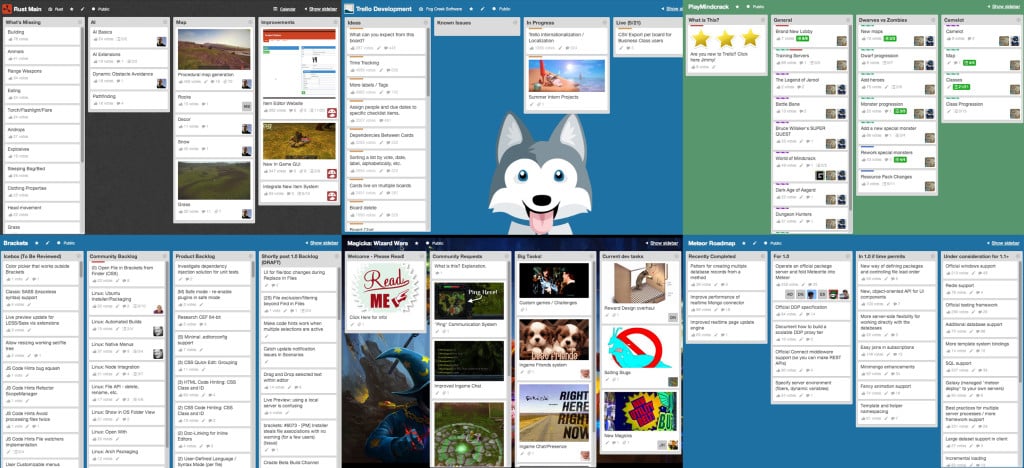
Going public! Roadmapping with a public Trello board. - Inside Atlassian
How to use a public Trello board to roadmap your plans, gain feedback from users, and ultimately make a better product.
Nothing to Declare
Making big public statements is always fun and people who think themselves to be important love doing it as a way of trying to influence public opinion and/or politics. They are a way for institutions and individuals to organize and try to shine some light onto important issues. We’ve seen many such things in the […]

Private-sector Trumpism
Monopoly, facial recognition and property rights all add up to a private system of government.

Computational Public Space
Legitimacy, Authority, and Democratic Duties of Explanation
Abstract Increasingly secret, complex, and inscrutable computational systems are being used to intensify existing power relations and to create new ones; in particular, they are being used to govern. To be all-things-considered morally permissible new, or newly intense, power relations must meet standards of procedural legitimacy and proper authority. This is necessary for them to protect and realise democratic values of individual liberty, relational equality, and collective self-determination. For governing power in particular to be legitimate and have proper authority, it must meet a publicity requirement: reasonably competent members of the governed community must be able to determine that they are being governed legitimately and with proper authority. The publicity requirement can be satisfied only if the powerful can explain their decision-making to members of their political community. At least some duties of explanation are therefore democratic duties. This chapter first sets out the foregoing argument, then applies it to opaque computational systems, and clarifies precisely what kinds of explanations are necessary to fulfil these democratic values.

You Really Do Have Some Expectation of Privacy in Public
When we spend time fighting the growing ubiquity of both public and private surveillance cameras we often hear a familiar refrain: “you don’t have an expectation of privacy in public.” This is not

The 'Digital Town Square' Problem
Privately owned public spaces like Twitter are often viewed as “public town squares.” But it's unclear exactly how private companies' influence on the so-called public spaces they control affects actual civic outcomes.

Public First Action
Public First Action is a 501(c)(4) nonprofit organization focused on United States public policy related to artificial intelligence.[1][2] Public First Action is a bipartisan group that advocates for AI transparency, safeguards, and export controls on advanced AI chips.[3] The organization is aligned with the political action committees Jobs and Democracy to support Democratic candidates, Defending Our Values to support Republican candidates, and Public First.
Moderation in a Public Commons - Bluesky
In this post, we share why we believe a public commons is important for social media, as well as some proposals for moderation and safety tooling.

You Have the Right to Think
Epistemic Status: Public service announcement. We will then return to regularly scheduled programming. Written partly as a response to (Robin Hanson): Why be Contrarian, responding to the book Inad…

What if permissioned data but then public though

Transitioning data from permissioned to public?
discourse.atprotocol.communitythe "atproto as public infrastructure" argument is gaining real traction — sebastian at re:publica today making that case to a european policy crowd. bsky.app/profile/sebastian.eurosky.soc…

