


WordPress isn’t easy. There, I said it. I’m willing to bet if you’ve spent any time using the software, you probably feel the same way. Even if you’re a WordPress expert, using the software is not without frustration. As a consultant, what I find even more frustrating, is the difficulty I have in recommending WordPress to a lot of new-to-the-web users or users with strict goals to launch their new business online. I’m mentoring an accelerator class and 90% of the students need to make their mark on the web. Sounds easy enough, but within a deluge of learning business legalese, accelerator students can’t come up for air to learn the best practices of WordPress too. Quite frankly, they shouldn’t have to. In the end, there’s simply too many moving parts for the newcomer to comprehend.
WordPress is at a Crossroads
I’ve been a WordPress user for nearly 14 years. I’ve watched as it has grown from a plucky little blogging platform struggling to compete…

The blue-collar WordPress worker and the 2,500+ websites built to grow the CMS
I'm not foolish enough to think that the entirety of WordPress' growth is driven by our love for the software, but that we consultants are responsible for


So you think you want to start a WordPress consulting business?
I can speak from experience (over 8 years in fact) that running a small business as a WordPress consultant is very rewarding and has some major benefits. However, there are a few traps you can easily fall into when you first start offering WordPress consulting services. And I'm not talking about technical stuff. Here are some quick tips to avoid making the same mistakes I did.

Welcome to the Post-Naive Internet Era
The grand idealism of the free and open internet might be over for now, but in its place falls a more practical mindset. Just like Silicon Valley’s entrepreneurs are entering their “Hard Tech” era, the people building web alternatives are also entering their Post-Naive Era. Here are the names to know.

Brutally Honest Advice About Web Design in 9 mins
Teach Yourself Programming in Ten Years
The conclusion is that either people are in a big rush to learn about programming, or that programming is somehow fabulously easier to learn than anything else. Felleisen et al. give a nod to this trend in their book How to Design Programs, when they say "Bad programming is easy. Idiots can learn it in 21 days, even if they are dummies." The Abtruse Goose comic also had their take.
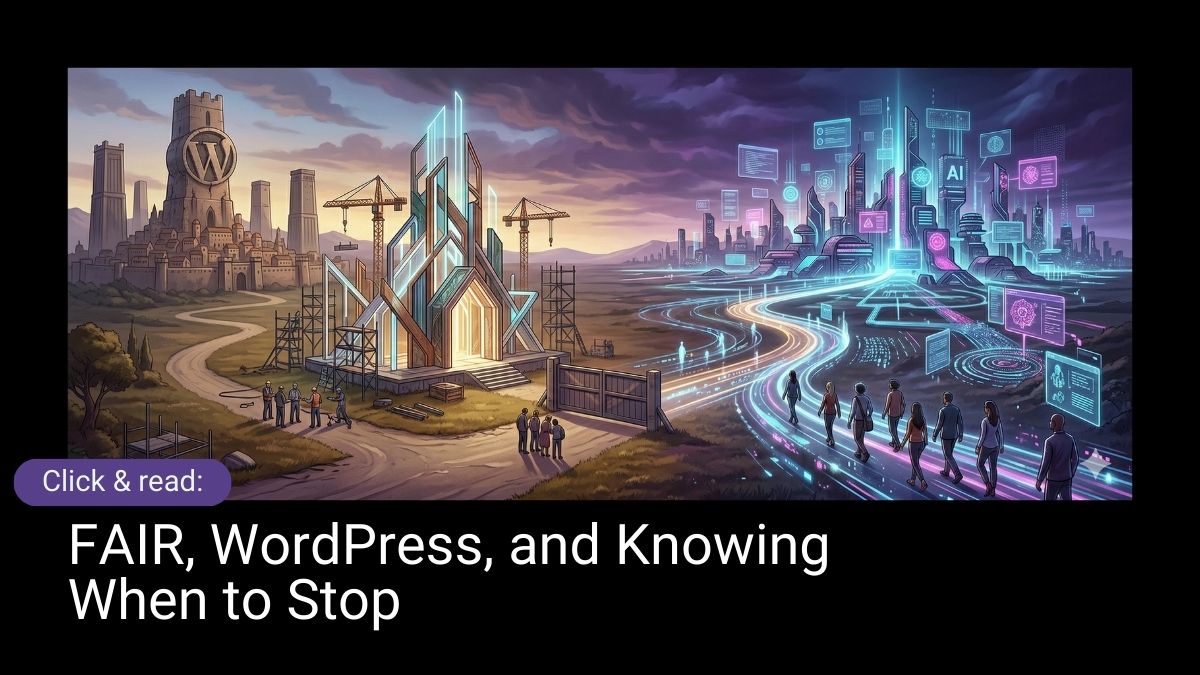
FAIR, WordPress, and Knowing When to Stop
Over the past year, we, Karim & Joost, have written and talked extensively about the challenges facing WordPress. We’ve been critical. At times, very critical. Of leadership, of governance, of the way decisions are made and enforced. We stand by that criticism. Matt’s way of operating has, in our view, been harmful. It has led […]
Home
After earning a bachelor’s with honors in philosophy and mathematics, I decided to pursue software development as a career. I’ve been creating web and desktop applications since 2016 and doing philosophy on the side.
Learn to code. Or don't.
Reasons to learn to code: * You have an offer for a job that involves coding, or could benefit from it * Existing tools don’t serve your needs well, or at all * You enjoy it “Learn to code” is the common refrain for what to do when you’re poor. It’

Does Writing Code Matter?
Ian Landsman’s 10 tips for moving from programmer to entrepreneur is excellent advice. Even if you have no intention of becoming an entrepreneur. One of the biggest issues I see is developers getting caught up in the code. Spending countless hours making a function perfect or building features which
How to keep learning in the age of LLMs | Oğuzhan Olguncu
Notes on how I keep learning as a programmer in the age of LLMs
Mobile Open Source: My Honest Dual Licensing
Excellent post, Fabrizio. Thanks for "just being honest" about dual licensing. I agree with you whole-heartedly.As for Alfresco, our old model was working fine. In some ways, perhaps better. But it never felt right for us. (Some of this was my innate insecurity born of competing with Red Hat's open source message while at mixed-source Novell. I lost there, and didn't like the way we lost. I hated the message I had to say there.) So we went 100% MPL, and the results have been excellent - sales are up, downloads are up, and (most importantly) happiness is up. We really like the change, and everyone in the company and our community is happier.Is it an infallible model? No. But I agree with you - the better we segment our customers, the better our sales/etc. will be.Matt
