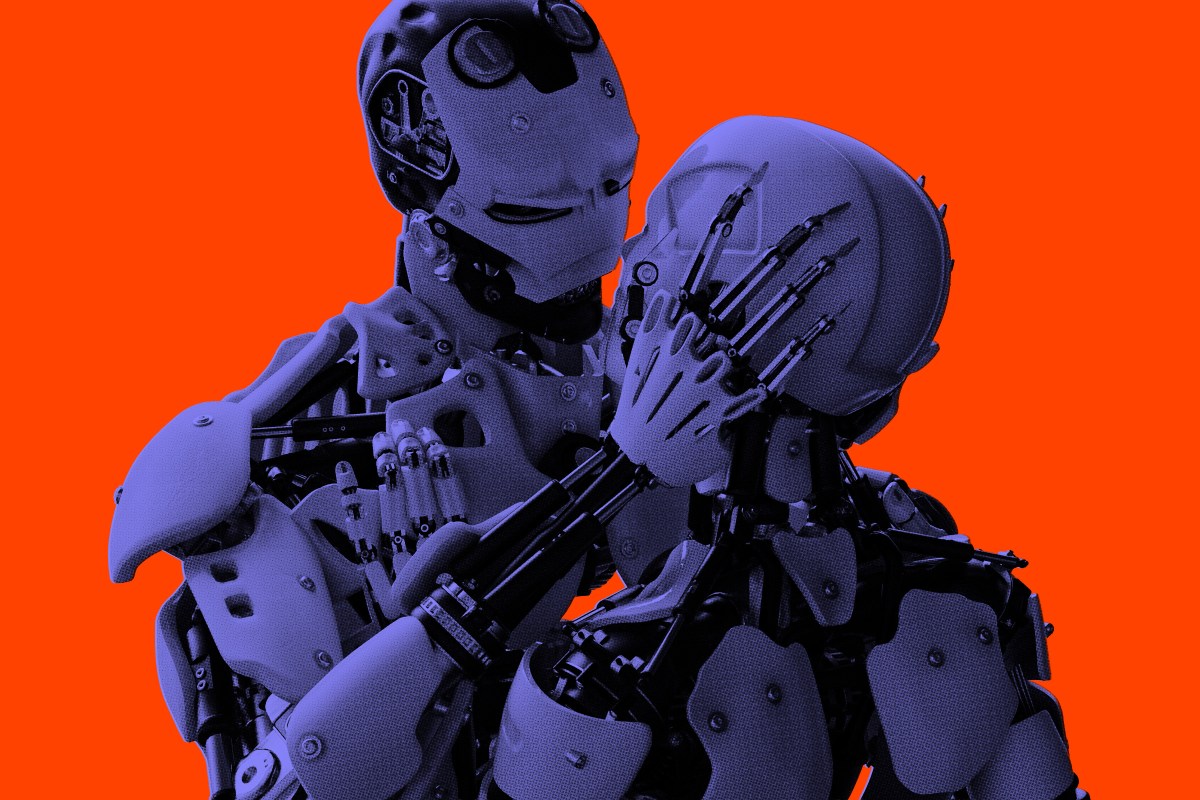
On a weird few weeks of A.I.-writing scandals
How The New York Times Uses A.I. for Journalism (Published 2024)
We don’t use A.I. to write articles, and journalists are ultimately responsible for everything that we publish.

What’s Happening to Reading?
For many people, A.I. may be bringing the age of traditional text to an end.

Writers at Risk Archive
PEN America champions the freedom to write, recognizing the power of the word to transform the world. The bedrock work of the global PEN network is advocacy and assistance on behalf of individuals persecuted for their use of the written word or other forms of expression. PEN America’s Writers at Risk Database is a searchable catalog of the writers, journalists, academics, public intellectuals and others under threat around the world. The database includes historical cases PEN America has worked on from 1987 onwards; non-active cases are color-coded black. PEN America is grateful to the John Templeton Foundation for support that enabled the establishment of the Writers at Risk Database and to PEN International for their collaboration in assembling this database.
Will A.I. Make College Obsolete?
During a time when American trust in institutions is at an all- time low, A.I. is poised to accelerate a growing disillusionment with higher education.

Certainly! Generative AI and its Impact on Academic Writing (in Finance)
We examine how the public release of large language models (LLMs) has affected academic writing and publication outcomes in finance. Using a sample of 55,964 fu


An AI Upheaval Is Coming for Media. This Journalist Is Already All In.
AI-assisted stories accounted for nearly 20% of Fortune’s web traffic in the second half of 2025. Most are written by Nick Lichtenberg.

Sort By Controversial
[Epistemic status: fiction] Thanks for letting me put my story on your blog. Mainstream media is crap and no one would have believed me anyway. This starts in September 2017. I was working for a sm…

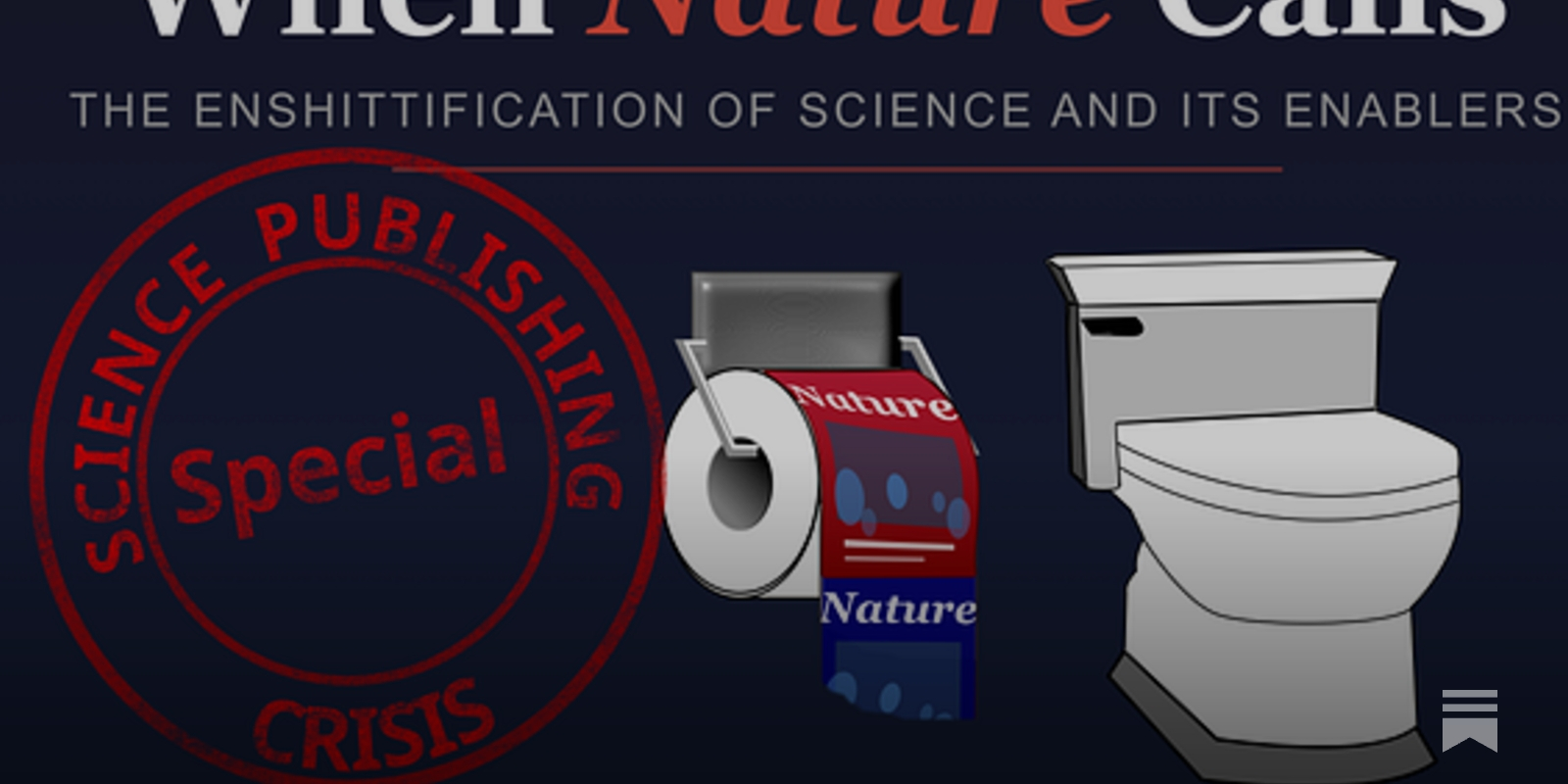
When Nature Calls: The Enshittification of Science and Its Enablers
Proof-of-work papers, policy laundering, and the collapse of self-correction
As Governments Silence War Critics, Writers Pay the Price
Crackdowns on writers during wartime emerged as a key trend in PEN America's 2025 data gathered for the latest annual Freedom to Write Index.

Large Language Muddle | The Editors
The AI upheaval is unique in its ability to metabolize any number of dread-inducing transformations. The university is becoming more corporate, more politically oppressive, and all but hostile to the humanities? Yes — and every student gets their own personal chatbot. The second coming of the Trump Administration has exposed the civic sclerosis of the US body politic? Time to turn the Social Security Administration over to Grok. Climate apocalypse now feels less like a distant terror than a fact of life? In three years, roughly a tenth of US energy demand will come from data centers alone.

AI Safety Is a Narrative Problem · Special Issue 5: Grappling With the Generative AI Revolution
This op-ed explores power and narrative dynamics around AI. Drawing on pop-culture references, the professional experiences of the author and examples from 2023’s “Great AI Safety Hype Roadshow,” this piece draws on the literary criticism technique of practical criticism to consider how speeches and announcements from both Silicon Valley executives and research scientists to interrogate the media-friendly nature of p(doom) discourse—which focuses on the existential risks of AI (PauseAI, 2023)—and its likely consequences. The complexities of AI and its numerous social impacts can be difficult for even the most expert analyst to unpack. In spite of this, the potential of “existential threats” has successfully cut through to become a mainstay of mainstream media coverage over the last year. This piece will make the case that this is an effective narrative conceit that has achieved a number of ends that traditional science communication tends to find difficult, if not impossible, to achieve. Firstly, it is easy to understand. Simplification of this nature—that removes jargon and complexity and focuses on a single outcome—is much easier to fit on a TV rolling news ticker or on the cover of a tabloid newspaper than more well-balanced, representative opinions. Secondly, it inherits prior assumptions from well-known dramatic forms. P(doom) plays to stories familiar from Greek tragedy through to Marvel movies, in which lone male heroes battle ineluctable forces. Thirdly, it is imbued with urgency and so becomes difficult to ignore.

AI Safety Is a Narrative Problem · Special Issue 5: Grappling With the Generative AI Revolution
This op-ed explores power and narrative dynamics around AI. Drawing on pop-culture references, the professional experiences of the author and examples from 2023’s “Great AI Safety Hype Roadshow,” this piece draws on the literary criticism technique of practical criticism to consider how speeches and announcements from both Silicon Valley executives and research scientists to interrogate the media-friendly nature of p(doom) discourse—which focuses on the existential risks of AI (PauseAI, 2023)—and its likely consequences. The complexities of AI and its numerous social impacts can be difficult for even the most expert analyst to unpack. In spite of this, the potential of “existential threats” has successfully cut through to become a mainstay of mainstream media coverage over the last year. This piece will make the case that this is an effective narrative conceit that has achieved a number of ends that traditional science communication tends to find difficult, if not impossible, to achieve. Firstly, it is easy to understand. Simplification of this nature—that removes jargon and complexity and focuses on a single outcome—is much easier to fit on a TV rolling news ticker or on the cover of a tabloid newspaper than more well-balanced, representative opinions. Secondly, it inherits prior assumptions from well-known dramatic forms. P(doom) plays to stories familiar from Greek tragedy through to Marvel movies, in which lone male heroes battle ineluctable forces. Thirdly, it is imbued with urgency and so becomes difficult to ignore.
Are newspaper opinion sections embracing AI-written op-eds?
Outside The Wall Street Journal, it appears not.

Elena Rossini 🌈 (@_elena@mastodon.social)
🚨 New post alert 📝 A deep dive into #WSocial with some fascinating findings: candid statements about their motives, a Greta Thunberg connection, potential AI plans (!!!) Why write about it again? I still had so many questions after publishing my first article. I spent 3 weeks watching every interview I could find and connecting the dots. I hope you'll enjoy this piece: 🔗 : https://blog.elenarossini.com/the-untold-story-about-w-social-unconventional-beginnings-strategic-pitches-conflicting-signals/ #blog #longread #privacy #DataMining #Europe
New York Times Accused of Running AI-Generated Article
People are speculating that an essay published in the New York Times' "Modern Love" was AI-generated. What's definitely real? AI paranoia.