
A levy on individual landholdings worth over $20m could deliver a stamp duty cut for all new houses, enhancing supply and fairness.
Home
Coefficient has directed over $4 billion in grants since 2014. Our mission is to help others as much as we can with the resources available to us.

The Artist Loft: Affordable Housing (for White People)
Do these tax-subsidized apartments perpetuate segregation by excluding some low-income households?

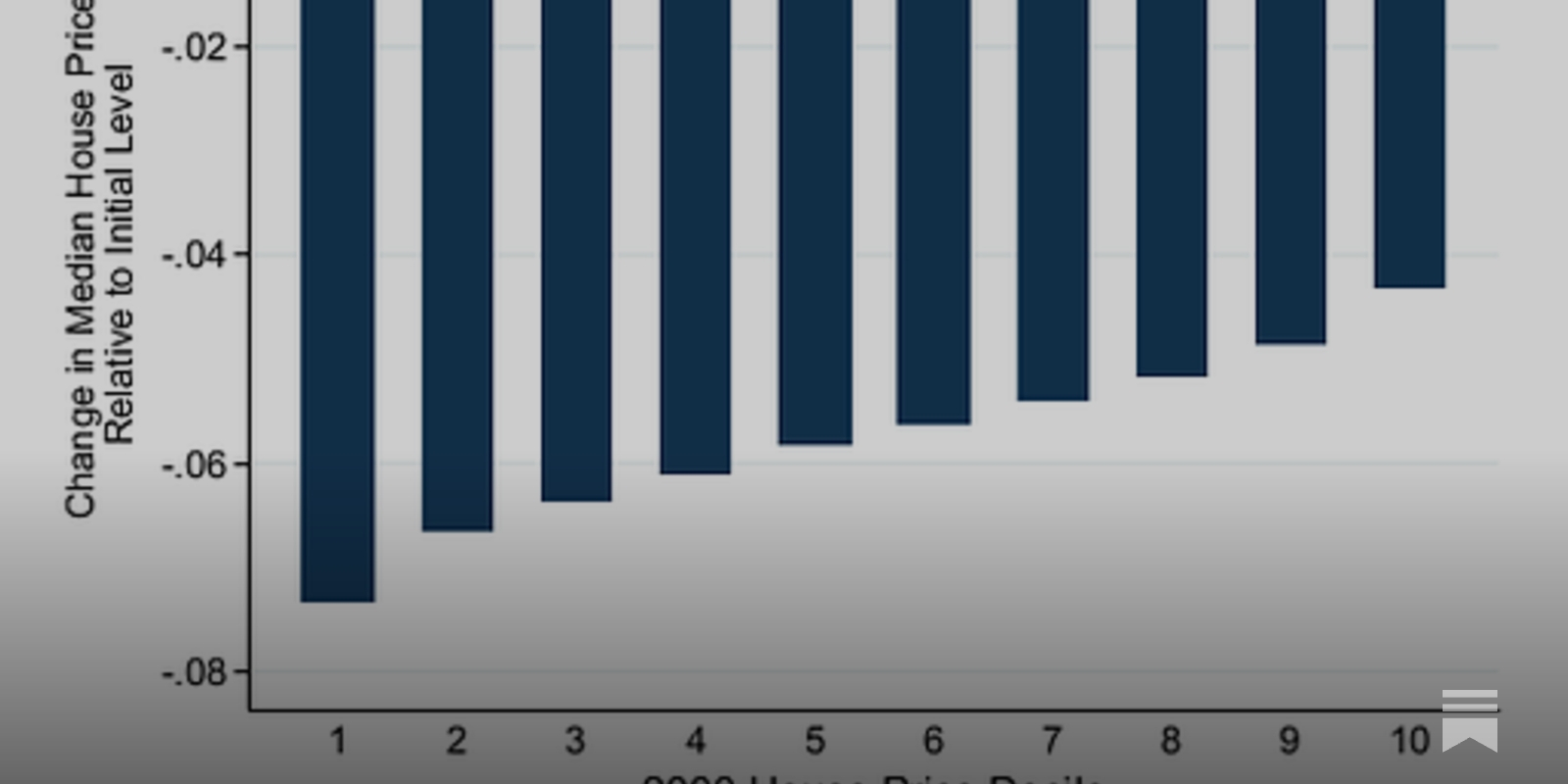
Housing ladder spillovers
Rich newcomers can raise low-end rents, and adding high-end homes can lower them
Funding the Commons | Public Goods Funding
We convene researchers, builders, and institutions to develop the funding mechanisms, governance systems, and coordination tools that public goods need in an age of AI.

Attestation-Based Funding
Continuous capital allocation triggered by verified community support thresholds.
New housing reforms could save more than $40,000 per home
Under Governor Gavin Newsom's new housing affordability reforms, several state housing financing programs will now be brought together under one roof.

The Folk Economics of Housing
Why is housing supply so severely restricted in US cities and suburbs? Urban economists offer two primary hypotheses: homeowner self-interest and political fragmentation. Homeowners, who outnumber and have organizational advantages over renters, are said to lobby against development to protect their property values. The fragmentation hypothesis emphasizes that development's negative externalities are borne locally while most of the benefits accrue regionally or nationally, leading localities to block housing. This paper offers another explanation: ordinary people simply do not believe that adding more housing to the regional stock would reduce housing prices. Across three original surveys of urban and suburban residents, only a minority of respondents say that a large, positive, regional housing supply shock would reduce prices or rents. These beliefs are weakly held and unstable (suggesting people have given the issue little thought), but respondents do have stable views about who is to blame for high housing prices: developers and landlords. Large, bipartisan supermajorities support price controls, demand subsidies, and restrictions on putative bad actors, policies which they believe would be more effective than supply liberalization for widespread affordability. We discuss the implications of these findings for efforts to expand the supply of housing.
Yes, a Land Value Tax Is Possible in Washington State | Sightline Institute
A new report modeling a property tax building exemption in Spokane rebalances incentives toward community goals, encouraging homebuilding and discouraging in-city vacant land speculation.
More Housing is Possible: a National Town Hall · Burhan for State Senate
Join Vice Mayor Burhan Azeem and the people behind the Montana Miracle, California’s SB79, and the ROAD to Housing Act to discuss recent wins and what comes next for the housing movement. Speakers will dig into the policy that's moving the needle, the campaigns and organizing that got us here, and how local leadership can turn big ideas into more homes. Expect sharp takes, lively panels, and the collective brainpower of the country's most effective housing advocates in one (virtual) room.

SCA - News and views from across our networks
Over the last few years, SCVO has been engaging with organisations across the voluntary sector to collect evidence on the issues and barriers faced around access to funding. The evidence collected clearly demonstrates the urgent need for Fair Funding. We, along with many of our intermediary network members have contributed to this work, providing case studies relating to Government priorities as well as sector wide themes, illustrating why implementing Fair Funding is an investment in Scotland’s essential voluntary sector for a sustainable future.
How we raised $3M for an open source project - PostHog
Open source projects have long battled with how to finance themselves. PostHog is lucky to have significant funding and wanted to share what we did…

AI Economics for Dummies
“Xavier owns an apartment that he rents out at a loss of $1 billion/month. Seeing this success, he decides to make financial commitments to construct $850 bi...

Home - FAIR
FAIR.pm is a groundbreaking new way of distributing software from a decentralized group of repositories. Discover, trust, install: FAIR 1.4.1 is here Decentralised WordPress packages are here. The working group for Federated And Independent Repositories is excited to announce its 1.4.1 Release. FAIR’s primary goal is to improve security in the software supply chain while […]

Community wealth building
As the UK’s leading organisation for community wealth building, we work with places to build fairer, more inclusive local economies.
Community Wealth Building — Urban Affairs Review
Scholars of urban politics have long debated the issue of what cities can and should do to promote the economic well-being of their residents. As the of election Zohran Mamdani illustrates, urban residents are increasingly demanding that city governments do more to address the increasingly exorbitant costs of housing, childcare, and transportation. One obvious solution is to raise taxes on the private holders of wealth. By the same token, his election has prompted handwringing on the right about the “inevitable” flight of capital out of New York City. Scholarship that runs the gamut from the public choice school associated with the “city limits” perspective (Peterson 1981) through to Marxian accounts (Logan and Molotch 1987) all recognize that the private ownership of wealth and the mobility of capital puts cities in a bind, especially in a context of highly circumscribed levels of federal urban spending. Though several scholars (Logan and Swanstrom 1990; Kantor and Savitch 1993; Schragger 2016) have demonstrated that cities have greater latitude to promote egalitarian public policies than these perspective allow, few would argue that the deep structural problems of economic and social inequality can be fully resolved by tax-and-spend liberalism (Imbroscio 2010).
Who Pays For Your Rewards? Redistribution in the Credit Card Market
The Federal Reserve Board of Governors in Washington DC.