


(Medical Xpress)—The brain's perception of space can determine whether a part of a body which occupies that space is either healthy or "neglected".
Why liminal spaces are your brain’s secret laboratory
These uncomfortable in-between spaces aren't just inevitable parts of life. They can be a lab for transformation, creativity, and growth.

Extended mind thesis
In philosophy of mind, the extended mind thesis says that the mind does not exclusively reside in the brain or even the body, but extends into the physical world.[1] The thesis proposes that some objects in the external environment can be part of a cognitive process and in that way function as extensions of the mind itself. Examples of such objects are written calculations, a diary, or a personal computer; in general, it concerns objects that store information. The hypothesis considers the mind to encompass every level of cognition, including the physical level.
The brain's 7D sandcastles could be the key to consciousness | New Scientist
We’ve glimpsed mind-bending geometric structures that fleetingly encode our thoughts, memories and feelings – and could solve the greatest mystery of all

Outside the body our memories fail us
New research from Karolinska Institutet and Umeå University demonstrates for the first time that there is a close relationship between body perception and the ability to remember. For us to be able to ...

People Experience 'New Dimensions of Reality' When Dying, Groundbreaking Study Reports - Slashdot
An anonymous reader quotes a report from Motherboard: Scientists have witnessed brain patterns in dying patients that may correlate to commonly reported "near-death" experiences (NDEs) such as lucid visions, out-of-body sensations, a review of one's own life, and other "dimensions of reality," repor...

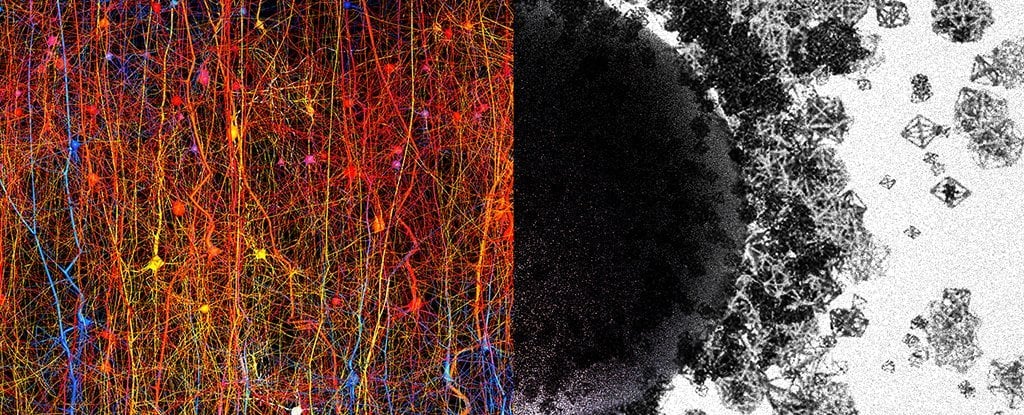
Scientists Find Evidence The Human Brain Can Create Structures in Up to 11 Dimensions
"We found a world that we had never imagined."


The inner screen model of consciousness: applying the free energy principle directly to the study of conscious experience
This paper presents a model of consciousness that follows directly from the free- energy principle (FEP). We first rehearse the classical and quantum formulations of the FEP. In particular, we consider the “inner screen hypothesis” that follows from the quantum information theoretic version of the FEP. We then review applications of the FEP to the known sparse (nested and hierarchical) neuro-anatomy of the brain. We focus on the holographic structure of the brain, and how this structure supports (overt and covert) action.
We have an epidemic of bad posture — @levelsio (Pieter Levels)
What happens if you Google “coworking space”? You see people working hard. I see lots of necks, backs, arms, wrist and hands that will need phyiscal therapy in…

Verbalizable Representations Form a Global Workspace in Language Models
If the mind is an ocean, we spend our lives floating at the surface. Beneath us, an enormous amount of processing takes place without our knowledge: our visual systems parsing the contours of a face, our motor circuits maintaining our posture. At any given moment, only a small fraction of this neural activity is accessible to us. Yet it is this privileged sliver of activity that we rely on to reason deliberately: to plan what ingredients to buy for a recipe, or to puzzle out why an engine won’t start. Such thoughts can be articulated out loud, deliberately held in mind, and brought to bear on whatever task the moment demands. This distinction, between our accessible thoughts and our unconscious processing, is perhaps the most striking feature of human cognition.
Excess Capacity Learning
How do humans learn from experience? Traditionally, cognitive scientists have assumed that discovering generalizable patterns requires that humans compress rich and noisy experiences. However, recent computer science results suggest otherwise — systems can learn by ‘overfitting’ and expanding all the details of their experiences. We offer a new perspective on learning based on a cognitive system’s representational capacity, which can be constrained (forcing the system to compress details of past experiences), sufficient (to memorize past experiences), or excess (allowing the system to expand on the details of past experiences). This framework has implications for understanding learning across cognitive, clinical, and developmental contexts.
The Neuroscience At The Heart Of Learning And Leading
Joshua Freedman (@eqjosh) shares the science behind what's going on inside your head. Emotional intelligence, he says, is the difference that makes the difference. Photo: Flickr/labguest Marco Iacoboni is one of the pioneers in a new area of neuroscience. A few years ago in Parma, Italy, scientists were researching how the brain [...]


