(HealthDay)—Using real-time images of brain connections developing in late-stage fetuses, scientists say they've been able for the first time to compare the order and strength of these connections.
Babies Are Prewired To Perceive the World - Slashdot
In an investigation of neural connectivity in 30 infants ranging from six to 57 days old (with an average age of 27 days), neuroscientists found that circuit wiring precedes, and thus may guide, regional specialization, shedding light on how knowledge systems emerge in the brain. An anonymous reader...

Brainchildren
Minds are complex artifacts, partly biological and partly social; only a unified, multidisciplinary approach will yield a realistic theory of how they came i...
Innate connectivity patterns drive the development of the visual word form area
What determines the functional organization of cortex? One hypothesis is that innate connectivity patterns, either structural or functional connectivity, set up a scaffold upon which functional specialization can later take place. We tested this hypothesis by asking whether the visual word form area (VWFA), an experience-driven region, was already functionally connected to proto language networks in neonates scanned within one week of birth. Using the data from the Human Connectone Project (HCP) and the Developing Human Connectome Project (dHCP), we calculated intrinsic functional connectivity during resting-state functional magnetic resonance imaging (fMRI), and found that neonates showed similar functional connectivity patterns to adults. We observed that (1) language regions connected more strongly with the putative VWFA than other adjacent ventral visual regions that also show foveal bias, and (2) the VWFA connected more strongly with frontotemporal language regions than with regions adjacent to these language regions. These data suggest that the location of the VWFA is earmarked at birth due to its connectivity with the language network, providing evidence that innate connectivity instructs the later refinement of cortex.

Neuroscientists Say They've Found An Entirely New Form of Neural Communication - Slashdot
Scientists think they've identified a previously unknown form of neural communication that self-propagates across brain tissue, and can leap wirelessly from neurons in one section of brain tissue to another -- even if they've been surgically severed. The discovery offers some radical new insights ab...
Open-source software reveals complete 3D architecture of brain cells
The neurons in our brain that underlie thought connect to each other using tiny branch-like structures on their surfaces known as dendritic spines. Now scientists at Columbia's Zuckerman Institute and ...

Stanford scientists discover the human brain may actually be two separate organs
Scientists have found that the human brain develops from two distinct cellular systems, suggesting that evolution fused together two ancient nervous systems with very different jobs. The discovery also allowed researchers to grow human hindbrain neurons in the lab, opening new possibilities for studying ALS, spinal muscular atrophy, and other brainstem diseases.
Adult Human Brains Do Not Produce New Neurons, Study Suggests - Slashdot
Rich Haridy reports via New Atlas: New research from scientists at UC San Francisco is challenging half a century of conventional wisdom by suggesting the human brain may cease producing new neurons beyond childhood. While the divisive study may prove a blow to some research aimed at birthing new n...

Neuroscientists show how neurons respond to sequences of familiar objects
The world grows increasingly more chaotic year after year, and our brains are constantly bombarded with images. A new study from Center for the Neural Basis of Cognition (CNBC), a joint project between ...

Scientists Solve Mystery of Human Brain’s Chandelier Cells | Biology | Sci-News.com
A new study reveals for the first time the birth timing and embryonic origin of elusive brain cells called chandelier cells.

Neurons position their parts for rapid communication
Neurons that talk to each other have proteins that mirror each other.
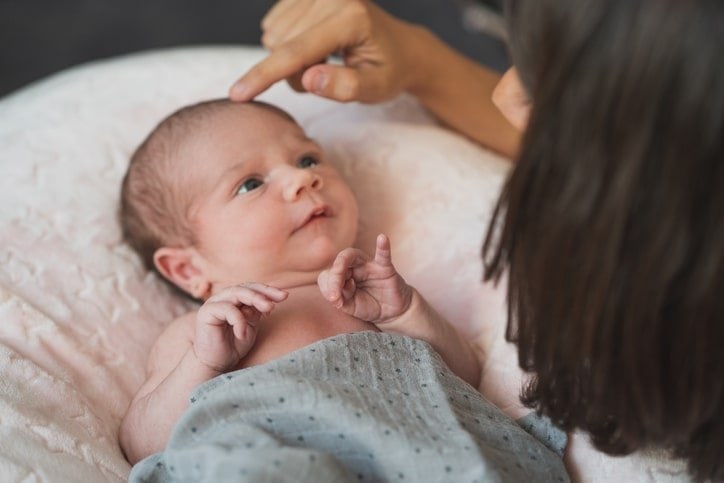
Newborn cognitive development: What are babies thinking and learning?
The newborn brain is busy processing information, searching for patterns, and learning. Here's a fascinating look at newborn cognitive development.
Scientists identify a crucial brain feature connecting genetics to intelligence
A team of neuroscientists has uncovered evidence that genetic influences on intelligence may operate through the density of brain wiring, highlighting a potential biological bridge between inherited DNA differences and the brain structures that support reasoning and problem-solving.
Scientists Find Evidence The Human Brain Can Create Structures in Up to 11 Dimensions
"We found a world that we had never imagined."

The First Map Showing All the Connections in Your Brain's White Matter
Scientists have created the first map of the ways that the white matter in our brains connects with itself, and with our grey matter. The takeaway? It

Brain Hyperconnectivity in Children with Autism and its Links to Social Deficits
In this study, Supekar, Menon, and colleagues shed light on a longstanding question about the nature of brain connectivity aberrations in autism. Using functional neuroimaging data, they demonstrate that the brains of children with autism are hyperconnected in ways that are related to the severity of social impairment exhibited by these children. They replicate these findings in two additional cohorts of children, challenging current theories of brain connectivity in autism and providing unique insights into the brain mechanisms underlying the disorder.

Building a Second Brain: The Definitive Introductory Guide
This is an introduction to Building a Second Brain, the proven method to organize your digital life and unlock your creative potential