


A woman walking down the street hears a bang. Several moments later she discovers her boyfriend, who had been walking ahead of her, has been shot. A month later, the woman checks into the emergency room. ...
In the brain, timing is everything
Study reveals how the brain links memories of events that occur one after the other.

Brain Study Suggests Traumatic Memories Are Processed as Present Experience (Published 2023)
Traumatic memories had their own neural mechanism, brain scans showed, which may help explain their vivid and intrusive nature.

False Memories Can Form Within Seconds, Study Finds - Slashdot
In a new study, scientists found that it's possible for people to form false memories of an event within seconds of it occurring. This almost-immediate misremembering seems to be shaped by our expectations of what should happen, the team says. Gizmodo reports: "This study is unique in two ways, in ...

On the Neuroscience of Travel Memories
Memory has a habit of expunging linear sequences in favor of moments of strong emotion.

To Remember, the Brain Must Actively Forget | Quanta Magazine
Researchers find evidence that neural systems actively remove memories, suggesting that forgetting may be the default mode of the brain.
Mental time travel: a new case of autobiographical hypermnesia
Remembering past events in minute detail, revisiting them methodically, and reliving past emotions—this is the peculiarity of people with an exceptional memory of their own lives, known as autobiographical hypermnesia, or hyperthymesia. This fascinating condition remains poorly understood, and each new case contributes to our understanding. In a recent article in Neurocase, researchers from Paris Brain Institute and the Memory, Brain, and Cognition Laboratory (LMC²) in Paris describe the extraordinary mental life of a 17-year-old girl.
To Make Sense of the Present, Brains May Predict the Future | Quanta Magazine
A controversial theory suggests that perception, motor control, memory and other brain functions all depend on comparisons between ongoing actual experiences and the brain’s modeled expectations.

Outside the body our memories fail us
New research from Karolinska Institutet and Umeå University demonstrates for the first time that there is a close relationship between body perception and the ability to remember. For us to be able to ...

False Memories Can Form Within Seconds, Study Finds
It's not just distant recollections that can fool you.

A Successful Artificial Memory Has Been Created
The growing science of memory manipulation raises social and ethical questions

Long-Term Couples Develop Interconnected Memory Systems
New research from Macquarie University in Australia reveals that intimate couples become part of an interpersonal cognitive system where each is dependent

False memories arise because the brain codes similar ideas similarly
Efficiency In neural storage allows false memories to arise.
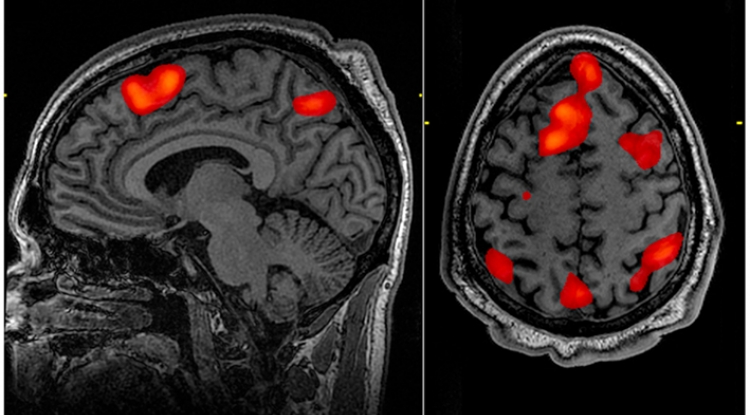
The Brain's Autopilot Mechanism Steers Consciousness
Freud’s notion of a dark, libidinous unconscious is obsolete. A new theory holds that the brain produces a continuous stream of unconscious predictions

Neuroscientists show how neurons respond to sequences of familiar objects
The world grows increasingly more chaotic year after year, and our brains are constantly bombarded with images. A new study from Center for the Neural Basis of Cognition (CNBC), a joint project between ...

The Brain ‘Rotates’ Memories to Save Them From New Sensations | Quanta Magazine
Some populations of neurons simultaneously process sensations and memories. New work shows how the brain rotates those representations to prevent interference.
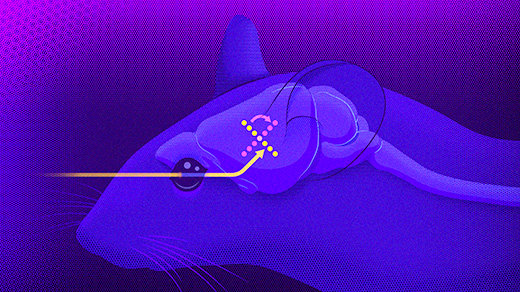
How the brain selectively remembers new places
MIT neuroscientists have discovered how the brain preferentially forms memories of new locations. A small region of the brainstem, known as the locus coeruleus, releases a flood of dopamine in response to novel sensory stimuli, and this dopamine triggers a certain region of the hippocampus to store a memory of the new location.
