


The neurons in our brain that underlie thought connect to each other using tiny branch-like structures on their surfaces known as dendritic spines. Now scientists at Columbia's Zuckerman Institute and ...

Inventing the future: A neuroscience research roadmap
The past decade of transformative advances in neurotechnology portends an exciting future for neuroscience. This NeuroView charts a strategic path to accelerate and integrate research discovery and speed the development of new cures for human brain disorders.

OpenAstrocytes – Forecast Research
Astrocytes make up about a third of the cells in your brain, and form a second, distinct brain network from the more-studied neuronal network. As neuroscience has discovered in only the last few years, the astrocyte network carries out extremely important computations, integrating information from across different brain networks, and using this information to drive feedback to neurons that controls physiological state and maintains long-term homeostasis.
The brain's 7D sandcastles could be the key to consciousness | New Scientist
We’ve glimpsed mind-bending geometric structures that fleetingly encode our thoughts, memories and feelings – and could solve the greatest mystery of all

Massively Scalable Neurotechnologies
Backed by £50m, this programme sits within the Scalable Neural Interfaces opportunity space and is seeking radically new ways to deliver responsive neurotechnologies to the brain without brain surgery.
nubrain - A foundation model for neural decoding
Building the world's largest dataset of human brain activity.

Stanford scientists discover the human brain may actually be two separate organs
Scientists have found that the human brain develops from two distinct cellular systems, suggesting that evolution fused together two ancient nervous systems with very different jobs. The discovery also allowed researchers to grow human hindbrain neurons in the lab, opening new possibilities for studying ALS, spinal muscular atrophy, and other brainstem diseases.
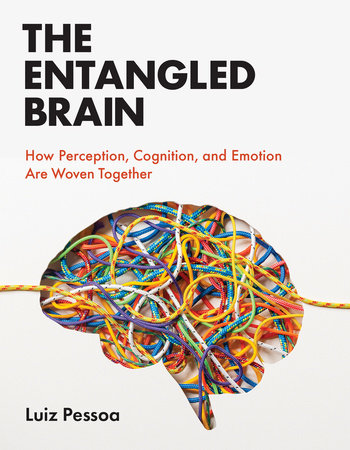
The Entangled Brain: How Perception, Cognition, and Emotion Are Woven Together
A new vision of the brain as a fully integrated, networked organ.Popular neuroscience accounts often focus on specific mind-brain aspects like addiction, c
Introducing TRIBE v2: AI Model Predicts Human Brain Responses | AI at Meta posted on the topic | LinkedIn
Today we're introducing TRIBE v2, a foundation model trained to predict how the human brain responds to almost any sight or sound. Building on our Algonauts 2025 award-winning architecture, TRIBE v2 draws on 500+ hours of fMRI recordings from 700+ people to create a digital twin of neural activity. It enables zero-shot predictions for new subjects, languages, and tasks, consistently outperforming standard modeling approaches. We’re releasing the model, codebase, paper, and an interactive demo to help researchers advance neuroscience, apply brain insights to build better AI, and use computational simulation to speed up breakthroughs in neurological disease diagnosis and treatment. Try the demo and learn more here: https://go.meta.me/tribe2 | 175 comments on LinkedIn
NeuroNYC
As the global leader in finance, policy, art, research, and medicine, the region is well-positioned to lead neurotech. We help foster and promote the local neurotech ecosystem: clinics, companies, funders, labs, and users.

Neuropeek — Accelerating the Neuro-AI convergence
Where brain data becomes shared knowledge. A community-driven platform federating neuroscience datasets, models, and tools to accelerate discovery.

The Global Brain Argument: Nodes, Computroniums and the Ai Megasystem (Target Paper for Special Issue)
The Global Brain Argument contends that many of us are, or will be, part of a global brain network that includes both biological and artificial intelligences (AIs), such as generative AIs ...

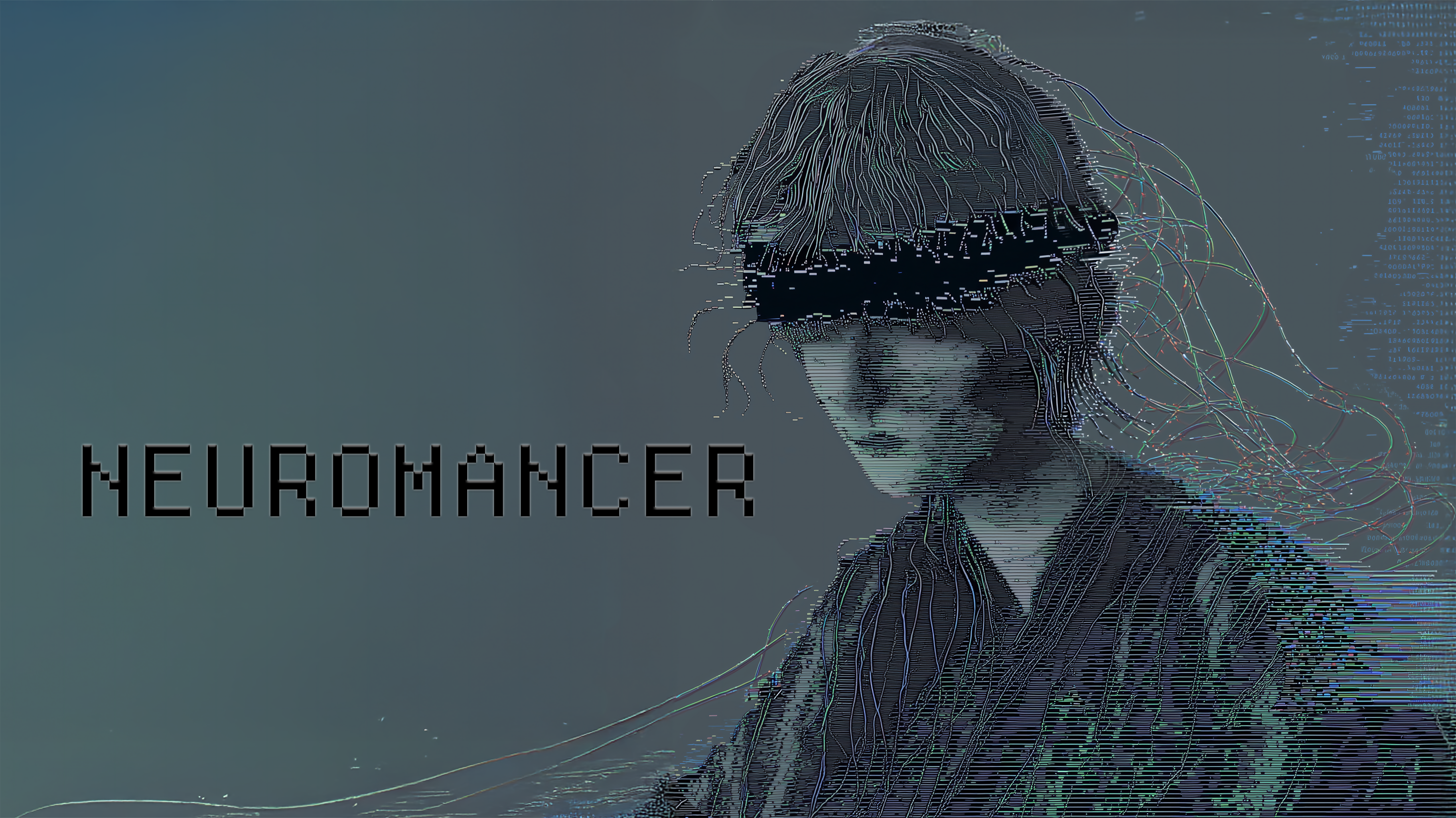
Plastic Labs Releases Neuromancer XR
NEUROMANCER: The first collection of models dedicated to AI-native memory and social cognition.
E11 Bio | Moonshot Neuroscience
An FRO building scalable single-cell brain circuit mapping.

1. New preprint resolving a conundrum in systems neuroscience with an AI scientist, and humans Reilly Tilbury, Dabin Kwon, @haydari.bsky.social, @jacobmratliff.bsky.social, @bio-emergent.bsky.social, @carandinilab.net, @kevinjmiller.bsky.social, @neurokim.bsky.social biorxiv.org/content/10.1101/2025.11.12.68…

Characterizing neuronal population geometry with AI equation discovery
www.biorxiv.org