


Billions of people in developing nations are still largely held captive to a restricted, low quality, and expensive local financial…

Seeing like a state: how certain schemes to improve the human condition have failed
Compulsory ujamaa villages in Tanzania, collectivizatio…

Cheap drones, costly consequences: the legal and humanitarian risks and outcomes of low-tech drone warfare
The article examines the recent and rapid proliferation of cheap, unsophisticated “kamikaze” drones, as well as the legal and moral challenges they present in modern warfare. As countries increasin...

The Limits to Growth: A report for the Club of Rome's project on the predicament of mankind
"I do not wish to seem overdramatic, but I can only conclude from the information that is available to me as Secretary–General, that the Members of the United Nations have perhaps ten years left in which to subordinate their ancient quarrels and launch a global partnership to curb the arms race, to improve the human environment, to defuse the population explosion, and to supply the required momentum to development efforts. If such a global partnership is not forged within the next decade, then I very much fear that the problems I have mentioned will have reached such staggering proportions that they will be beyond our capacity to control."
The New Gulf War: Epic Fubar Goes Global
Why there is much more at stake here than rising prices

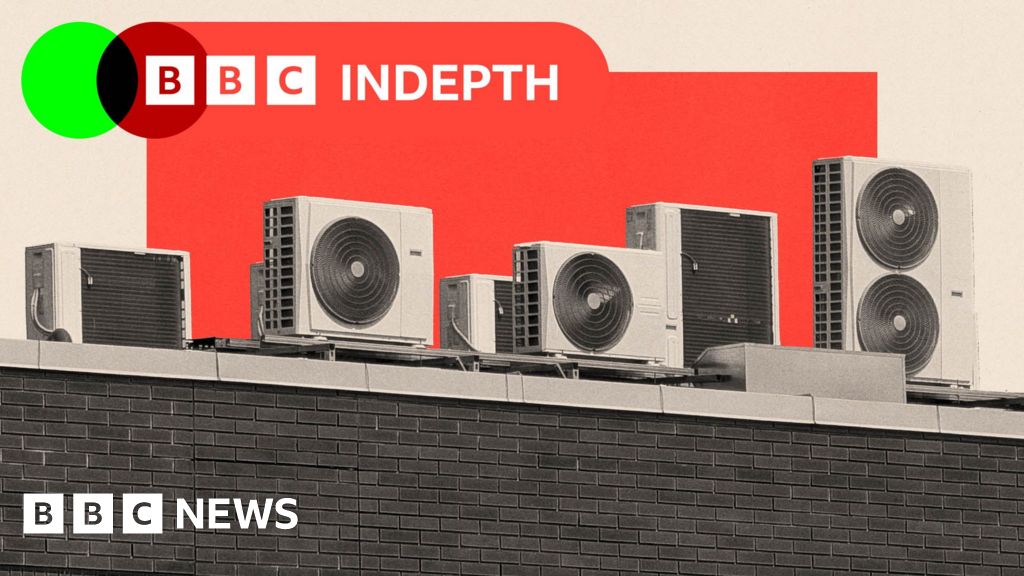
How the UK's extreme heat is shifting the conversation about air-con
Should we embrace air conditioning despite its costs and consequences?
Open social tech and geopolitical risk - ATmosphereConf 2026
Aeropolis – Queering Air in Toxicpolluted Worlds
Check out Aeropolis – Queering Air in Toxicpolluted Worlds - How do we get to know air? <i>Aeropolis: Queering Air in Toxicpolluted Worlds</i> offers a speculative and interdisciplinary framework to reorient common understandings of air and air pollution as matter “out there.” <i>Aeropolis</i> contests regimes of managing air which ultimately operate toward upholding dominant modes of world-making that are dependent on forms of exclusion and inequity. Instead, <i>Aeropolis</i> proposes that air is thought of as a city, to center its social, cultural, political, ecological entanglements. Drawing upon feminist technoscience and queer ecological frameworks, <i>Aeropolis</i> moves away from solutions toward a methodology of “designing-thinking-making” that redirects and connects our understandings of air—as designers, as citizens—with ongoing struggles for just futures. <br /><br />Moving through a series of design interventions, histories of air, and theoretical coordinates, <i>Aeropolis</i> thinks with air across its many forms—through smog and dust, bodies and breath, pollen and weeds, and from urban design to geopolitics, polluted environments to open data, parks to aerial infrastructures. It insists that we acknowledge the diversity of air and its relation to humans, non-humans, and environments, both physically and affectively. That we become sensible to air by following its unruliness—by living, breathing, seeing, holding, touching, queering airs.<br /><br />With contributions from María Puig de la Bellacasa and Timothy K. Choy. by Nerea Calvillo on Bookshop.org UK!

The Economics of Sovereign Media: A Roadmap for AT Protocol - ATmosphereConf 2026
The Economics of Sovereign Media: A Roadmap for AT Protocol - ATmosphereConf 2026
Exocapitalism: economies with absolutely no limits
There is a touch of destiny with this one. We have real…

Capitalism, Inequality, and the Myth of Catch-Up Development
Prevailing narratives in international development hold that poorer countries can and will "catch-up" with richer countries through the process of
Early on in my time here I was sketching out a Bandcamp alternative hosted on the ATmosphere. The necessary affordances weren't there to make the market work (private data), but there was also not a way to get funding to build it because there is no moat or ROI. The data model is open, competition

Ted Han★ 韓聖安
I've been talking about this for months with others. SaaS products built around data moats are not a thing in the Atmosphere. The whole point is that users data should not be enclosed. This is a space that requires other types of business models.
