


As simple encouragement to act, “ask forgiveness, not permission” is fair enough. But here are 4 reasons to signal your intentions:
Ask for no, don’t ask for yes – Dan Moore!
I think it is important to have a bias for action. Like anything else, this is something you can make a habit of. Moving forward allows you to make progress. I don’t know about you, but I’ve frozen up in the past not knowing what the right path was for me. Moving forward, even the smallest possible step, helped break that stasis.
You Don't Owe Anyone An Interaction
Will some people have hurt feelings if you decline their invitations and delete their messages? Probably. That's tough to accept, but the alternative is worse. Trying to manage other people's emotions while tuning out your own is exhausting. It harms your health and your relationships.

How to say you’re sorry
“We apologize for any inconvenience this may have caused” is absolutely not the way. There’s never really a great way to say you’re sorry, but there are plenty of terrible ways. One of the worst wa…


Ever Wanted to Get Revenge? Try This Instead (Published 2018)
You know that “letting go” is probably the healthiest move, but wanting revenge is often much more appealing. But why?

Self-guaranteeing promises
A self-guaranteeing promise is verifiable and non-reversible. It does not require you to trust anyone.
Please Don’t Take Moral Advice from ChatGPT
Before turning to a large language model for ethical counsel, consider what makes for good advice

Refusing to Be the Victim – How to Adopt a “Player” Mindset at Work
You can’t expect others to fix your problems. When you take responsibility for making the best of any situation, you have the power to make things better.

Against Empathy
Most people see the benefits of empathy as too obvious to require justification.

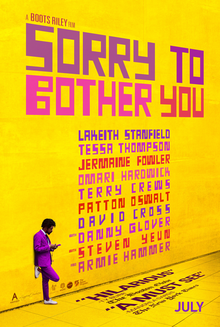
Sorry to Bother You
Sorry to Bother You is a 2018 American science fiction black comedy film written and directed by musician Boots Riley in his directorial debut. It stars LaKeith Stanfield, Tessa Thompson, Jermaine Fowler, Omari Hardwick, Terry Crews, Patton Oswalt, David Cross, Danny Glover, Steven Yeun, and Armie Hammer. The film follows a young African-American telemarketer who adopts a "white voice" to succeed at his job, after which he is swept into a corporate conspiracy and must choose between chasing profit or joining his activist friends who are attempting to unionize.
Intention, control, and the feeling of commitment
In this paper we propose that rational control of action, agentive stability over time, and coordinated social behavior, are assisted by a form of metacognitive monitoring, leading to an aspect of conscious experience: a feeling of commitment. This feeling of commitment is attached to the formation, retrieval, and execution of intentions. The metacognitive monitoring that produces it is sensitive to the importance of intentions. And the feeling of commitment facilitates the stability and effectiveness of intentions across individual and social contexts, strengthens goal shielding, biases intention retrieval, and thus structures prospective deliberation, expression of intention, and execution of intention. In section two, we discuss control, which is a central aspect of agency and action. In section three, we discuss a crucial part of control: intention. We also discuss a crucial part of intention: commitment. In section four we relate the commitment involved in intention with definitions of commitment in the literature. In section five we offer and elucidate our hypothesis.

Morally Motivated Networked Harassment as Normative Reinforcement
While online harassment is recognized as a significant problem, most scholarship focuses on descriptions of harassment and its effects. We lack explanations of why people engage in online harassment beyond simple bias or dislike. This article puts forth an explanatory model where networked harassment on social media functions as a mechanism to enforce social order. Drawing from examples of networked harassment taken from qualitative interviews with people who have experienced harassment ( n = 28) and Trust & Safety workers at social platforms ( n = 9), the article builds on Brady, Crockett, and Bavel’s model of moral contagion to explore how moral outrage is used to justify networked harassment on social media. In morally motivated networked harassment, a member of a social network or online community accuses a target of violating their network’s norms, triggering moral outrage. Network members send harassing messages to the target, reinforcing their adherence to the norm and signaling network membership. Frequently, harassment results in the accused self-censoring and thus regulates speech on social media. Neither platforms nor legal regulations protect against this form of harassment. This model explains why people participate in networked harassment and suggests possible interventions to decrease its prevalence.

It's easy to default to inaction when the path is unclear but you have to remember that inaction is itself an action. Refusal to make a decision [now] becomes the choice you make. #noteToSelf

