(By Ethan and Chand Rajendra-Nicolucci of the Knight First Amendment Institute at Columbia University)
Improving social media for democratic discourse
Social media have expanded opportunities for communication and political participation, but today's dominant platforms are optimized primarily for engagement and advertising revenue, contributing...

Platform Wars (part 4): A Public Option for Social Media
Welcome to StateBook.
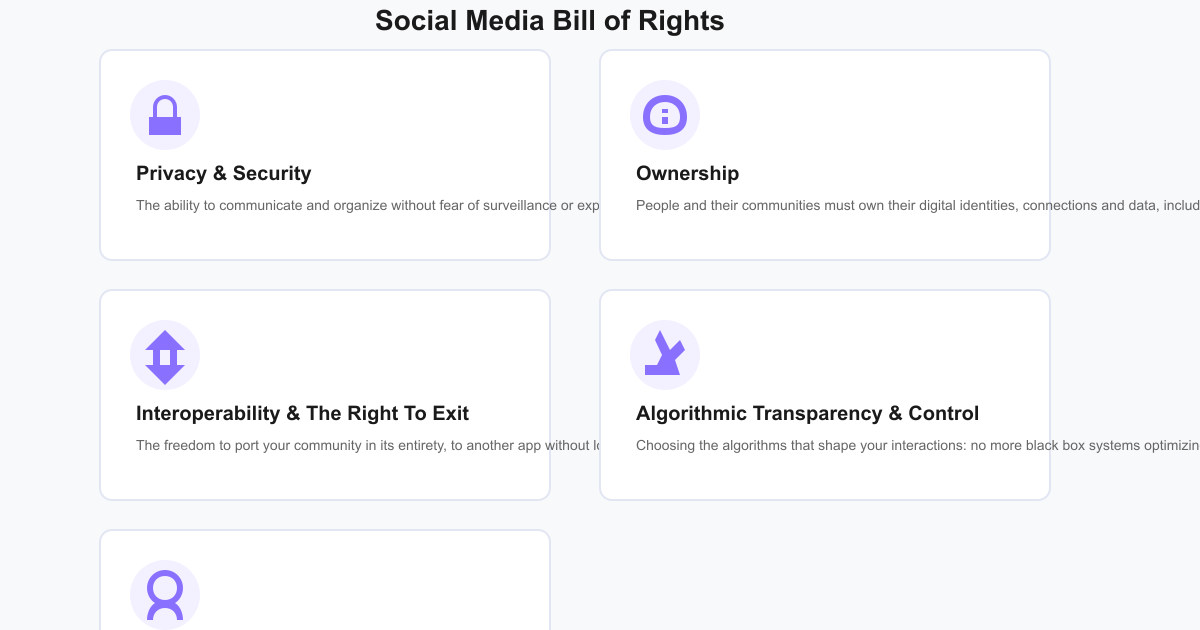
Declaration of Social Media Rights
Five fundamental rights we need for a free, open, and humane social media ecosystem
Shifts in U.S. Social Media Use, 2020–2024: Decline, Fragmentation, and Enduring Polarization
The social media ecosystem appears to be in flux. Twitter’s rebranding to X has come to symbolize a broader reorganization of online publics – political reshuffling, user attrition, and uncertainty over the role of legacy platforms. Simultaneously, the shift from text-based, networked feeds toward algorithmically curated, short-form video has accelerated, with TikTok setting the pace for the wider ecosystem [18, 14, 16]. At the same time, everyday communication increasingly migrates from large, open networks to semi-private spaces such as group chats and messaging apps. Commentators describe a digital public sphere in transition: smaller, more fragmented, less dominated by traditional social networking sites, and rise of more broadcast-oriented forms of media – with some even suggesting that we are seeing the beginning of the end of the social media era.
Social Media Is Now Parasocial Media
When practitioners used the term “social media” to describe the internet tools that emerged in the mid-aughts, they were giving a name to the kinds of platforms and protocols that allowed people to socialize with friends and communities of interest by using digital technologies. Twenty years later, users of social media are far more likely to scroll than post – and the content that they consume is often strategically produced and algorithmically curated. In this essay, I argue that the very essence of social media has changed. To more effectively interrogate what we are witnessing, we need to stop presuming that these tools are “social media” and begin recognizing that they are now “parasocial media.” Doing so raises new questions about digitally mediated sociality, not to mention the politics and governance of these platforms.

Framing to Grow the Open Social Web and Serve Democratic Freedoms – Position Paper / Richard Reisman
Framing to Grow the Open Social Web and Serve Democratic Freedoms – Position Paper Richard Reisman (Discussion Draft 2/13/26) For FediForum Un-Workshop March 2, 2026 Growing the usage and functionality of the social web to meet the needs of humanity requires a broadened framing of the task and ...

Top 100: The most popular social media platforms and what they can teach us
After seven essays in our Mapping Social Media series, we wanted to take a step back and evaluate our work so far. We thought a good way to do this would be to construct a list of the top 100 most popular social media platforms (a harder task than you might think!) and see what we could learn from it using the analytical framework we’ve developed over the course of this series. We also examined our analytical framework itself, comparing it to existing frameworks and exploring where it worked and where it fell short.

Empowering Users, Not Overlords: Overcoming Digital Helplessness
Disclosure: I’m on the board of Bluesky, so feel free to take as many grains of salt as you want in reading it, though all of it applies equally to other decentralized social media ecosys…

FediForum | Growing the Open Social Web un-workshop, 2026/03/02
Whose Global Village — Ramesh Srinivasan
In the digital age, technology has shrunk the physical world into a “global village,” where we all seem to be connected as an online community as information travels to the farthest reaches of the planet with the click of a mouse. Yet from the US election, to the growth of the alt-right movement, to the Dakota pipeline to the question of ISIS, we also have begun to recognize how incredibly disconnected we are at the same time, occupying various bubbles and self-selected communities.While we think of platforms such as Twitter and Facebook as open and accessible to all, in reality, these are commercial entities developed primarily by and for the Western world. Considering how new technologies increasingly shape labor, economics, and politics, these tools often reinforce the inequalities of globalization, rarely reflecting the perspectives of those at the bottom of the digital divide.
New report on alternative social media
Exploring a transition to alternative social media platforms for social justice organizations in the Majority World
Tech and Liberty
The First Amendment is not about a law, but rather a culture — specifically a culture of liberty. It is essential to tech, and in this context, Facebook is mostly right about political ads (but can…

Social Media Effects: Hijacking Democracy and Civility in Civic Engagement
Perceived as an equalizing force for disenfranchised individuals without a voice, the importance of social networks as agents of change cannot be ignored. However, in some societies, social networks have evolved into a platform for fake news and propaganda, empowering disruptive voices, ideologies, and messages. Social networks such as Twitter, Facebook, and Google hold the potential to alter civic engagement, thus essentially hijacking democracy, by influencing individuals toward a particular way of thinking.

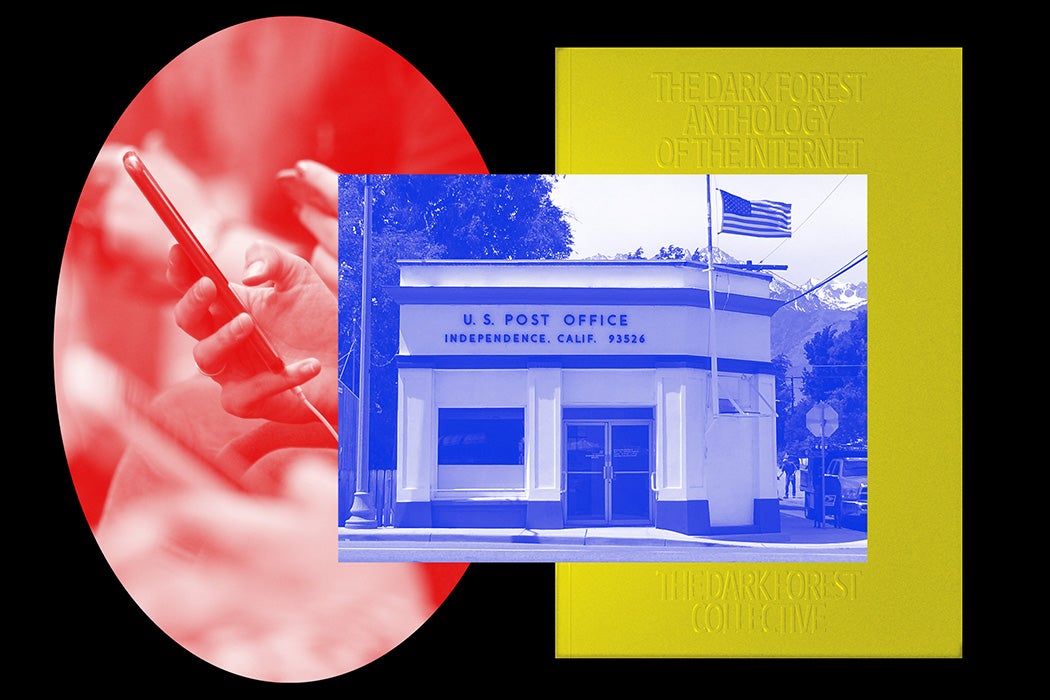
The Case for a Public Social Media Platform - JSTOR Daily
Artist and writer Joshua Citarella explores why corporate platforms corrode democracy—and what a postal-service-style digital commons could do differently.
Hello, Social Web 👋🏼
Our mission is to liberate people's networks from their platforms, enabling The Last Network Effect and leveling the playing field across the open social web.