Battling Unconscious Bias in the Workplace

Holacracy: a red herring in the quest for leadership
Does Holacracy liberate employees from the shackles of traditional management structures so they can perform like entrepreneurial leaders? Well, for me the answer’s a definite no. It’s a paradox that for Holacracy to succeed employees need a leadership mindset. But if they have that mindset in the first place they don’t actually need Holacracy. Let’s […]


The Holacracy Community of Practice is now the Self-Management Accelerator | Holacracy
A new identity for a new direction A new identity for a new direction


How Couples Share "Cognitive Labor" and Why it Matters - Behavioral Scientist
Cognitive labor is unevenly distributed between men and women in households. New research shows there’s nuance to this breakdown, with implications for how we address gender equality across society.

Autopsy of a Failed Holacracy: Lessons in Justice, Equity, and Self-Management | Nonprofit Quarterly | Civic News. Empowering Nonprofits. Advancing Justice.
As many nonprofits look at the enormous potential benefits of building shared leadership in and around their organizations, they will surely stumble across the holacracy model, but does it offer a real path forward? In this article, a veteran of one change process intelligently critiques the model, providing guidance on what other organizations may wish to avoid. This is the first of a 3-part series on shared leadership we will run over the coming month.

Beyond the Holacracy Hype
Most observers who have written about holacracy and other forms of self-management take extreme positions, either celebrating these “bossless,” “flat” work environments for fostering flexibility and engagement or denouncing them as naive experiments that ignore how things really get done. To gain a more accurate, balanced perspective, the authors—drawing on examples from Zappos, Morning Star, and other companies—examine why these structures have evolved and how they operate, both in the trenches and at the level of enterprise strategy and policy. Self-organization models typically share three characteristics: Teams are the structure. Within them, individual “roles” are collectively defined and assigned to accomplish the work. Teams design and govern themselves, while nested within a larger structure. Leadership is contextual. It’s distributed among roles, not individuals, and responsibilities shift according to fit and as the work changes. Adopting self-management wholesale—using it to determine what should be done, who should do it, and how people will be rewarded across an entire enterprise—is hard, uncertain work, and the authors argue that in many environments it won’t pay off. But their research and experience also suggest that elements of self-organization can be valuable tools for companies of all kinds, and they look at circumstances where it makes more sense to blend the new approaches with traditional models.

Digitalisation and the Remaking of the Ideal Worker
The ideal worker concept, typified by an unencumbered male, continues to influence workplace norms, despite a more gender-mixed workforce. This article examines whether this concept is being disrupted or reproduced as digitalisation becomes increasingly embedded in the workplace. Based on qualitative research in two professional services firms, the analysis shows how the ideal worker themes of work prioritisation and presenteeism have been maintained but adapted. Significantly, the study reveals how the novel dimension of connectedness is reshaping the ideal worker norm as enhanced digitalisation becomes interwoven in social relations. This has modified informal expectations about how, when and where work is performed, altering work organisation. This reconfiguration may in principle broaden scope for conformity with the ideal worker model, but in practice the heightened intrusion of work demands on personal time and into domestic space potentially works against gender equality.
Distinction Bias: Why You Make Terrible Life Choices
Worried about a cognitive bias like confirmation bias or hyperbolic discounting screwing you up? Watch out for distinction bias.
Researchers uncover AI bias against older working women
AI is perpetuating inaccurate gender and age stereotypes, influencing everything from hiring practices to workplace perceptions.

Holacracy and 3 of the Other Craziest Management Practices Around | Fortune
These companies pride themselves on managing a little differently that most.
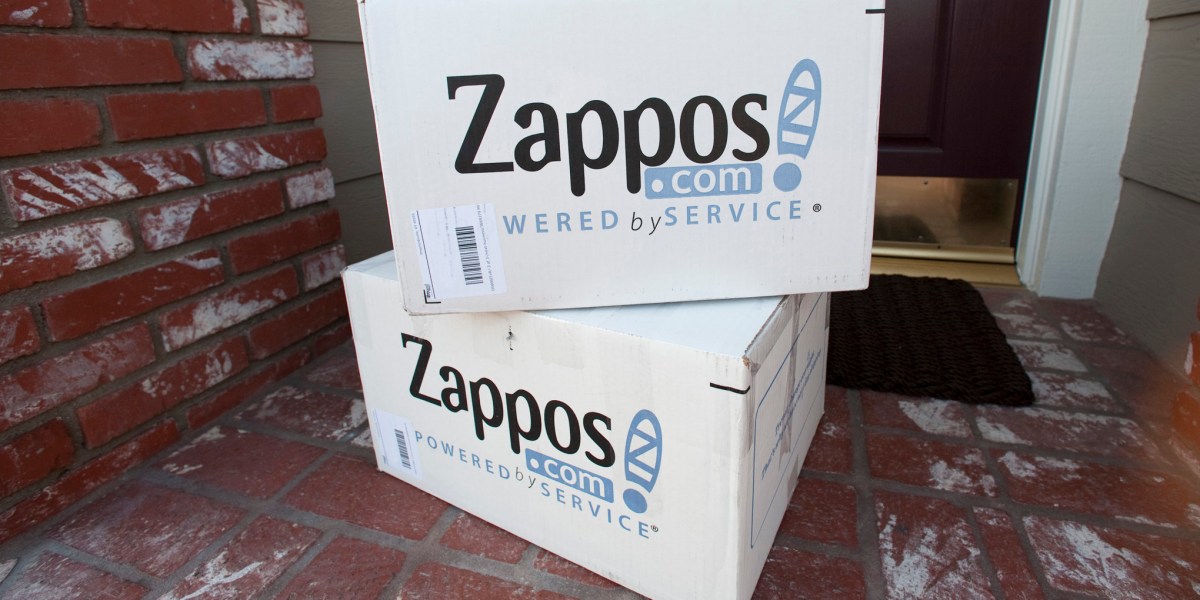
Holacracy, Zappos and Employment Law (LMFTFY)
Holacracy is a non-hierarchical management philosophy that is getting a lot of attention these days. As readers might know, Zappos recently adopted this ideology, famously eliminating bosses and j…

If you rise, I fall: Equality is prevented by the misperception that it harms advantaged groups
Nine preregistered studies ( n = 4197) demonstrate that advantaged group members misperceive equality as necessarily harming their access to resources and inequality as necessarily benefitting them. Only when equality is increased within their ingroup, instead of between groups, do advantaged group members accurately perceive it as unharmful. Misperceptions persist when equality-enhancing policies offer broad benefits to society or when resources, and resource access, are unlimited. A longitudinal survey of the 2020 U.S. voters reveals that harm perceptions predict voting against actual equality-enhancing policies, more so than voters’ political and egalitarian beliefs. Finally two novel-groups experiments reveal that advantaged participants’ harm misperceptions predict voting for inequality-enhancing policies that financially hurt them and against equality-enhancing policies that financially benefit them. Misperceptions persist even after an intervention to improve decision-making. This misperception that equality is necessarily zero-sum may explain why inequality prevails even as it incurs societal costs that harm everyone. , Advantaged groups misperceive equality as harming their resource access, which predicts voting against equality policies.

Egalitarians are more aware of inequality
Some of our disagreements about inequality come from people's failure to notice it.

Stanford professor: "The workplace is killing people and nobody cares" - Fast Company
From the disappearance of good health insurance to the psychological effects of long hours, the modern workplace is taking its toll on all of us.