


From time to time in human societies, things get so bad with the governments that we set up that we have to take a step back, stop being…
Grow like Trees: An Organic Approach to Societal Regrowth
2026 is the year that system breakdown became impossible to deny. Democratic norms, societal norms, rule of law, the fabric of the social contract tearing as we watch. Or hide, unwilling or unable to face the unravelling. The hopeful among us see opportunity through the dark. Tentatively or boldly we

Building on the Fight Oligarchy Tour: It’s Time to Reboot America
A Call for a Big-Tent Movement
The Future History of America and the World to 2050
The introduction to a positive and plausible scenario about how we could solve our many challenges and transform our world for the better

A Systems Literacy Manifesto
In 1968, West Churchman wrote, “…there is a good deal of turmoil about the manner in which our society is run. …the citizen has begun to suspect that the people who make major decisions that affect our lives don’t know what they are doing.”[1] Churchman was writing at a time of growing concern about war, civil rights, and the environment. Almost fifty years later, these concerns remain, and we have more reason than ever “to suspect that the people who make major decisions that affect our lives don’t know what they are doing.” Examples abound.
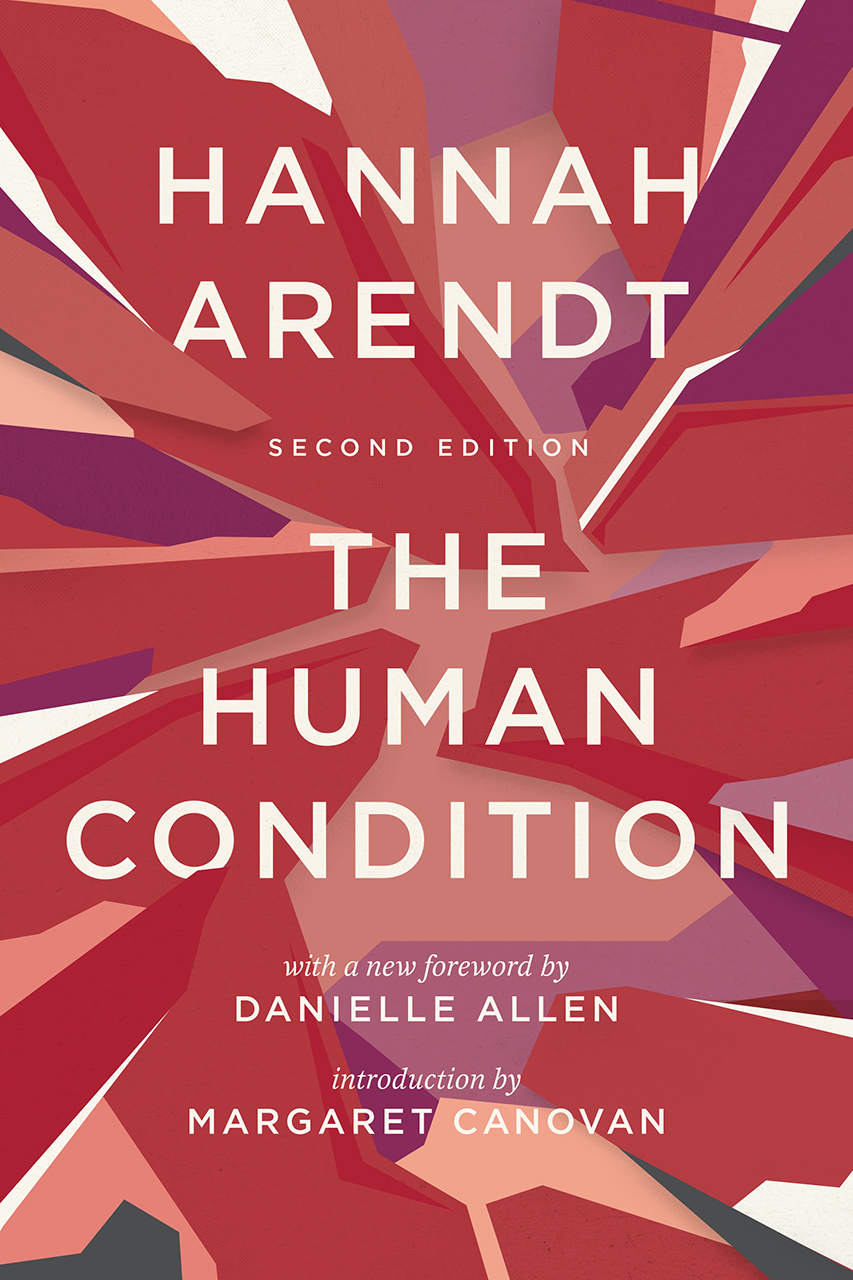
The Human Condition: Second Edition
A classic work of political thought, more relevant today than ever The twenty-first century has seen a resurgence of interest in the political thinker Hannah Arendt, “the theorist of beginnings,” whose work probes the logics underlying unexpected transformations—from totalitarianism to revolution. A work of striking originality, The Human Condition is in many respects more relevant now than when it first appeared in 1958. In her study of the state of modern humanity, Hannah Arendt considers humankind from the perspective of the actions of which it is capable. The problems Arendt identified then—diminishing human agency and political freedom, the paradox that as human powers increase through technological and humanistic inquiry, we are less equipped to control the consequences of our actions—continue to confront us today. This new edition, published to coincide with the sixtieth anniversary of its original publication, contains Margaret Canovan’s 1998 introduction and a new foreword by Danielle Allen. A classic in political and social theory, The Human Condition is a work that has proved both timeless and perpetually timely.
To Change Everything, an anarchist appeal
The case for complete self-determination—a guide for the furious, the curious, and the pure of heart

A Manifesto for a Future Philosophy (guest post) - Daily Nous
“This project of re-envisaging, looking at past ideas, and developing new ones to deal with our difficult situation will take the work of many people…” […]
Preface | The World After Capital
Since publishing the previous version of The World After Capital, I have met with people across the political spectrum to discuss the ideas from the book. When I present these in person, I emphasize that the ideas are neither left nor right but forward (credit to Scott Santens who first used this phrase about Universal Basic Income). My writing, however, at times has alienated readers who identify as being more on the right. In this new edition, I am therefore making an extra effort to emphasize how both my diagnosis of where we are at and my suggestions for how to move forward do not map onto the existing political divides. Instead this is a new way of understanding our challenges and opportunities that can be the basis for movements and parties that are not trapped in Industrial Age ideology.
Voluptuous Disintegration: A Future History of Black Computational Thought
I really think that I know that Americans now are simply overwhelmed; like what is happening, what can we do. Everybody's tendency is understandably to try to take care of yourself; cover your back, make sure you have a house, a door for the key. I say that as understandable as that is, it seems to me that we cannot afford to divorce ourselves from what is happening in South Africa, for example, or for that matter, what is happening in West Germany, or Poland any more than the Reagan administration divides these issues. I think that the Reagan Administration and people in that; they see everything in global terms. From Brooklyn to Angola is not a big jump for them at all. I think that unless we, the people, begin to think in the same way, to make these connections, really on a visceral level, I feel for the survival of the species [Jordan 1981]
The Great Realignment: Why the New Right Is Here to Stay
The re-election of Donald Trump has illustrated in spectacular fashion the extent to which politics all over the world is in a state of continual flux. Old political configurations and parties are under unprecedented strain, with new forces, particularly on the hard right, challenging the status quo everywhere. Rejecting stale analyses based on moralistic panics about 'populism' or social media, political commentator Steve Davies shows how we are going through a deep-seated process of realignment rooted in underlying structural trends. We are transitioning, he argues, from an era where the key political division was over the economic structure of society to one where the primary division is between a vision rooted in national identity and sovereignty, and an essentially post-national cosmopolitanism. This change upends the ideological and electoral alliances that have structured our political systems for decades. No-one who wishes to truly understand the crises currently roiling the political status quo can afford to miss this stunning panoramic analysis of how this process works and how it is playing out across the world, from the USA and Germany to Argentina and India, and beyond.
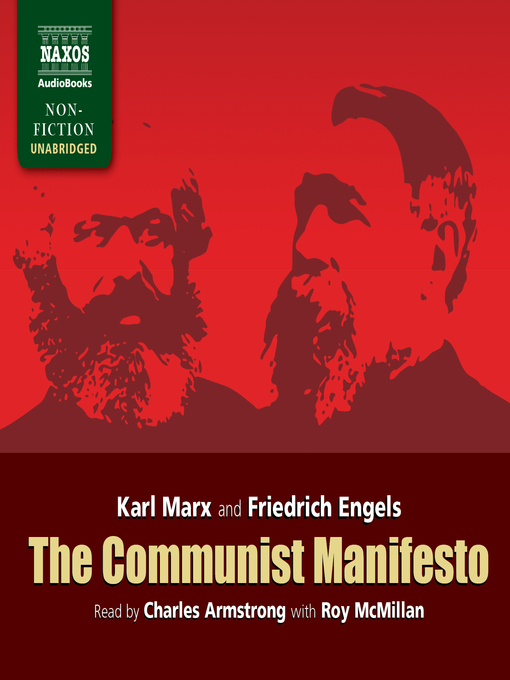
The Communist Manifesto
Without question one of the most significant books in modern history, The Communist Manifesto is a brief, populist pamphlet that distils the core ideas of Communism into accessible prose. Published just months before violent uprisings threatened to destabilise much of the European establishment, it outlines a view of history as a constant battle between the classes that will inevitably result in revolution. An ang...
Hyperpolitics: Extreme Politicization without Political Consequences
POLITICS AFTER THE END OF THE END OF HISTORYWhat happens when politics is everywhere, yet nothing seems to change? From the abandoned dance floors of Thatcher’s London to the mass mobilizations of Black Lives Matter, Anton Jäger traces how public life has become infused with protest, spectacle, and moral urgency — while the old infrastructure of parties, unions, and civic solidarity has been hollowed out.Hyperpolitics revisits the illusions of the “end of history” and dissects the strange energies that replaced them: viral outrage, endless culture wars, and the digital rush of causes that flare and vanish overnight. Jäger shows how the promises of post–Cold War liberalism gave way to a restless, unsteady public sphere where private passions overflow into politics but rarely build enduring power.Ranging from Guy Debord and Wolfgang Tillmans to Houellebecq’s disenchanted fictions, Hyperpolitics makes sense of a world in which collective action remains fragmented and the social fabric thinner than ever. For anyone trying to grasp why our age feels so charged yet so inconsequential, this book offers a vital map through the new contradictions of our hyperpolitical moment.
Why I Didn’t Sign the Resonant Computing Manifesto: The Foundations Need Work
The Resonant Computing Manifesto speaks to humane tech, but its foundations don't address issues of power, accountability, and community. I wrote this to name what’s missing and suggest commitments that would give this manifesto teeth.

Broken Assumptions of Governance
Before we can really tackle building next generation governance, we may have to shake up some of the assumptions holding us back. After…

Democracy, Sovereignty, and the Throne Speech That Wasn’t
We have to go back to go forward. Our power to do that is shrinking.

Keep coming back to the idea that—ideally—the Atmosphere ultimately wants to become something like a public utility. But obviously not an American public utility. But also not a European one, nor one belonging to any conventional state. A new type of thing entirely—a global public utility.
