TL;DR — Empathy is the most important skill you can practice. It will lead to greater success personally and professionally and will allow…
Opinion | To Make the World Better, Think Small (Published 2016)
It is easy to become numb to suffering. Feeling empathy for individual victims can overcome the numbness.

Practicing with Language Models Cultivates Human Empathic Communication
Empathy is central to human connection, yet people often struggle to express it effectively. In blinded evaluations, large language models (LLMs) generate responses that are often judged more empathic than human-written ones. Yet when a response is attributed to AI, recipients feel less heard than when comparable responses are attributed to a human. We built a conversation platform in which participants are asked to offer empathic support to an LLM expressing realistic troubles and conducted a randomized experiment collecting 33,938 messages spanning 2,904 text-based conversations between 968 participants and their LLM conversational partners. We find participants report feeling empathy but systematically fail to express it, but an LLM coaching intervention offering personalized feedback on effective empathic communication significantly boosts it without homogenizing participants' responses. Moreover, we derive a data-driven taxonomy of idiomatic empathic expressions in naturalistic dialogues across personal and workplace trouble scenarios. These results advance the scientific understanding of how empathy is expressed and demonstrate a scalable, AI-based intervention for scaffolding and cultivating it.

Against Empathy
Most people see the benefits of empathy as too obvious to require justification.

The Empathy Paradox
Understanding The Empathy Paradox can transform relationships by enabling you to appreciate differing perspectives and foster collaboration.

The empathy paradox
There’s an image of empathy we all know that is beautiful: the fullness of completely understanding someone else, the symbolic walk in shoes that are not one’s own. The knowledge that someone else can share a pain so acute that would otherwise seem unbearably solitary. It’s an image inherent to empathy’s definition, an image many believe in wholeheartedly. Several studies conducted by Stanford researchers alone suggest people are motivated to feel empathy, that empathy is highly associated with social desirability, that it is as beneficial as it is admired.
It’s Not Enough to Be Right. You Also Have to Be Kind.
Takedowns and clever quips are easy, but empathy and persuasion are better
Empathy, Thick and Thin
When we empathize with someone going through something, we often draw on our past experiences with the someone and the something. These kinds of experiences gro

Why Tacit Knowledge is More Important Than Deliberate Practice
What tacit knowledge is, and why it is the most interesting topic in the study of expertise today.

Copying Better: How To Acquire The Tacit Knowledge of Experts
Much of expertise is tacit: that is, it cannot be captured through words alone. We look at techniques, drawn from the field of Naturalistic Decision Making, designed to acquire the tacit knowledge of experts.

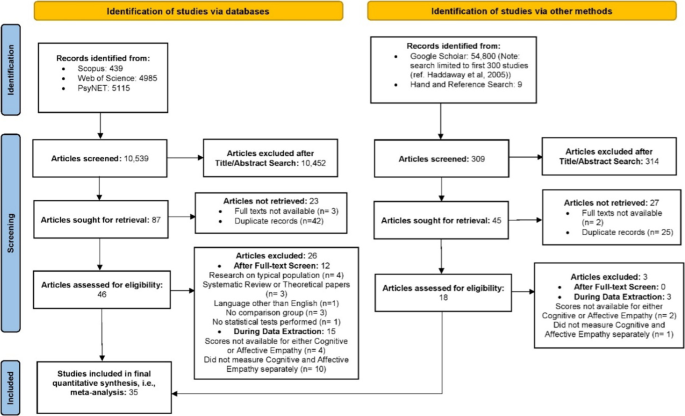
Cognitive and Affective Empathy in Autism Spectrum Disorders: A Meta-analysis
Research has consistently shown that individuals with Autism Spectrum Disorder (ASD) exhibit Empathy deficits. The aim of this study was to systematically review and meta-analyze the research conducted in the domain of cognitive and affective Empathy in Autism. The author also attempted to see the influence of moderators, such as age, culture, and measure-used, on the effect sizes. To fulfill the objective, the meta-analysis was performed on 35 studies that fulfilled the inclusion criteria with the help of the Meta-essentials, which is a free excel meta-analysis tool that facilitates the integration of effect sizes from various studies. The results indicated that the ASD group differs significantly from typically developing (TD) group in both cognitive and affective empathy. The effect size for cognitive empathy was very large (1.26), whereas, for affective empathy, the effect size was medium (0.58). Further, there was a significant moderating effect of the type of measure used on cognitive empathy. However, there are a few limitations of the present meta-analysis. Firstly, it does not shed light on how symptom severity in Autism influences empathy. Secondly, all the possible moderating variables influencing empathy could not be considered. Lastly, the generalizability of the findings may be limited owing to the limitations present in the included studies themselves. The present meta-analysis has implications for conceptualizing cognitive and affective empathy appropriately, and developing appropriate measures to assess empathy in the Autism population.
‘It’s the most empathetic voice in my life’: How AI is transforming the lives of neurodivergent people
AI tools like ChatGPT are helping neurodivergent users communicate more clearly and confidently — though some experts warn that overreliance could come at a cost.

How to Deliver Constructive Feedback in Difficult Situations
Thoughtful, empathetic language can make or break your business relationships

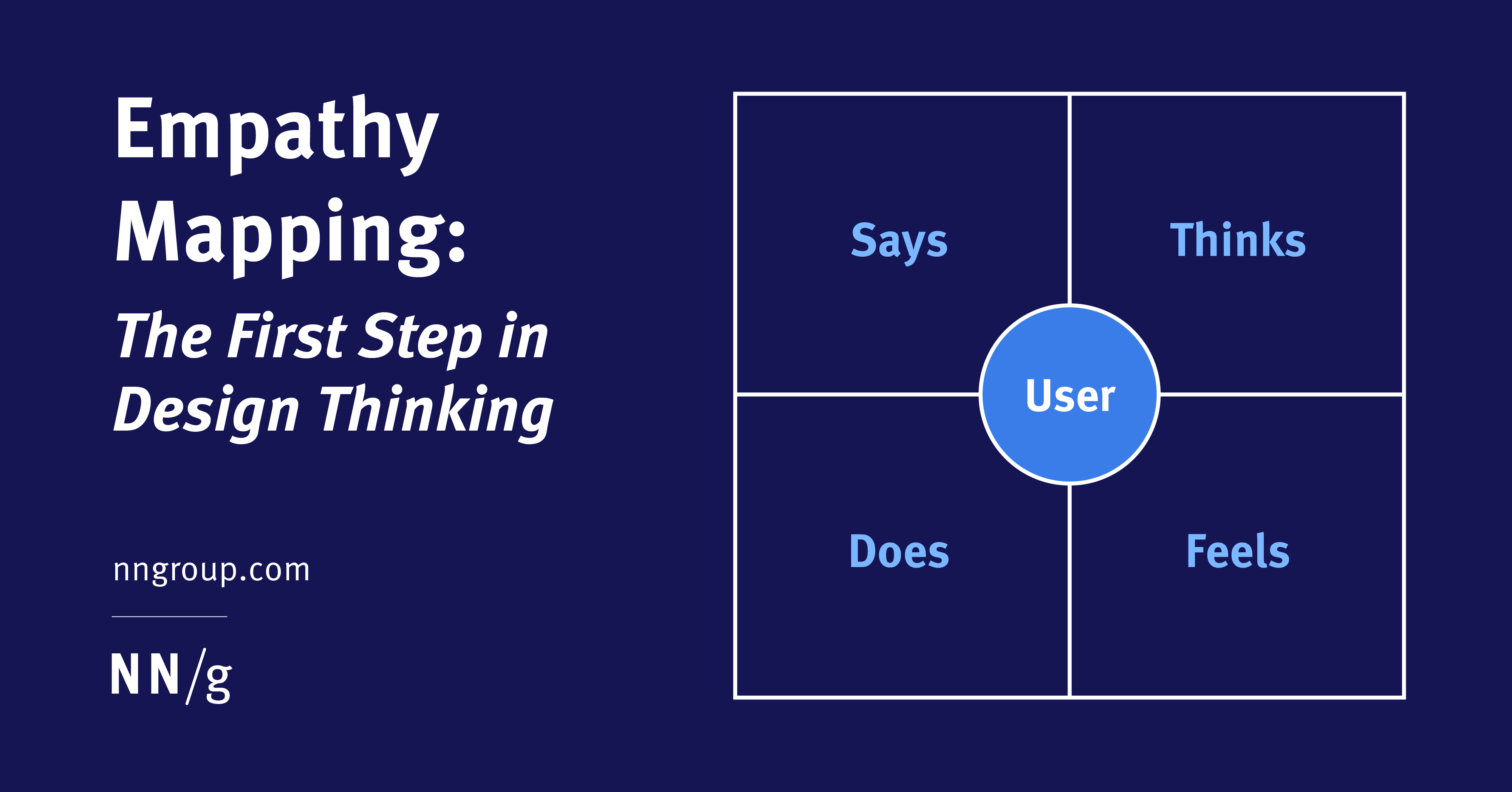
Empathy Mapping: The First Step in Design Thinking
Visualizing user attitudes and behaviors in an empathy map helps UX teams align on a deep understanding of end users.