


tl;dr: Either developers need to change, or GitHub needs to change
It’s time to rethink Open Source
Why developers give away valuable work for free — and what can be done to take that money back.

I hate the term “open source”
It doesn’t accurately reflect how people are building today anymore.

The Missing Middle of Open Source
Why serious, maintainer-driven projects struggle to sustain themselves—and what it will take to fix it.

I Don’t Want to Know What “Open Source” Means
I am he as you are he as you are me and we are all on GitHub.


The Few, the Tired, the Open Source Coders
The open source movement runs on the heroic efforts of not enough people doing too much work. They need help.

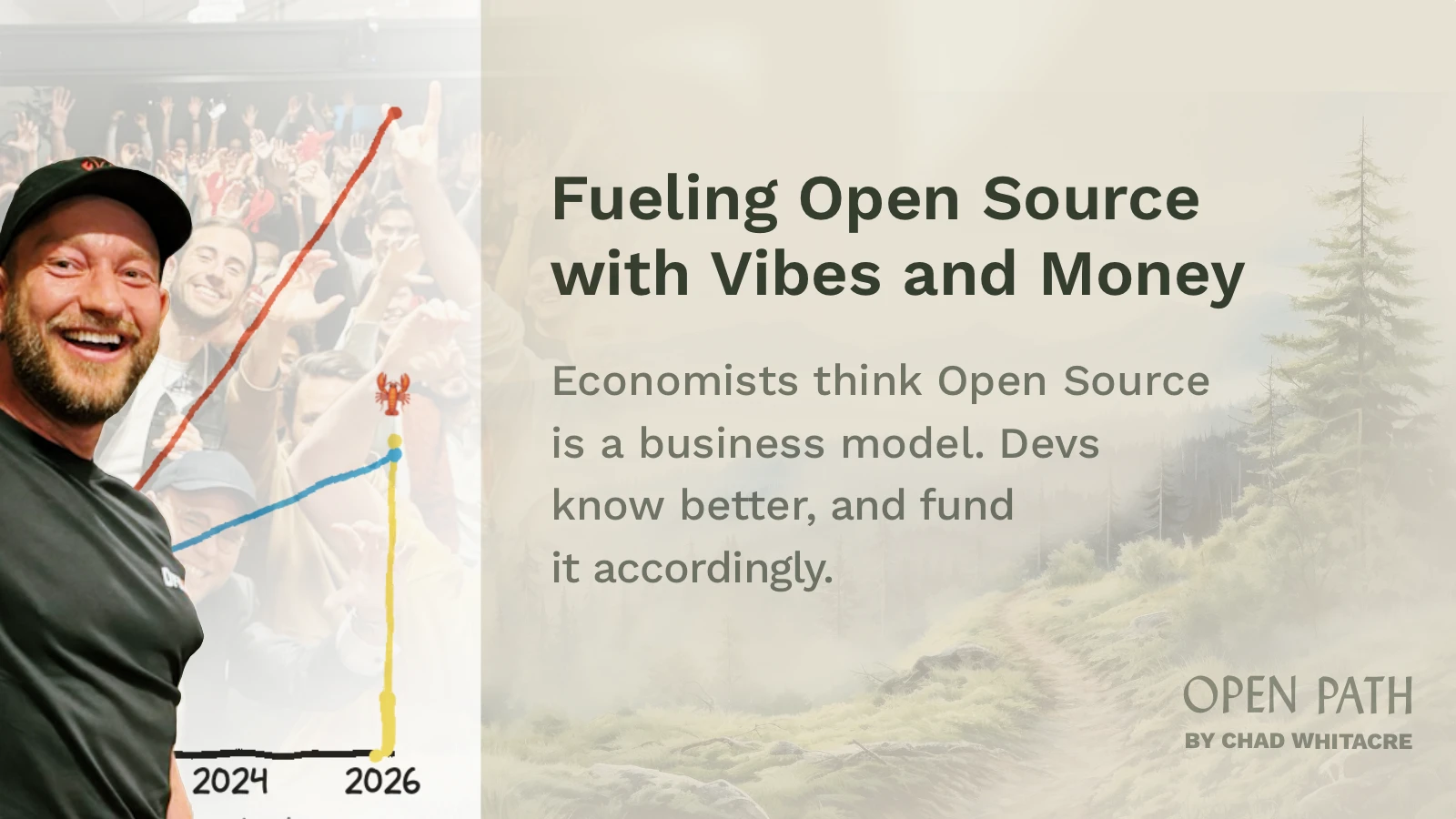
Fueling Open Source with Vibes & Money
Economists think Open Source is a business model. Devs know better, and fund it accordingly.
Open Source is a cost-allocation system
Because the right to use the software is not tied to payment, the license does not connect the people who benefit, the people who decide, and the people who bear the costs. Projects have to build those connections deliberately through governance.

A method for giving credit to organizations that contribute code to Open Source
By tracking organizational contributions in Git commits, we can give organizations more tangible reasons to fund open source and help sustain it over time.
Moving beyond the charity framework
A healthy ecosystem for supporting open source in the long term.

More Money For Better Open-Source Software
When Free Software Isn't (Practically) Superior - GNU Project - Free Software Foundation
The Open Source Initiative's mission statement reads, “Open source is a development method for software that harnesses the power of distributed peer review and transparency of process. The promise of open source is better quality, higher reliability, more flexibility, lower cost, and an end to predatory vendor lock-in.”