


How the Current State of Design is Simply a Digitally Updated Status Quo
Design thinking was supposed to fix the world. Where did it go wrong?
An approach that promised to democratize design may have done the opposite.

“Design Thinking”: Defending Silicon Valley at the Apex of Global Labor Hierarchies
This paper examines the emergence of “design thinking” as a form of technical expertise. It demonstrates that “design thinking” articulates a racialized understanding of labor, judgment, and the subject and attempts to maintain whiteness at the apex of global hierarchies of labor.“Design thinking” is a form of expertise that poses design not as form giving, but as a form of empathic reason by which executives can plan products, services, and accumulation. Silicon Valley, business schools, and reformers promote it as a form of caring technical expertise by which some guide futures for others. The paper will examine the history of the concept of “design thinking” – a category forged by Silicon Valley designers in the face of mounting competitive pressures on design professions in the United States in the mid-2000s. By drawing on artifacts, documents, public debates about the design profession from this period, I will demonstrate how champions of “design thinking” responded to expanded availability of design labor globally by figuring Asians and machines as the creative subject's Other.

Why Design Thinking is bullshit
For the fifth consecutive year, It’s Nice That has media partnered with Design Indaba. We will be delivering news, interviews and insight live and direct from each day of the three-day conference in Cape Town. The event will be live broadcast via simulcast to a number of South African cities allowing each presentation to resonate around the country.

On Design Thinking | Maggie Gram
By embracing “design thinking,” we attribute to design a kind of superior epistemology: a way of knowing, of “solving,” that is better than the old and local and blue-collar and municipal and unionized and customary ways. We bring in “design thinkers” — some of them designers by trade, many of them members of adjacent knowledge fields — to “empathize” with Kaiser hospital nurses, Gainesville city workers, church leaders, young mothers, and guerrilla fighters the world over.

Designs for the pluriverse: radical interdependence, autonomy, and the making of worlds
"Arturo Escobar presents a new vision of design theory by arguing for the creation of what he calls 'autonomous design'--a design practice aimed at channeling design's world-making capacity toward ways of being and doing that are deeply attuned to justice and the Earth"--Publisher description

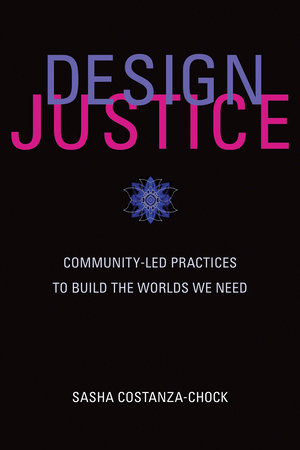
Design Justice: Community-Led Practices to Build the Worlds We Need
An exploration of how design might be led by marginalized communities, dismantle structural inequality, and advance collective liberation and ecological survival. What is the relationship between design, power, and social justice? “Design justice” is an approach to design that is led by marginalized communities and that aims expilcitly to challenge, rather than reproduce, structural inequalities. It has emerged from a growing community of designers in various fields who work closely with social movements and community-based organizations around the world. This book explores the theory and practice of design justice, demonstrates how universalist design principles and practices erase certain groups of people—specifically, those who are intersectionally disadvantaged or multiply burdened under the matrix of domination (white supremacist heteropatriarchy, ableism, capitalism, and settler colonialism)—and invites readers to “build a better world, a world where many worlds fit; linked worlds of collective liberation and ecological sustainability.” Along the way, the book documents a multitude of real-world community-led design practices, each grounded in a particular social movement. Design Justice goes beyond recent calls for design for good, user-centered design, and employment diversity in the technology and design professions; it connects design to larger struggles for collective liberation and ecological survival. The open access edition of this book was made possible by generous funding from Knowledge Unlatched and the MIT Press Frank Urbanowski Memorial Fund.
Why we must reclaim digital sovereignty
A new white paper envisions a radically different technological future
Design: A Happening Life
"When life is happening, design has meaning, and every design we encounter strengthens our recognition of the value of being alive."

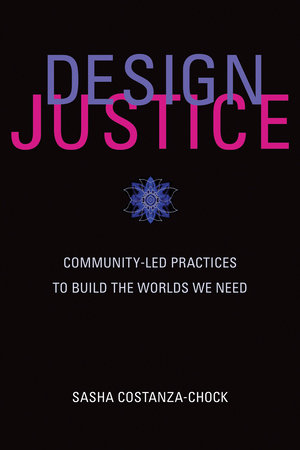
Design Justice: Community-Led Practices to Build the Worlds We Need
An exploration of how design might be led by marginalized communities, dismantle structural inequality, and advance collective liberation and ecological su
Design Thinking by IDEO: Human-Centered Innovation
Learn how IDEO uses design thinking to help teams solve complex problems through human-centered innovation, creativity, collaboration, and impact.

New Design Congress (@newdesigncongress@mastodon.world)
4 Posts, 7 Following, 128 Followers · An independent research group confronting the gap between what is said to be happening and what is actually happening in digitised societies.

Design Thinking
In the past, design has most often occurred fairly far downstream in the development process and has focused on making new products aesthetically attractive or enhancing brand perception through smart, evocative advertising. Today, as innovation’s terrain expands to encompass human-centered processes and services as well as products, companies are asking designers to create ideas rather than to simply dress them up. Brown, the CEO and president of the innovation and design firm IDEO, is a leading proponent of design thinking—a method of meeting people’s needs and desires in a technologically feasible and strategically viable way. In this article he offers several intriguing examples of the discipline at work. One involves a collaboration between frontline employees from health care provider Kaiser Permanente and Brown’s firm to reengineer nursing-staff shift changes at four Kaiser hospitals. Close observation of actual shift changes, combined with brainstorming and rapid prototyping, produced new procedures and software that radically streamlined information exchange between shifts. The result was more time for nursing, better-informed patient care, and a happier nursing staff. Another involves the Japanese bicycle components manufacturer Shimano, which worked with IDEO to learn why 90% of American adults don’t ride bikes. The interdisciplinary project team discovered that intimidating retail experiences, the complexity and cost of sophisticated bikes, and the danger of cycling on heavily trafficked roads had overshadowed people’s happy memories of childhood biking. So the team created a brand concept—“Coasting”—to describe a whole new category of biking and developed new in-store retailing strategies, a public relations campaign to identify safe places to cycle, and a reference design to inspire designers at the companies that went on to manufacture Coasting bikes. [hbr_brightcove id=”4443548301001″]

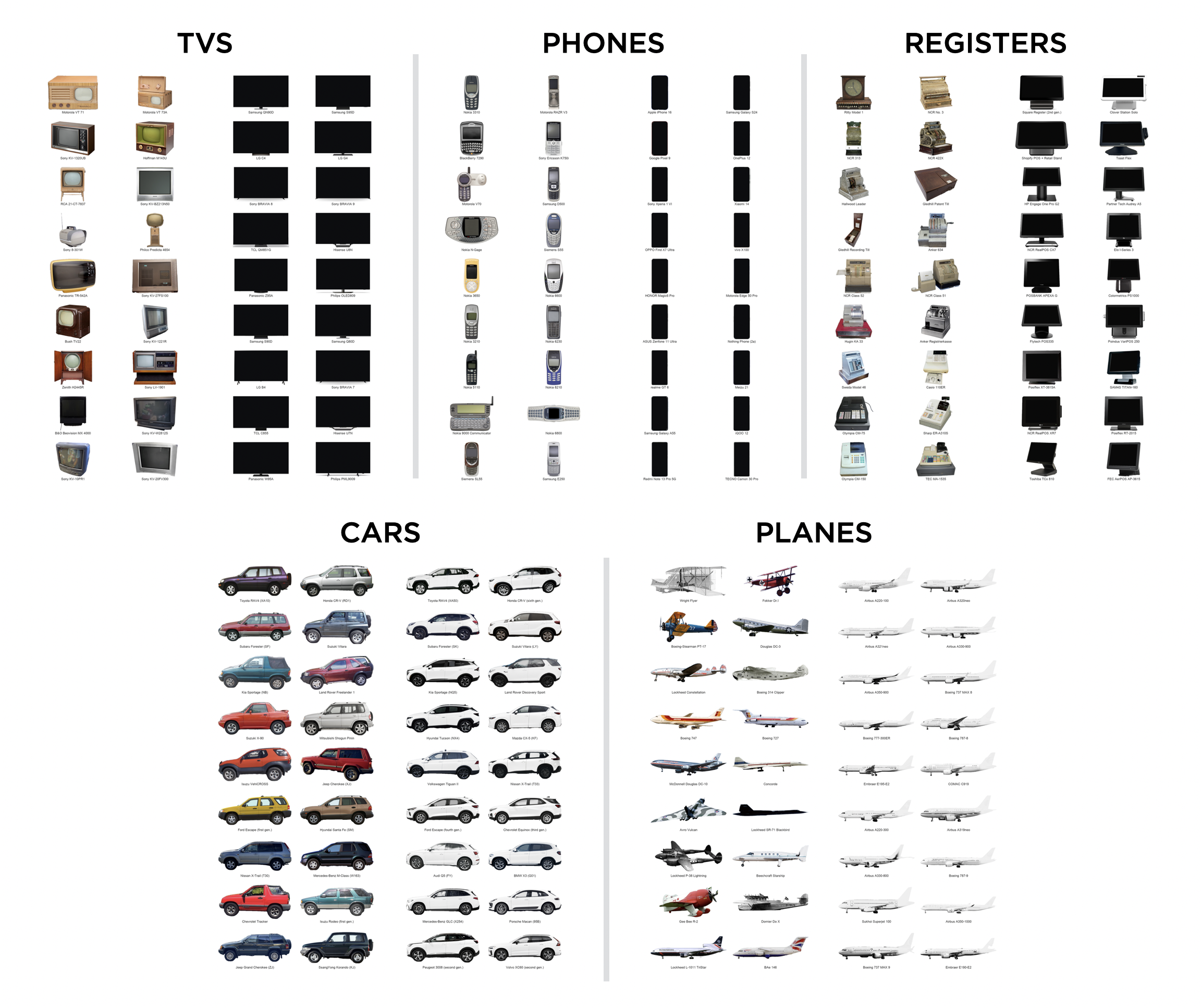
LukeW | The Convergence of Design
After seeing lots of posts over the years arguing that design has become homogenized, I decided to pull together historical and modern designs for a few differe...
DARK GOTHIC MAGA: How Tech Billionaires Plan to Destroy America