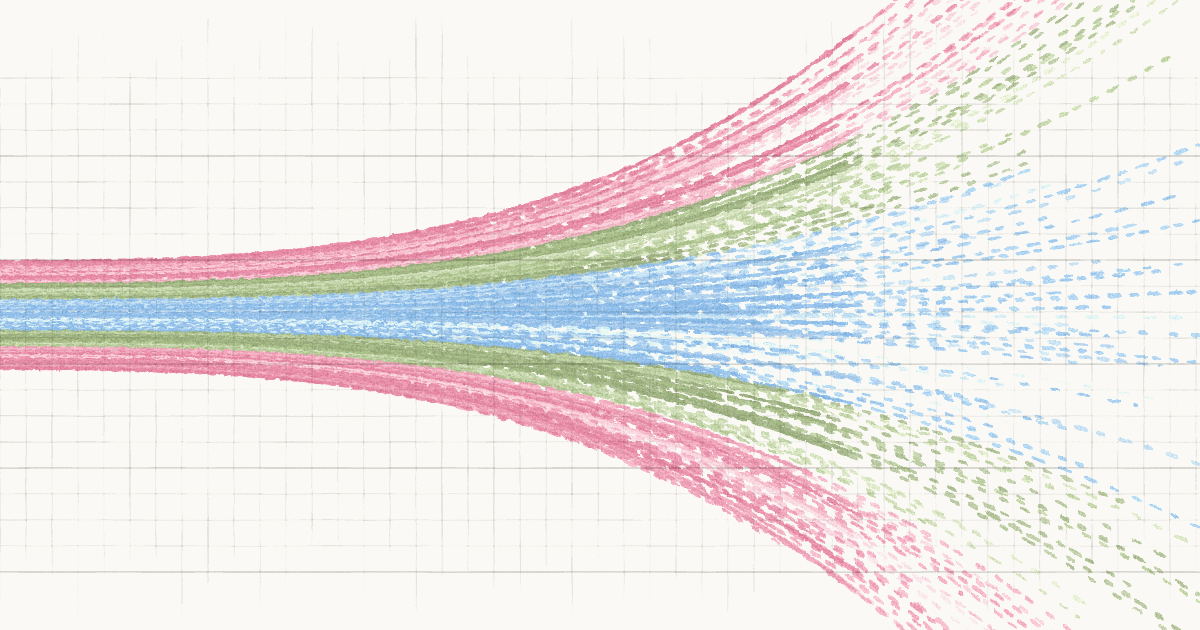
In the future, companies will help us use the techniques of behavioral economics to manipulate ourselves…and we will pay them to do so for…
Opinion | Why Is Behavioral Economics So Popular? (Published 2018)
The recent vogue for this academic field is in part a triumph of marketing.

Pay Enough or Don't Pay at All*
Abstract. Economists usually assume that monetary incentives improve performance, and psychologists claim that the opposite may happen. We present and disc

The economics of agents - Marginal REVOLUTION
From Patrick Collison: Assorted things I’ve been mulling over regarding agents in the economy: • Companies are in some sense the original superintelligence. It’s often the case that they can use their amortized cognitive surplus to advance their interests against those of certain consumers: relative to the optimization capacity of companies, consumers can be inattentive, […]

Putting nudges in perspective
Conventional economic policy focuses on ‘economic’ solutions (e.g. taxes, incentives, regulation) to problems caused by market-level factors such as externalities, misaligned incentives and information asymmetries. By contrast, ‘nudges’ provide behavioural solutions to problems that have generally been assumed to originate from limitations in human decision making, such as present bias. While policy-makers have good reason for exploiting the power of nudges, we argue that these extremes leave open a large space of policy options that have received less attention in the academic literature. First, there is no reason that solution and problem need have the same theoretical basis: there are promising behavioural solutions to problems that have causes that are well explained by traditional economics, and conventional economic solutions often offer the best line of attack on problems of behavioural origin. Second, there is a wide range of hybrid policy actions with both economic and behavioural components (e.g. framing a tax or incentive in a specific way), and there exist many societal problems – perhaps the majority – that arise from both economic and behavioural factors (e.g. firms’ exploitation of consumers’ behavioural biases). This paper aims to remind policy-makers that behavioural economics can influence policy in a variety of ways, of which nudges are the most prominent but not necessarily the most powerful.
We don’t have a hundred biases, we have the wrong model
Behavioral economics has identified dozens of cognitive biases that stop us from acting 'rationally'. But instead of building up a messier and messier picture of human behavior, we need a new model.

Pain of Paying? — A Metaphor Gone Literal: Evidence from Neural and Behavioral Science
How do individuals consider the price of a good when making purchase decisions? Standard economic theories assume an analytical process: Individuals consider th

Monetary incentives, what are they good for?
This paper is a critical reflection on the use of monetary incentives in economic experiments. The argument is that incentives have their effect through their influence on one or more of three fact...

Economics for the future – Beyond the superorganism
Our environment and economy are at a crossroads. This paper attempts a cohesive narrative on how human evolved behavior, money, energy, economy and th…
Misbehaving: the making of behavioral economics
Nobel laureate Richard H. Thaler has spent his career s…

The High Cost of Not Doing Experiments - Behavioral Scientist
We can pay dearly, in blood, treasure, and well-being, for experiments that aren’t done. -Richard Nisbett, Mindware

How we will pay for our plans | The Australian Greens
We can make life affordable by making big corporations pay their fair share.

How Field Experiments in Economics Can Complement Psychological Research on Judgment Biases
This review summarizes results of field experiments examining individual behaviors across several market settings—from open-air markets to rideshare markets to tax-compliance markets—where people sort themselves into market roles wherein they make consequential decisions. Using three distinct examples from my own research on the endowment effect, left-digit bias, and omission bias, I showcase how field experiments can help researchers understand mediators, heterogeneity, and causal moderation involved in judgment biases in the field. In this manner, the review highlights that economic field experiments can serve an invaluable intellectual role alongside traditional laboratory research.

Why Free Markets Make Fools of Us
George Akerlof and Robert Shiller believe that once we understand human psychology, we will be a lot less enthusiastic about free markets and a lot more worried about the harmful effects of competition. In their view, companies exploit human weaknesses not necessarily because they are malicious or venal, but because the market makes them do it.
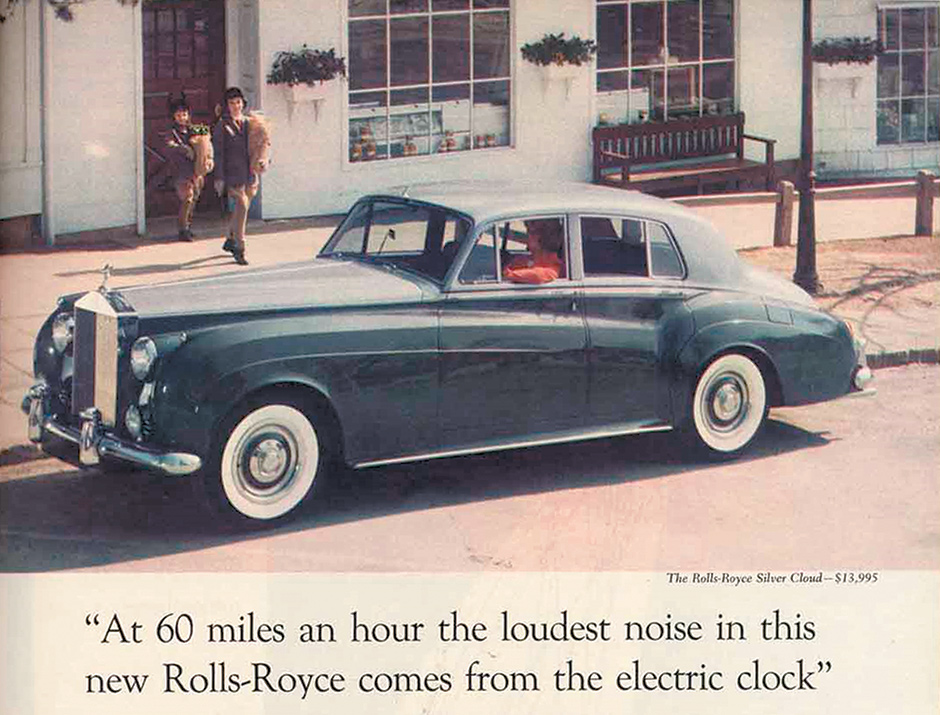
The Effects of Financial Incentives in Experiments: A Review and Capital-Labor-Production Framework
We review 74 experiments with no, low, or high performance-based financial incentives. The modal result has no effect on mean performance (though variance is usually reduced by higher payment). Higher incentive does improve performance often, typically judgment tasks that are responsive to better effort. Incentives also reduce “presentation” effects (e.g., generosity and risk-seeking). Incentive effects are comparable to effects of other variables, particularly “cognitive capital” and task “production” demands, and interact with those variables, so a narrow-minded focus on incentives alone is misguided. We also note that no replicated study has made rationality violations disappear purely by raising incentives.
Scenarios for our Economic Future
The Anthropic Economics Team models the effects of AI on the economy of 2030.