


Jon Ingold
Why Good Leaders Fail
The risk of sudden leadership failure can be headed off by early detection of challenges and better supports.

The Expert Trap and the Next War
what forecasting failure tells us about the future


The Joy of Becoming Worthless…except to each other — Douglas Rushkoff
My last piece, The Intentional Collapse, seems to have agitated a few people. I know it came off a bit dark. I talked about how the Uber wealthy believe the world as we know it is ending and that there won’t be enough essential resources to go around, so they need to take control of as much money and stuff and land as possible in order to position themselves for the end of days.
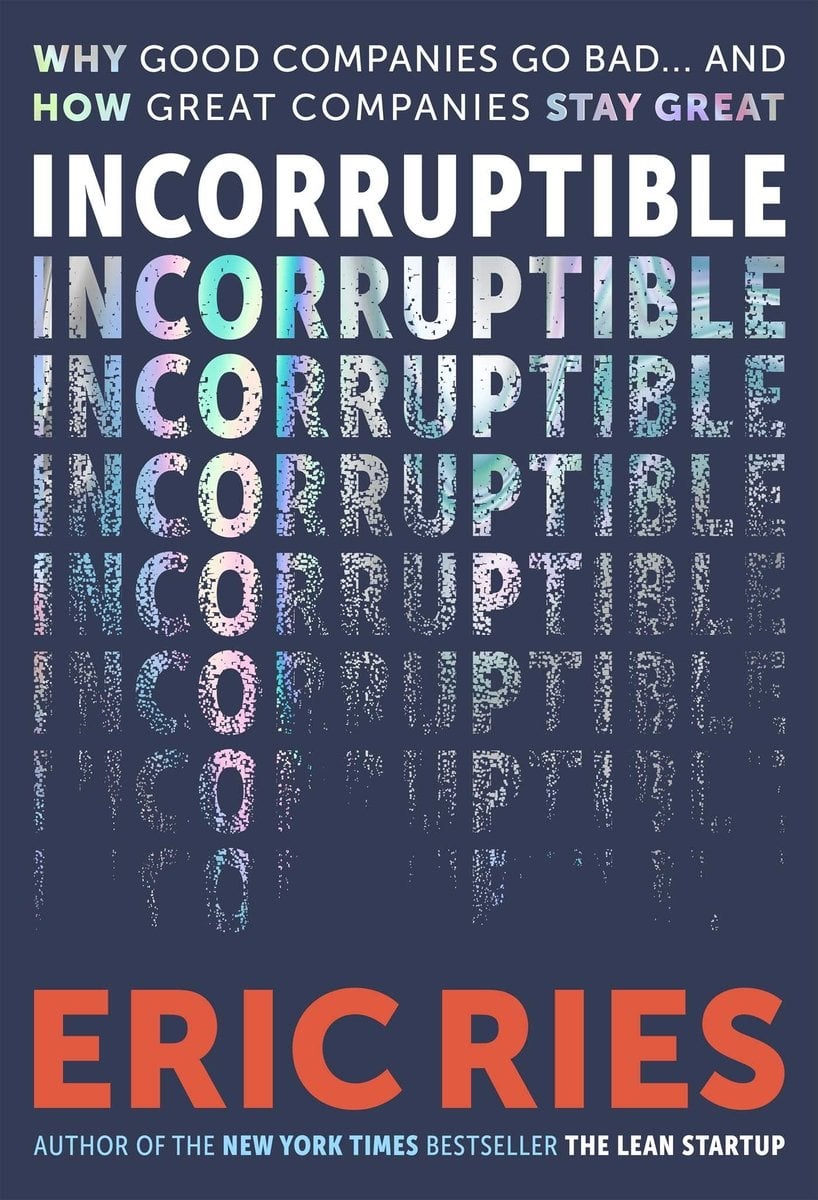
Incorruptible
Instant New York Times Bestseller "Incorruptible by Eric Ries is the best and most important business book of the year." —Dan Heath, NYT Bestselling Author & Podcast Host of "What It's Like To Be..." A Thinkers50 Best New Management Book | A Next Big Idea Club Must-Read From Eric Ries, creator of The Lean Startup, comes a bold and urgently needed rethink of how organizations are built—and why success itself so often turns companies against the people and principles that made them worth building in the first place. For decades, we've explained corporate corruption as a problem of bad actors, moral weakness, or isolated scandals. But that story doesn't match reality. Again and again, companies founded with strong ideals drift toward short-term thinking, extractive behavior, and mission abandonment—often despite the best intentions of the people inside them. Incorruptible argues that this failure is not primarily ethical. It is structural. As organizations grow, the systems that govern them—ownership, incentives, charters, accountability, and decision-making—quietly reshape behavior. When those systems are poorly designed, even principled leaders are pushed toward outcomes they never wanted. Success itself becomes a form of financial gravity, bending companies away from their original purpose. Drawing on two decades of work with founders, CEOs, investors, and institution builders, Ries shows how these failures arise predictably—and how they can be prevented. He reframes corporate governance not as bureaucracy or compliance, but as a creative and strategic act at the heart of building enduring, mission-controlled companies. At a moment when trust in business is eroding, Incorruptible offers a clear-eyed diagnosis and a practical blueprint for change. Success alone will not protect what matters most. Only incorruptible design can. Get more information and bonus materials at incorruptible.co.
Explorable - Think Outside The Box - Research, Experiments, Psychology, Self-Help
"It is impossible to live without failing at something, unless you live so cautiously that you might as well not have lived at all - in which case, you fail by default." - J.K. Rowling
A New Legibility: Theo Ellin Ballew
A New Legibility: Interactive Essay by Theo Ellin Ballew.
Net information about the Jon Johansen (“DVD Jon”) case
A colletion of links to articles and documents about the Jon Johansen case, DeCSS and QTFairUse
A Modern Guide to Thinking, Fast and Slow - Critikid
A chapter-by-chapter analysis of Kahneman's text with a focus on the replication crisis, clarifying which findings remain solid and which have not held up to scrutiny.

The Optimization Trap: Why Too Much Efficiency Makes Us Fragile - The Great Simplification
In this episode, Nate is joined by biologist and biophysicist Olivier Hamant to explore why living systems prioritize robustness over performance, and what that means for a civilization built almost entirely in the opposite direction.

When to Fold: The Cost of Failing Slow in a Startup
Failing Slow: Why One Founder Regretted Keeping His Startup Alive

Jonathan Blow - Preventing the Collapse of Civilization
Jonathan Blow's talk on preventing the collapse of civilization.
Startup Mistakes: First-Hand Lessons from 80+ Failed Startups
We've analyzed why +80 startups have failed and identified some of their common mistakes. Here're our findings!
9 signs that your business idea will probably fail - Dan Norris
After 14 years running my own businesses, I’ve failed a lot. I haven’t kept count thankfully, but I’d say I’ve started at least 50 businesses / ideas and out of those, 3 have worked. And when I say worked I don’t mean staying in business, I mean resulting in either a decent income for me […]

The Fractal Organization
The world of management is in crisis - the old remedies no longer work and organizations are failing at an increasing rate. Although many talk of 'joined up thinking', few offer practical guidance on how to achieve this in organizations. <b><i>The Fractal Organization</i></b> sets down the practical implications of a well tested systemic approach to building organizations that are capable of surviving and flourishing in these turbulent times. <p>"An excellent read…Many organizations fail at the mercy of their own ignorance. The author has done an excellent job in making ‘the science of effective organization’ accessible to management, providing them with a new knowledge to deal with the uncertainties that the markets place upon them."<br /><b>Stephen J. Brewis, Business Architect, British Telecom</b></p> <p>"...one of the most interesting, thorough and rigorous guides to management that I have ever read, … introduces new insights in every chapter… carries a credibility which acts as a counterbalance to the sometimes difficult message which he conveys which is that a lot of mainstream management practice is at best ineffective and at worst downright destructive. I would recommend this book to anyone interested in management or systems thinking."<br /><b>Penny Marrington</b>, <b>Course Chair, Systems Group, Open University</b></p> <p>"In my opinion this book manages to present sound academic theory that is relevant and helpful to the practitioner in the business. I experienced several A-HA moments."<br /><b>Pauline Marsh, Strategy Director, CS&S International, BAE SYSTEMS</b></p> <p>"The insights of the Viable System Model have been open only to a select few for much too long. Hoverstadt has gone furthest in bringing these ideas to a wider audience…Management books have too often been serious but not practical, or practical but not serious. This book is both brilliantly serious and practical, and often entertaining too."<br /><b>Professor Peter Kawalak, Manchester Business School</b></p> <p>"Integrates mainstream management ideas with the systems ideas underpinning the VSM, and flows and reads well. As a starting point for developing understanding of the VSM in today's world this book improves greatly on all books that have gone before, I would certainly recommend it to colleagues, clients, and students."<br /><b>Dr. Robin Asby, Course Chair, Communication and Systems, Open University</b></p>
Bankroll

Capital opportunities for Gen Z
Media Startup Fellowship: Startup funding & coaching
New advertiser incentive program | TikTok for Business

NVIDIA Inception Program for Startups

Startup Program for NVIDIA Inception Members

Koyeb for Startups: Accelerate with Credits for High-Performance Infrastructure - Koyeb

Rise: A Cloud Computing Program Built for Start-Ups | Akamai