

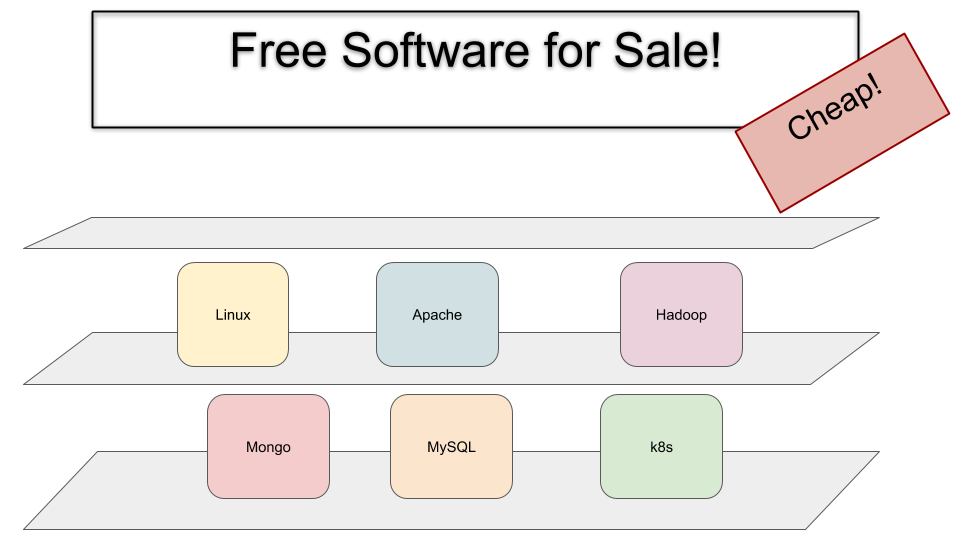
Don’t Let the Tail Wag the Dog
There is NO Open Source Business Model
Preface: It has been brought to my attention by friends and trusted advisors that a valid interpretation of my point below is that open…

The Secrets of Successful Open Source Business Models
Finding the right model for your open-source startup
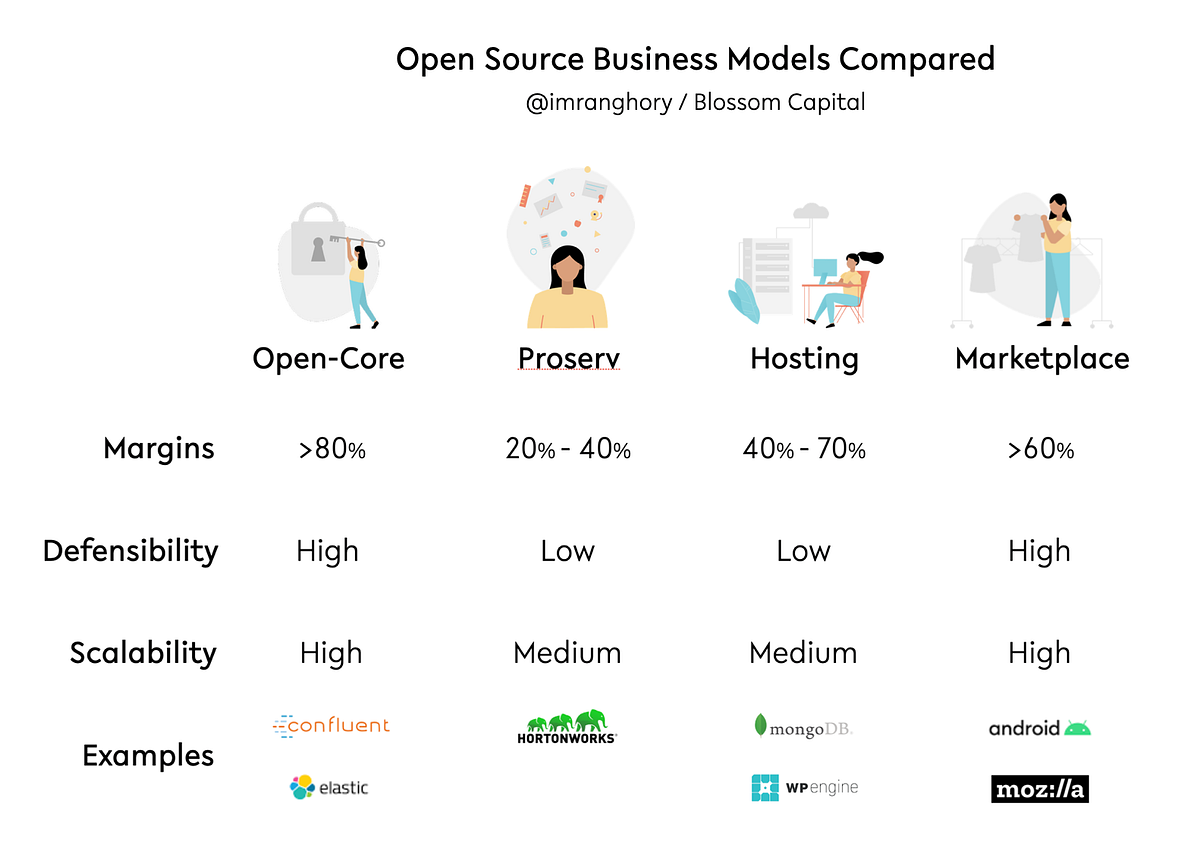
There is Still NO Open Source Business Model
I wrote a blog post two years ago called There is NO Open Source Business Model. In it, I argued that open source software is really about…

Fueling Open Source with Vibes & Money
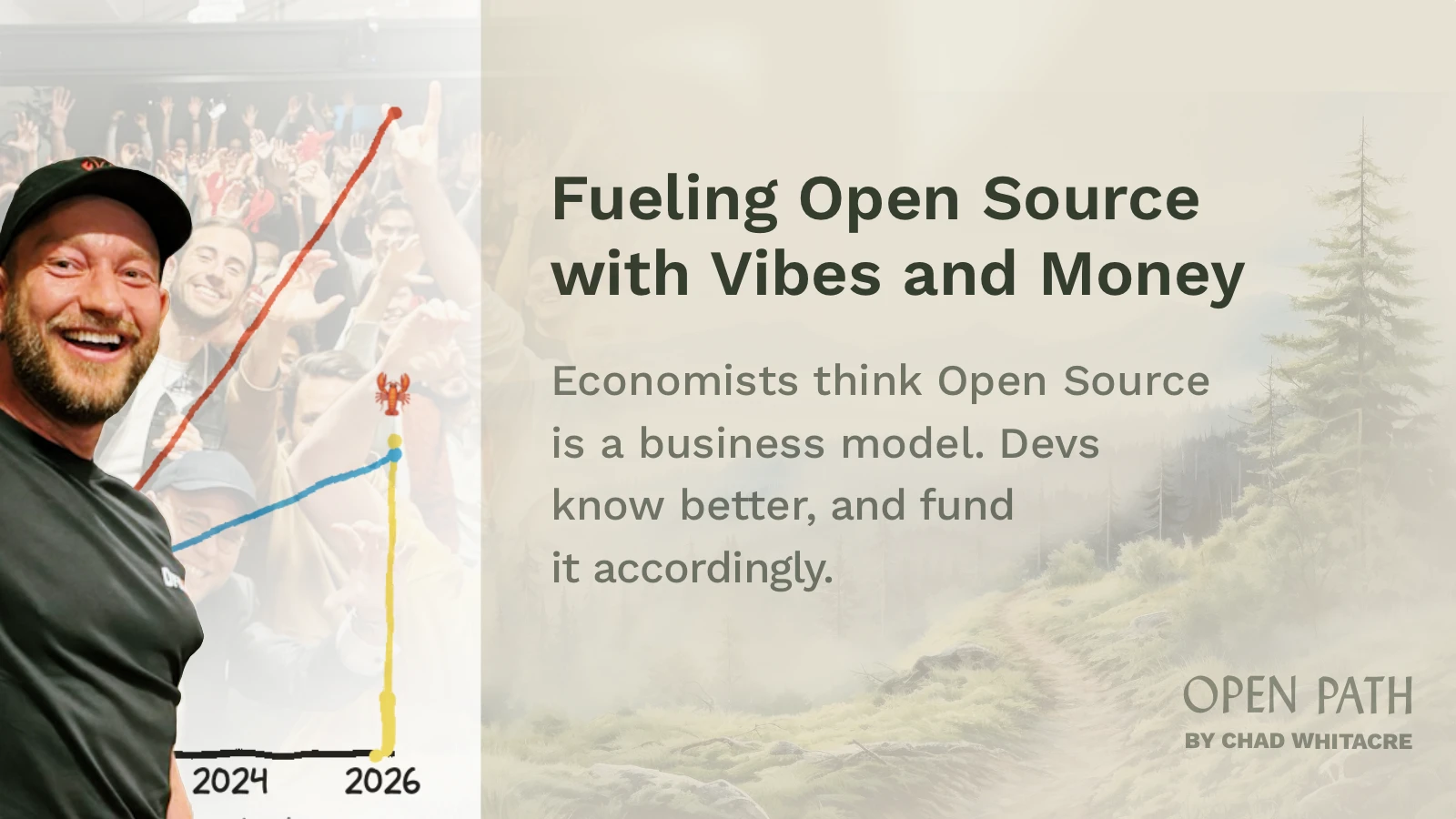
Economists think Open Source is a business model. Devs know better, and fund it accordingly.
Open Source Business Model is Under Siege [Video Insights]
This post is about about the existential threat that Open Source Database companies, or any open source software infrastructure, are facing from cloud vendors like Amazon Web Services, Google Cloud, and Microsoft Azure. Watch the video as Paul Dix, Fou...
The Open Source Distributor Business Model
Dirk Riehle, dirk@riehle.org, Published in Computer vol. 54, no. 12 (December 2021), pp. 99-103. Abstract This article defines and discusses one particular commercial open source business model, ca…
How to build a successful business model around open source software
The right approach to open source can be a great revenue model for the software provider — my company did it and we've been profitable since day one.

Open Source infrastructure deserves a business model
Open Source infrastructure is essential, invisible, and chronically underfunded. A more sustainable approach may be to connect the cost of running that infrastructure to the organizations that rely on it most.

Why open source: 25 reasons to embrace it | Ben Balter
Open source isn't a fad. Here are twenty-five economic, moral, and personal reasons your organization should embrace it.
Revisiting the Open Source Business Model
In the past few years, many companies have come to me asking for help drafting a “new open source license.” As a rule, drafting a new open source software license is not a good idea, s…

Single-Vendor Open Source Firms (and Their Intellectual Property Strategies)
Dirk Riehle, dirk@riehle.org An edited version was published in Computer magazine, April 2020 Abstract This article present a particular business model for commercial open source firms, called the …

We need Sustainable Free and Open Source Communities
Sustainable Free and Open Source software is not about business models, it’s about building sustainable communities.

Is open source a development model, business model, or something else?
The term "open source" was coined in 1998 at a strategy session held by Open Source Initiative (OSI).
The emerging economic paradigm of Open Source
The following commentary is part of First Monday's Special Issue #2: Open Source. Open Source developers have, perhaps without conscious intent, created a new and surprisingly successful economic paradigm for the production of software. Examining that paradigm can answer a number of important questions. It's not immediately obvious how Open Source [1] works economically. Probably the worst consequence of this lack of understanding is that many people don't understand how Open Source could be economically sustainable, and some may even feel that its potential negative effect upon the proprietary software industry is an overall economic detriment. Fortunately, if you look more deeply into the economic function of software in general, it's easy to establish that Open Source is both sustainable and of tremendous benefit to the overall economy. Open Source can be explained entirely within the context of conventional open-market economics. Indeed, it turns out that it has much stronger ties to the phenomenon of capitalism than you may have appreciated.