


A colleague says something you completely disagree with. I’m talking full-on, head-tilting, face-scrunching, crazy talk.
The Honest Case for the Humanities
Or: Why I’m Tired of My Colleagues Making Arguments That Only Work on Us

The sound of inevitability
Have you ever argued with someone who is seriously good at debating? I have. It sucks. You’re constantly thrown off-balance, responding to a point you didn’t expect to. You find yourself defending the weak edges of your argument, while the main thrust gets left behind in the back-and-forth, and you end up losing momentum, confidence, and ultimately, the argument. One of my close friends won international debate competitions for fun while we were at university (he’s now a successful criminal barrister), and he told me that the only trick in the book, once you boil it all down, is to make sure the conversation is framed in your terms. Once that happens, it’s all over bar the shouting.
How to change someone’s mind, according to science
How to argue with someone so it works
Beginner's Guide to Arguing Constructively
How to turn arguments from vicious battles into productive dialogues.
Misarticulation: Why We Sometimes Feel Our Words Don’t Match Our Thoughts
People do not always say what they mean. In everyday conversations, people regularly sense that they have not fully communicated what they had in mind—a subject

This Common Communication Mistake Makes It Impossible for Others to Understand Your Ideas
Personal systems are OK, but they need to be clear.

fenc.es — be wrong on the internet, productively
Trace the map of reasonable disagreement. Break arguments into statements, rate confidence and importance, and find the crux.

Research shows there are no easy fixes to political hatred
Tune into American politics today, and you'll hear something far more sinister than simple disagreement. The language has escalated: political parties trash talk each other—blaming rival parties for policy ...

Opinion | Stop Saying ‘I Feel Like’ (Published 2016)
Pretending that every argument you make is just a hunch you have is self-destructive.

Against Modesty’s Bailey
Modesty arguments often say that you should mostly or entirely bow to ‘expert consensus’ or the views of particular others, and who are you to disagree.

The Death Of Expertise
To reject the notion of expertise, and to replace it with a sanctimonious insistence that every person has a right to his or her own opinion, is silly.
Misplaced Divides? Discussing Political Disagreement With Strangers Can Be Unexpectedly Positive
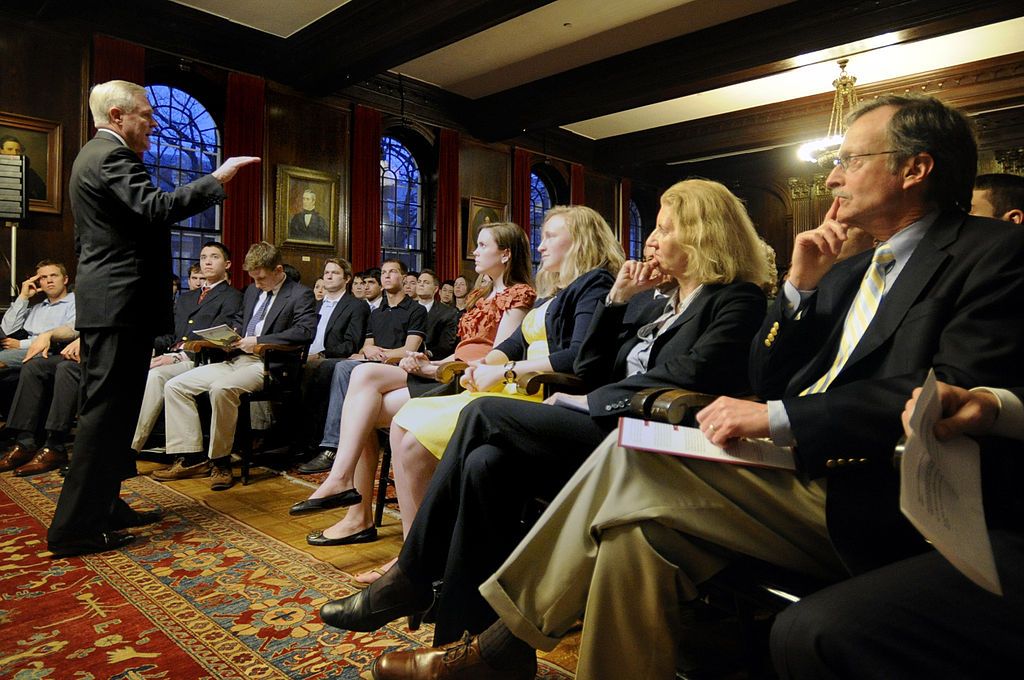
Differences of opinion between people are common in everyday life, but discussing those differences openly in conversation may be unnecessarily rare. We report three experiments ( N = 1,264 U.S.-based adults) demonstrating that people’s interest in discussing important but potentially divisive topics is guided by their expectations about how positively the conversation will unfold, leaving them more interested in having a conversation with someone who agrees versus disagrees with them. People’s expectations about their conversations, however, were systematically miscalibrated such that people underestimated how positive these conversations would be—especially in cases of disagreement. Miscalibrated expectations stemmed from underestimating the degree of common ground that would emerge in conversation and from failing to appreciate the power of social forces in conversation that create social connection. Misunderstanding the outcomes of conversation could lead people to avoid discussing disagreements more often, creating a misplaced barrier to learning, social connection, free inquiry, and free expression.

Argument from authority
Some consider it a practical and sound way of obtaining knowledge that is generally likely to be correct when the authority is real, pertinent, and universally accepted,[1][4][5][6][7][8][9] while others consider it to be a very weak defeasible argument or an outright fallacy.[10][11][12][13][14]
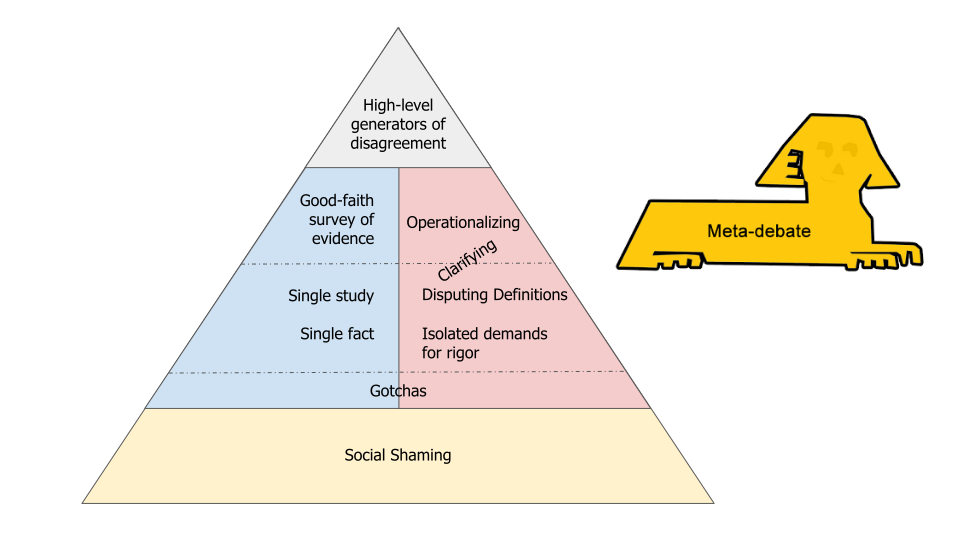
How to disagree well: 7 of the best and worst ways to argue
A classic essay defines different ways to disagree, from the worst to the best, with lessons that ring true in our divisive times.

I dunno how many times someone has told me, “the stochastic parrots paper was wrong,” and i’ve had to stutter, regain my composure, and put in real work to salvage the conversation. Like lol, wrong about what? That coherence is in the eye of the beholder? We see things as we are, not as they are.

Emily M. Bender
In this context, I feel like reminding people (again) that the stochastic parrots paper was not primarily a response to synthetic text extruding machines (not at all popular in late 2020), but an exploration of the range harms that had already been documented in the pursuit of LM scale. >>
And why, while flawed, the study isn't meaningless or worthless - everyone's take is just lacking nuance:

Ariel M.
Yes mostly. The paper (still a preprint, so not peer-reviewed) does start off kinda strong in its claims compared to what the results show. But they acknowledge all the limitations too: - this captured brief AI exposure, so did not look at how these effects change with usage over time
