

Definition. The consequences of making bad design choices when choosing concepts to model your product around. A conceptual or mental model…
Tech debt metaphor maximalism
I really like the "tech debt" metaphor. A lot of people don't, but I think that's because they either don't extend the metaphor far enough,...
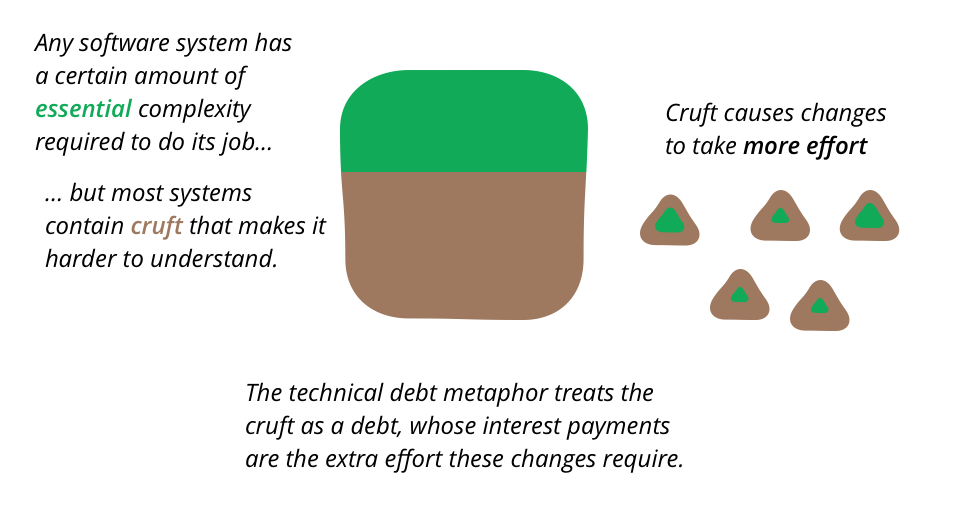
bliki: Technical Debt
Technical Debt is a metaphor for the consequences of cruft. You either have to accept a drag on further features (paying interest) or fix the software (paying the principal)
Organizational Debt is Like Technical debt — But Worse
Startups focus on speed since they are burning cash every day as they search for product/market fit. But over time code/hardware…

How Generative and Agentic AI Shift Concern from Technical Debt to Cognitive Debt
The term technical debt is often used to refer to the accumulation of design or implementation choices that later make the software harder and more costly to understand, modify, or extend over time...

A Taxonomy of Tech Debt
Hi there. I’m Bill “LtRandolph” Clark, and I’m the engineering manager for the Champions team on LoL . I’ve worked on several different teams on League over the past years, but one focus has been consistent: I’m obsessed with tech debt. I…

Technical debt as a lack of understanding
Some time back, I was working on a project where it felt like the timebomb of technical debt was exploding in our faces. We couldn’t refactor the whoositz because of the whatsitz and when we asked about the whatsitz no one knew about the whatsitz and how it exactly worked with the whoositz and there certainly weren’t tests for it. When we notified management they replied, “We’re in a build the plane while flying situation, how can we get this out now without doing a big rewrite?” It was pretty clear how the technical debt had amassed.
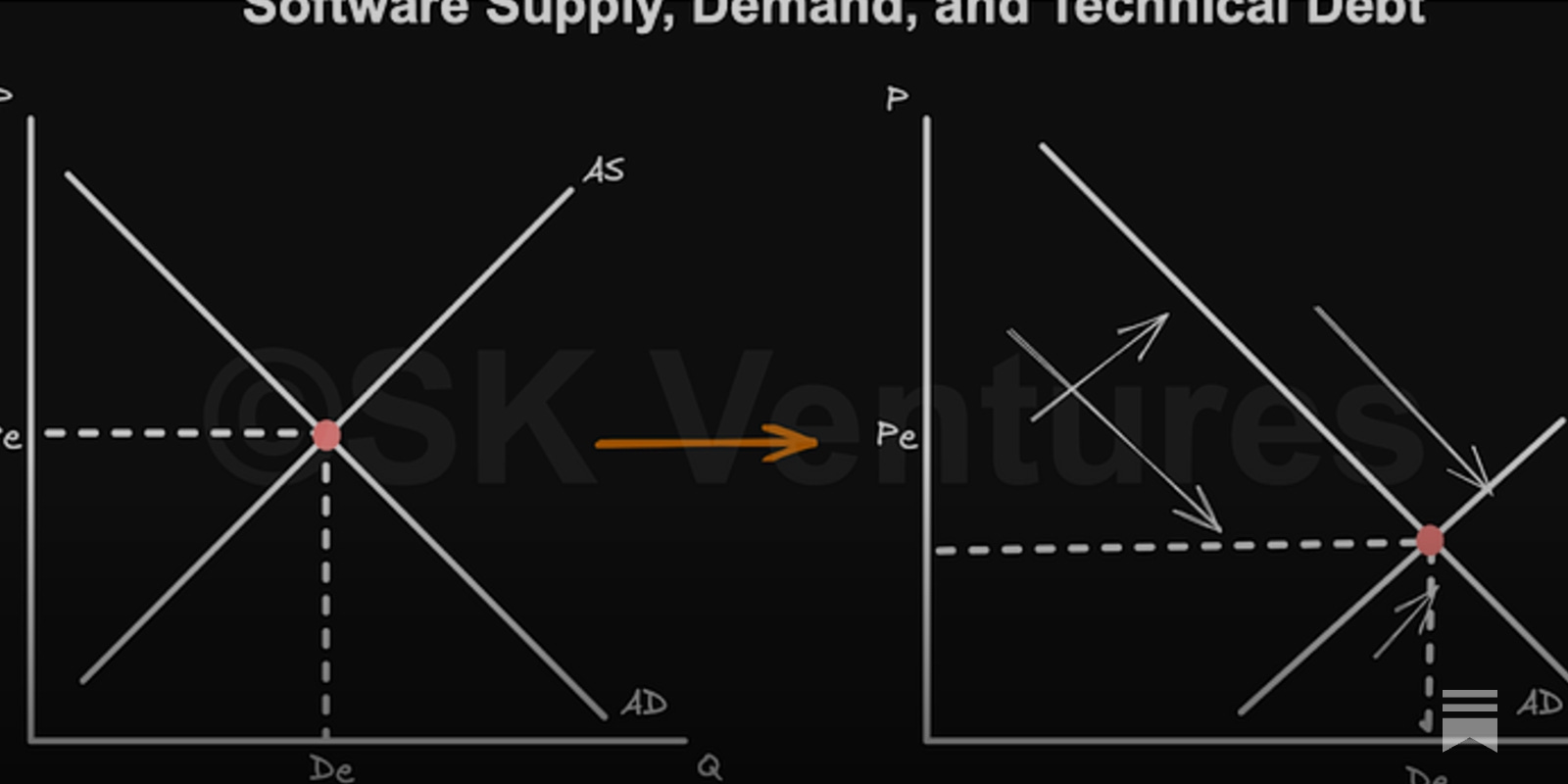
Comprehension Debt - the hidden cost of AI generated code.
Comprehension debt is the hidden cost to human intelligence and memory resulting from excessive reliance on AI and automation. For engineers, it applies most to agentic engineering.
Research Debt
Science is a human activity. When we fail to distill and explain research, we accumulate a kind of debt...

Prompts are technical debt too
It’s common and correct to say that “all code is technical debt”. Adding code is a necessary evil for developing new features: you almost always have to do it, but each line of code adds to the complexity and maintenance burden of the system. All future changes to the system have to work with the existing code, or at least avoid breaking it. Once systems accumulate enough code, they become impossible for a single person to understand: instead of reading the code and understanding what it does, you must rely on guesses, theories and heuristics1. Sensible engineers write as little code as possible.

Back-to-basics: on poor conceptualizations in AI work - (Un)rigorous AI
TL;DR — Poor conceptual foundations can severely undermine the credibility and reliability of knowledge claims. (And, no, your metric is not your construct.)
Conceptual Models: The Hidden Structure Behind Your Next Great Interface
Discover the hidden structure behind every great UI. Master how to use conceptual models to design systems that users instantly understand and grow to trust.

Imagining your future projects is holding you back.
There is no book. There is only Idea Debt.

The Debt Payment Puzzle: An Experimental Investigation
Why do borrowing individuals fail to repay their debt optimally? We design a diagnostic laboratory experiment where we rule out selection into debt and other co

Software Design is Knowledge Building
The product of software development is not code but a mental model, a theory: a specific way of explaining the world.

On shifting consumers from high‐interest to low‐interest debt
Abstract In the United States, many consumers are increasingly accumulating debt, much of which is harmful and expensive. Prior research has devoted a great deal of attention to understanding why consumers generally get into debt and the strategies they can use to repay existing debts. While this work has furthered the agenda of helping consumers reduce or eliminate their overall debt balances, it has failed to emphasize the fact that for many consumers, debt may be unavoidable. This article aims to promote research that addresses not only overall debt reduction but also the need for consumers to shift from more to less costly types of debt. By shedding light on the psychological reasons why consumers may naturally gravitate toward more costly forms of debt when less costly ones may be available, we offer a novel perspective on why consumers get into and stay in debt longer than they should. This new angle has the potential to spur on further research into the ways consumers can use debt more effectively and less expensively in service of the overarching goal of debt reduction.
