


A Guide for the Everyday User
A recent experience with ChatGPT 5.5 Pro
We are all having to keep revising upwards our assessments of the mathematical capabilities of large language models. I have just made a fairly large revision as a result of ChatGPT 5.5 Pro, to whi…

What Are ChatGPT and Its Friends?
Opportunities, Costs, and Risks for Large Language Models
Build A Large Language Model (From Scratch), Published by Manning, ISBN 978-1633437166
Implement a ChatGPT-like LLM in PyTorch from scratch, step by step
ChatGPT is bullshit
Ethics and Information Technology - Recently, there has been considerable interest in large language models: machine learning systems which produce human-like text and dialogue. Applications of...

14 LLMs that aren’t ChatGPT
ChatGPT isn't your only option for generating content and insight from AI. Here are 14 large language models giving ChatGPT a run for its money.

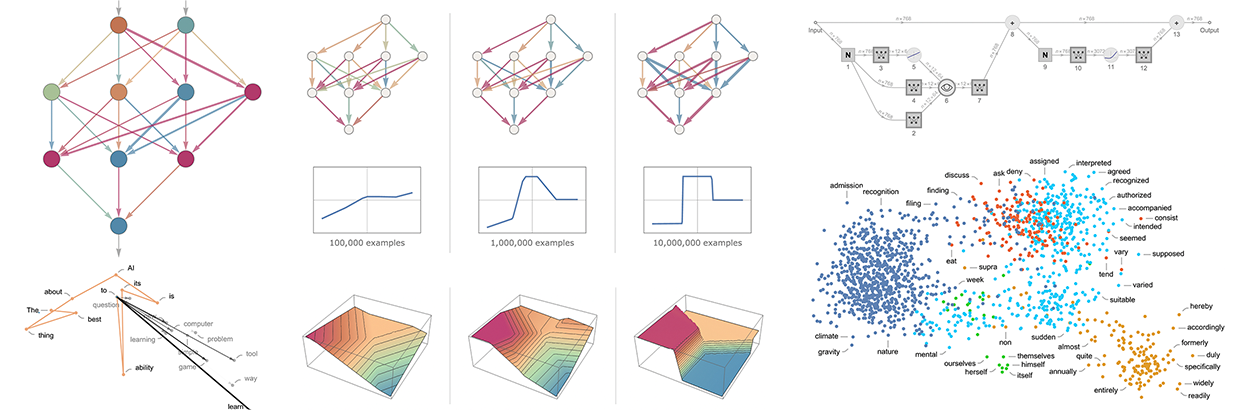
What Is ChatGPT Doing … and Why Does It Work?
Stephen Wolfram explores the broader picture of what's going on inside ChatGPT and why it produces meaningful text. Discusses models, training neural nets, embeddings, tokens, transformers, language syntax.
Context Rot: How Increasing Input Tokens Impacts LLM Performance
Large Language Models (LLMs) are typically presumed to process context uniformly—that is, the model should handle the 10,000th token just as reliably as the 100th. However, in practice, this assumption does not hold. We observe that model performance varies significantly as input length changes, even on simple tasks. In this report, we evaluate 18 LLMs, including the state-of-the-art GPT-4.1, Claude 4, Gemini 2.5, and Qwen3 models. Our results reveal that models do not use their context uniformly; instead, their performance grows increasingly unreliable as input length grows.
On the Way to LLM Personalization: Learning to Remember User Conversations
This paper was accepted at the Workshop on Large Language Model Memorization (L2M2) 2025. Large Language Models (LLMs) have quickly become…

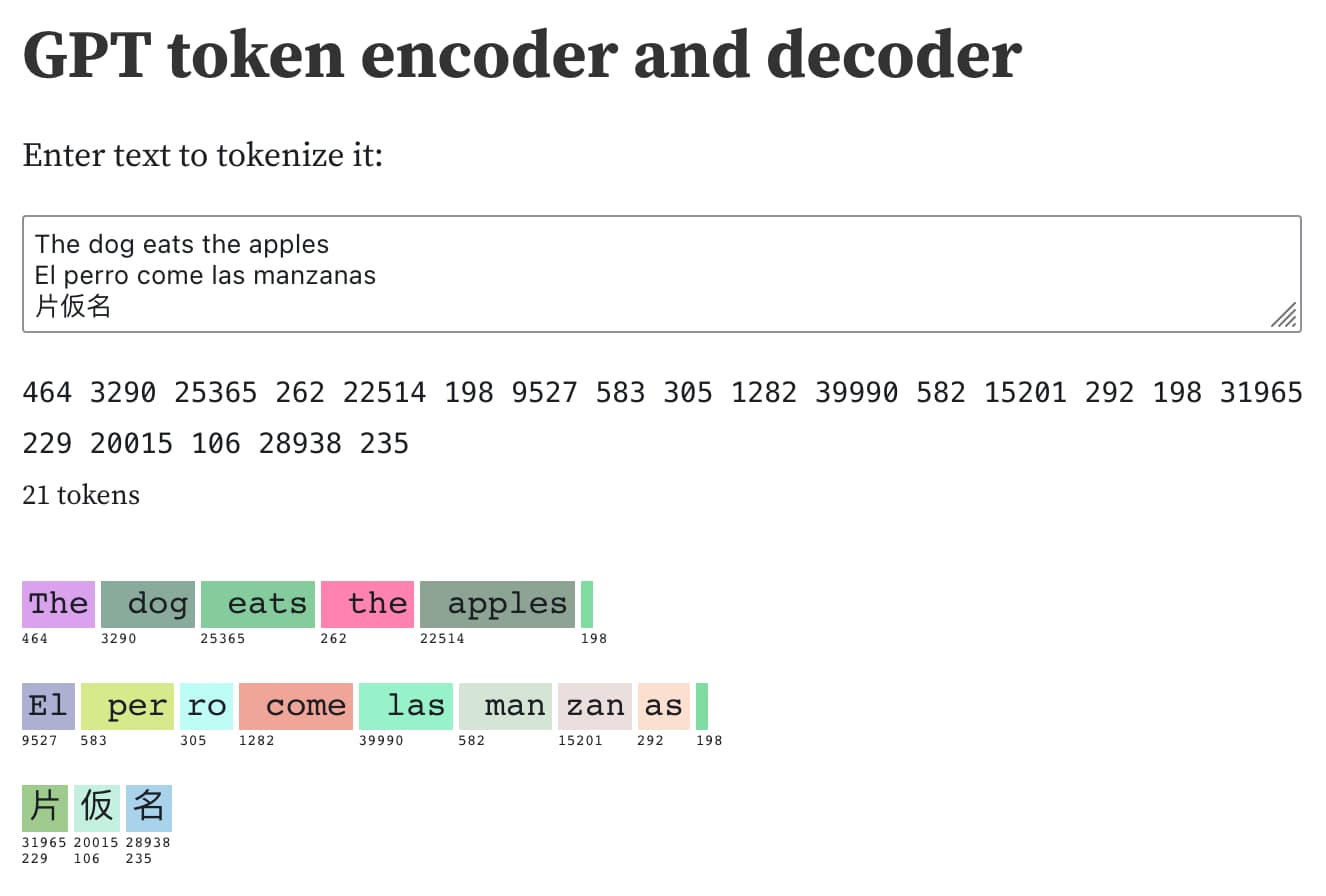
Understanding GPT tokenizers
Large language models such as GPT-3/4, LLaMA and PaLM work in terms of tokens. They take text, convert it into tokens (integers), then predict which tokens should come next. Playing …
Training Compute-Optimal Large Language Models
We investigate the optimal model size and number of tokens for training a transformer language model under a given compute budget. We find that current large language models are significantly undertrained, a consequence of the recent focus on scaling language models whilst keeping the amount of training data constant. By training over 400 language models ranging from 70 million to over 16 billion parameters on 5 to 500 billion tokens, we find that for compute-optimal training, the model size and the number of training tokens should be scaled equally: for every doubling of model size the number of training tokens should also be doubled. We test this hypothesis by training a predicted compute-optimal model, Chinchilla, that uses the same compute budget as Gopher but with 70B parameters and 4$\times$ more more data. Chinchilla uniformly and significantly outperforms Gopher (280B), GPT-3 (175B), Jurassic-1 (178B), and Megatron-Turing NLG (530B) on a large range of downstream evaluation tasks. This also means that Chinchilla uses substantially less compute for fine-tuning and inference, greatly facilitating downstream usage. As a highlight, Chinchilla reaches a state-of-the-art average accuracy of 67.5% on the MMLU benchmark, greater than a 7% improvement over Gopher.

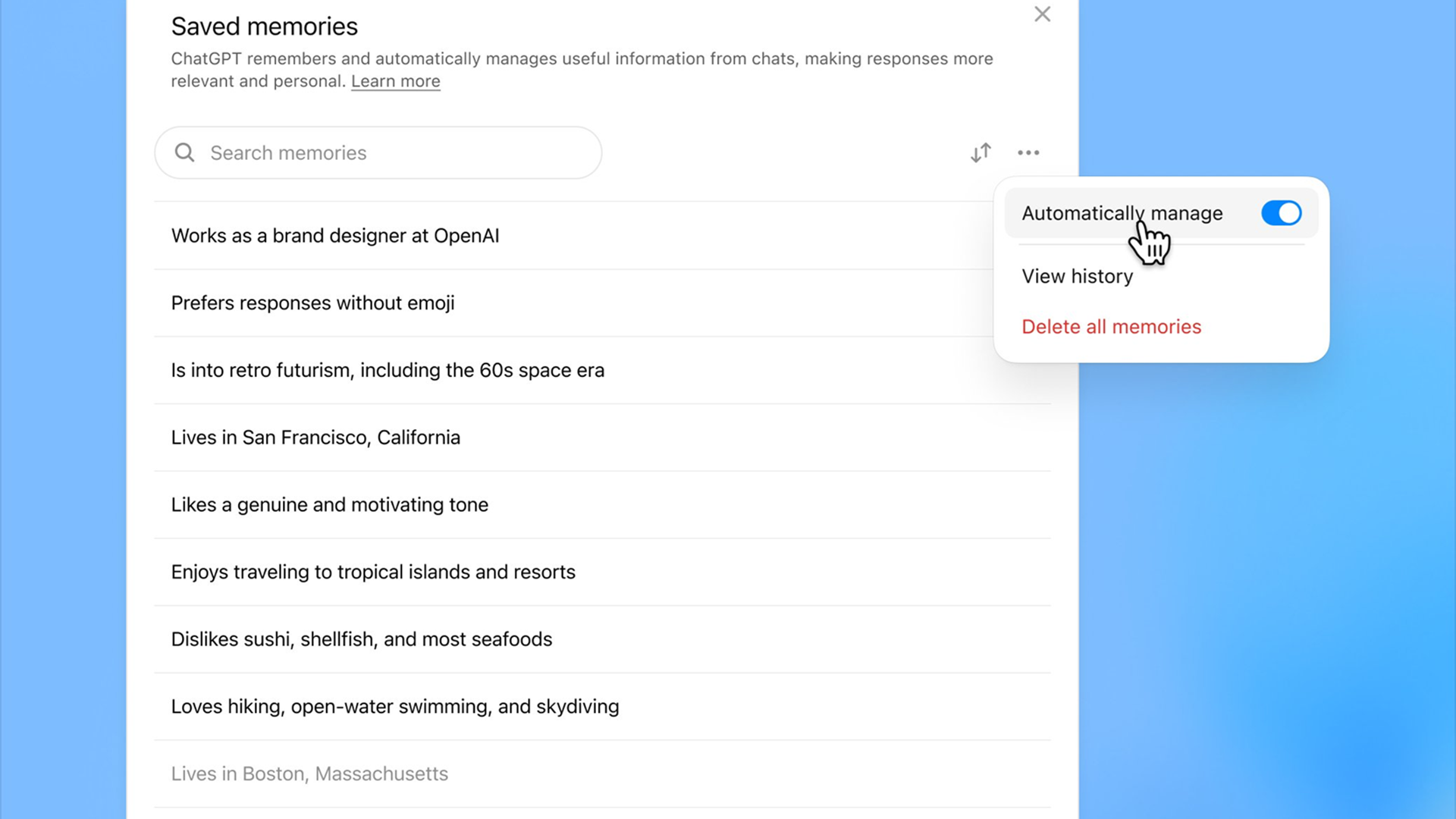
ChatGPT is smarter now that it's learned to forget - a huge memory upgrade is coming
The AI chatbot will remember what matters most and quietly let the rest fade
ChatGPT Translate | Fast, Natural, 40+ Languages
ChatGPT translates across 40+ languages with accuracy, tone, and cultural nuance. Translate text, voice, or photos for everyday use, travel, school, and work — and learn grammar or phrasing as you go.
Tokenization Tax 2026: LLM Tokenizer Comparison | ellamind
A measurement study of 20 LLM tokenizers across 12 languages and 21 kinds of text. On German, Claude 4.7+ needs 2.01x the tokens of the OpenAI reference, and Cohere Command A+ the fewest.
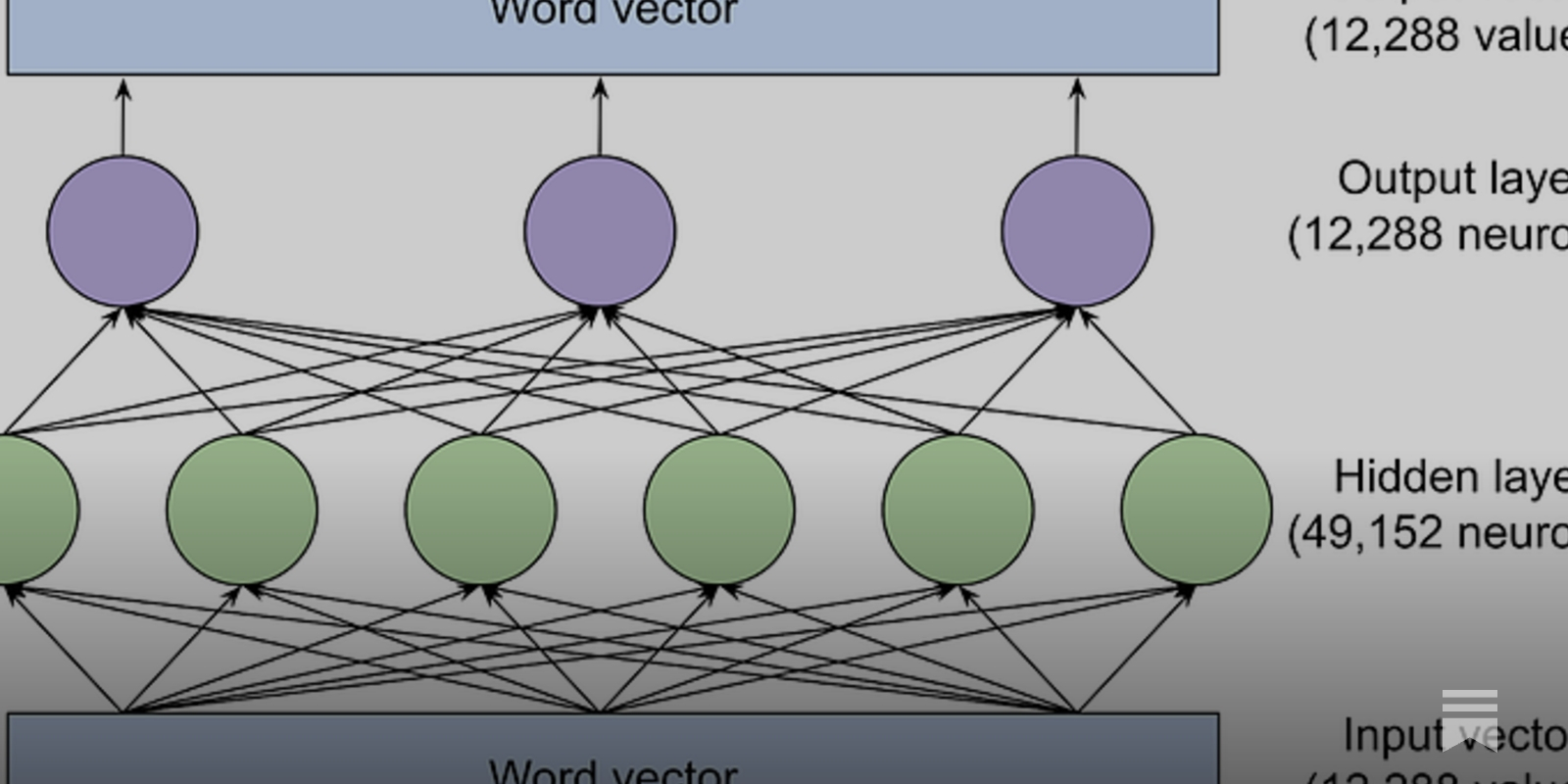
Large language models, explained with a minimum of math and jargon
Want to really understand how large language models work? Here’s a gentle primer.
The Unpredictable Abilities Emerging From Large AI Models | Quanta Magazine
Large language models like ChatGPT are now big enough that they’ve started to display startling, unpredictable behaviors.
Bye Bye Bye...: Evolution of repeated token attacks on ChatGPT models
Building on prior prompt injection research, we recently discovered a new training data extraction vulnerability involving OpenAI’s chat completion models.
