

A framework for building enduring products
What coffee taught me about building products?
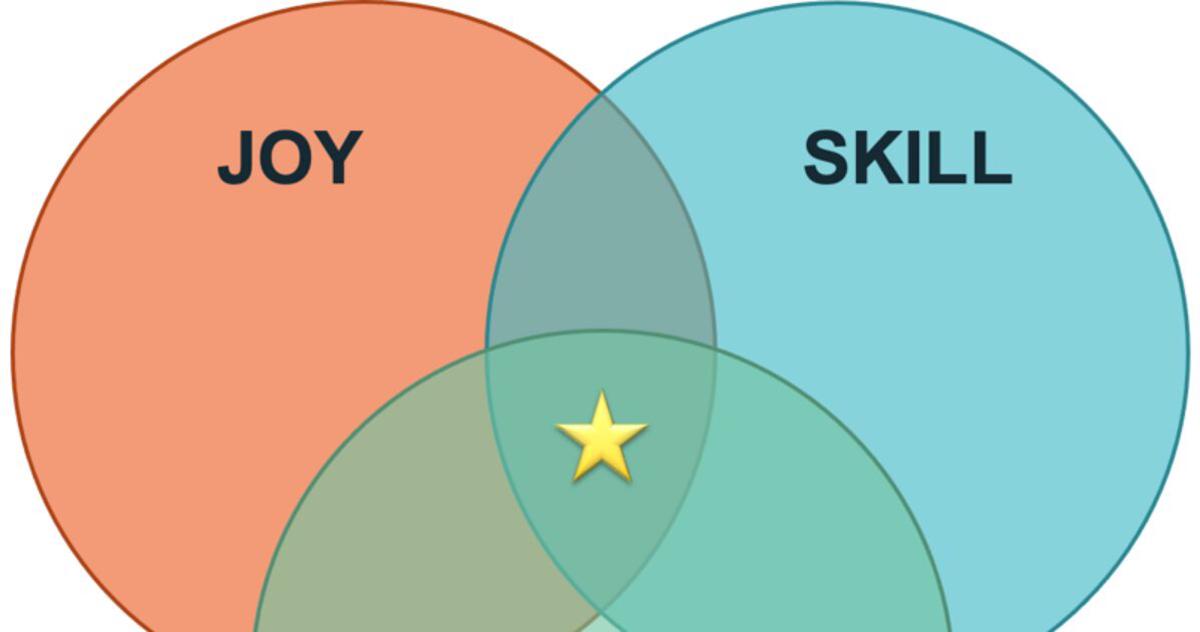
You have probably been asked about your hobbies at some point. I never had a good answer to that question. Tbh, I still don't. A few years ago, while reading Designing Your Life, I realised something slightly uncomfortable. I did very little just for joy. Most things I spent

The Product Picnic
Writing on UX and product management to connect today's discourse with classic insights that the industry forgot.

Finding Fulfillment
What creates a fulfilling existence? Exploration leads to a framework I've used for years for myself and the people around me. I hope it helps you too.
Design for Real Life
You can't always predict who will use your products, or what emotional state they'll be in when they do. But by identifying stress cases and designing with compassion, you'll create experiences that support more of your users, more of the time.
The role of storytelling in the creation of brand love: the PANDORA case
The study of storytelling and brand love is justified by the need to understand the potential of storytelling as a tool that marketers have available to positively influence the love felt by the consumers toward a particular brand. In this case, we ...

Love Is a Many-Splendored Thing: Brand Love in a Consumer Culture
In a consumer culture, people make sense of their everyday existence based on meanings generated during the consumption process. These meanings feature in establishing human identities and communicating them to others. Brands fulfill a pivotal role in conveying the...

AIDA model | Marketing | Research Starters | EBSCO Research
<p>The AIDA model is a marketing framework that outlines the stages consumers typically go through when making a purchasing decision: Attention, Interest, Desire, and Action. Developed in the late 19th century by American marketer Elias St. Elmo Lewis and later refined by Edward Strong in the 1920s, this model aims to guide marketers in capturing potential buyers' attention and leading them toward a purchase. </p> <p>In the Attention stage, marketers employ engaging strategies to attract consumers, often using eye-catching visuals or intriguing information. Next, the Interest stage focuses on maintaining that attention through memorable content or relatable messaging. The Desire stage demonstrates how a product or service fulfills the consumer's needs, often using persuasive techniques like testimonials or demonstrations. Finally, the Action stage prompts the consumer to make a purchase, providing clear instructions on how to proceed.</p> <p>While the AIDA model remains relevant, marketers today may adapt it to incorporate new elements, such as Retention or Satisfaction, reflecting the evolving digital landscape and consumer behavior. Overall, the AIDA model serves as a foundational tool for understanding consumer engagement and facilitating effective marketing strategies.</p>

Mindful Design Products – Mindful Design
Mindful Design products are forever–free products designed from the ground up to be calm, opinionated, and lovely to use.

Collective Flourishing
Our tools for navigating the future haven't kept pace with its growing complexity. Creating new systems that integrate a deep understanding of people, profound advances in modelling and foresight, and expressive interfaces could help us see, reason, and choose a better future together.
What makes people flourish? A new survey of more than 200,000 people across 22 countries looks for global patterns and local differences
A global study seeks insights into what helps people feel happy, healthy and satisfied – and what holds them back.

Feature / Product / Business: A Framework for Sustainable ATProto Projects | ATmosphereConf VODs
The ATProto community built a ton of great features and products over the past year! For our next trick, let's mature them into products and businesses. In this talk, you'll get a practical framework for understanding whether what you're building should be a feature, product, or business, plus concrete funding models at each layer to keep your work going and growing. (More in this thread: https://bsky.app/profile/mosh.bsky.social/post/3mckiat2ne22q)
Sustainable Open Source: The Maintainers Perspective or: How I Learned to Stop Caring and Love Open Source
Ten Steps Towards Happiness - Hintjens.com
Biography | Portfolio | GitHub Books | Videos | Slides | Stories | Wiki Contact
Consumer Entrapment
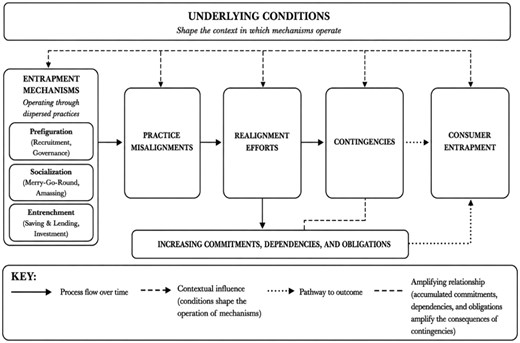
Abstract Why do consumers sometimes remain trapped in the very practices and communities that once helped them? Consumer practice research has largely emphasized the enabling outcomes of sustained practice participation, with less attention given to how those same practices can become entrapping. This article explores how consumer entrapment emerges within interconnected collective practices. Drawing on an ethnographic study of Chama, a community-based savings and support group in Kenya, it integrates practice theory with Hodder’s theory of entanglement. The study identifies three mechanisms (prefiguration, socialization, and entrenchment) through which participation generates commitments, dependencies, and obligations that produce recurring practice misalignments. Consumers continually work to realign these misalignments, yet under specific conditions, these efforts reproduce the contingencies that sustain participation while progressively deepening entrapment. The findings reveal a central tension: efforts to restore practice alignment can sustain what consumers value while simultaneously reproducing the interdependencies through which consumer entrapment emerges.
Research – Open Heart Mind
We’re developing Metavaluation — a participatory framework for recognising and rewarding the value of diverse contributions, from creative work and care to logistics and leadership.
Today I’m playing with an idea that’s been on my mind for too long: storing design systems tokens on the #Atmosphere My proof of concept works, and that Makes Me Happy™
