One of the great features of cryptocurrencies is that one can create something that acts as ownership in a platform, without requiring a…
What Blockchain Means for the Sharing Economy
Blockchain technology is facilitating the emergence a new kind of radically decentralized organization . These organizations — which have no director or CEO, or any sort of hierarchical structure — are administered, collectively, by individuals interacting on a blockchain. As such, it is important not to confuse them with the traditional model of “crowdsourcing,” where people contribute to a platform but do not benefit proportionately from the success of that platform. Blockchain technologies can support a much more cooperative form of crowdsourcing — sometimes referred to as “platform cooperativism”— where users qualify both as contributors and shareholders of the platforms to which they contribute. The value produced within these platforms can be more equally redistributed among those who have contributed to the value creation. With this new opportunity for increased “cooperativism,” we could be moving toward a true sharing economy.

Artworld Ethereum - Identity, Ownership and Authenticity
Ethereum is a distributed computing system for writing and executing smart contracts. Inspired by Bitcoin, it's currently in development with a planned late 201…

Trust: the inside story of the rise and fall of Ethereum | Aeon Essays
Blockchain enthusiasts crave a world without bankers, lawyers or fat-cat executives. There’s just one problem: trust

Designing a multi-sided data platform: findings from the International Data Spaces case
The paper presents the findings from a 3-year single-case study conducted in connection with the International Data Spaces (IDS) initiative. The IDS represents a multi-sided platform (MSP) for secure and trusted data exchange, which is governed by an institutionalized alliance of different stakeholder organizations. The paper delivers insights gained during the early stages of the platform’s lifecycle (i.e. the platform design process). More specifically, it provides answers to three research questions, namely how alliance-driven MSPs come into existence and evolve, how different stakeholder groups use certain governance mechanisms during the platform design process, and how this process is influenced by regulatory instruments. By contrasting the case of an alliance-driven MSP with the more common approach of the keystone-driven MSP, the results of the case study suggest that different evolutionary paths can be pursued during the early stages of an MSP’s lifecycle. Furthermore, the IDS initiative considers trust and data sovereignty more relevant regulatory instruments compared to pricing, for example. Finally, the study advances the body of scientific knowledge with regard to data being a boundary resource on MSPs.

From Competition to Cooperation | Primavera De Filippi | TEDxCambridge
The Power Of Ethereum's Merge Revisited
Alex De Vries has published Cryptocurrencies on the road to sustainability: Ethereum paving the way for Bitcoin , a detailed review of the e...

Democratizing Social Media | Platform Cooperativism Consortium
Exploring the Potentials of Cooperative Models In the age of the ever-expanding platform economy, questions over the ownership and governance of social media platforms have become increasingly…

Mutual Credit Cryptocurrencies: Beyond Blockchain Bottlenecks
We identify and clarify the core elements of cryptocurrency and describe a new approach to designing such currencies distinct from blockchains – an approach rooted in biomimicry. We explore efficiencies for decentralized data and decision-making and distinguish consensus of distributed process, rather than data in ledgers, at the core. We then illustrate an implementation of a cryptocurrency using these principles and a use case which brings a centuries old practice into the digital era. We address the central vulnerability to this model working at scale, showing how the solution can be built with existing technologies. Finally, we also confront social challenges involved in governance of crypto systems.
Identity is the Platform
This is the talk I gave at Mindtrek in Tampere, Finland. Slides are available here: http://factoryjoe.com/blog/2009/10/01/identity-is-the-platform/

Rust 2019: Ownership without fear – Dirkjan Ochtman
Like last year, the Rust community team asked community members to write blog posts "proposing goals and directions for 2019"; this is mine. Like withoutboats' post and Niko Matsakis' take, this post will focus on organizational issues. As such, the "ownership" from the title refers to a leadership principle, not the technical type system concept we all know and love.
Cryptoeconomics: Paving the Future of Blockchain Technology | HackerNoon
Page through the articles on <a href="https://hackernoon.com/tagged/blockchain" target="_blank">blockchain</a> today and you will see healthy discussions over its applications and endless debates over the future price action of someone’s favorite cryptocurrency. Yet rarely among all these topics is any mention of the most fascinating notion at the heart of the movement — blockchain as a novel means<strong> to incentivize desired human behavior</strong>.

This New Cooperative Business Model Could Change Everything
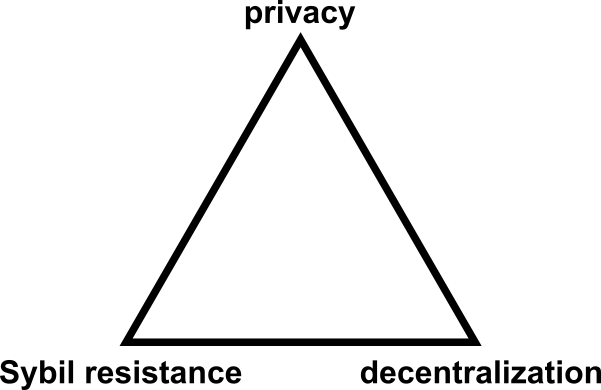
Principal Authority: A New Perspective on Self-Sovereign Identity
This summer, we’ve been iterating through an article intended to talk about the success that Blockchain Commons has had working with the Wyoming legisla...

Delete Your Account: On the Theory of Platform Capitalism | Los Angeles Review of Books
The platform confuses capital-flow and social form, rearranging the relationship of profit to community and intelligence to organization.

Is "acceptably non-dystopian" self-sovereign identity even possible?
In the recent paper about "soulbound" tokens, Vitalik Buterin et al. write that they aim to build technology that is "acceptably non-dystopian". Do any of today's self-sovereign identity projects fit that bill?