


An Overnight Success 1,834 Days in the Making


Highlights From Matt Mullenweg’s Q&A Session on Product Hunt
On September 22nd, Matt Mullenweg participated in a question and answer session on Product Hunt. Product Hunt is a site that lets users share and discover new products. In the session, Mullenweg an…

The unreasonable effectiveness of just showing up everyday
Six years, no deadlines, and one rule: write some code every day. That slow, stubborn routine turned a side project into a sustainable search company.

Here’s a metric that I bet you aren’t using… I want you to check it out, and start using it. It could be a real wake up call about how inactive your users are. I’m talking about the XD28 metric. A… | Moe Ali | 17 comments
Here’s a metric that I bet you aren’t using… I want you to check it out, and start using it. It could be a real wake up call about how inactive your users are. I’m talking about the XD28 metric. A lot of teams have never bothered to collect this data - but you can get started after 28 days. Here’s how the metric works👇 This metric looks at a user and determines how many days they used your product/feature in a 28 day cycle. If your user used your product just once in the last 28 days, they’re identified as 1D28. If they use it 5 days out of 28, they’re categorized as 5D28 and so on… Then you create a bucket with each number of days and how many users used the product for each number of days. For example, 17 users belong in the 5D28 bucket and 500 users belong in the 24D28 bucket. You can use this to create a distribution chart. You should be using these figures to calculate the average AND median number of days that users are using the product in a given 28 day cycle. Ideally you want people to be moving from a lower number of days to a higher number. E.g. If your average number of XD28 is 5 days, you want to aim for 15 days in a year’s time. This is an interesting metric because often you will find users at one extreme of this distribution curve. And it can be a real wake up call for Product Managers. | 17 comments on LinkedIn

Signals: Toward a Self-Improving Agent | Factory.ai
Traditional product analytics tell you what happened. Session duration, tool calls executed, completion rates. But they...
React at Product Hunt
At ProductHunt we use React for almost 2 years. In the talk, I'm going to share some of the things we learned during that period.

So You Just Became a Product Manager…
Things to do (and not do) in your first 90 days as a Product Manager. Author: Alex Mitchell


Discovery – Judgement | Silicon Valley Product Group
To continue with the series on common sources of confusion regarding product discovery, in this article I want to talk about the critical role of judgement in product discovery. This may in fact be the single most common confusion I encounter. I think the source of the issue is that so many product people have...

The one product feature that tripled our sales last month
Here’s how the tiniest Know Your Company feature that took 20 minutes to code led to the biggest impact on our business… Even the smallest lever can have a big impact.A few months ago, we moved Kno…

Hot Take: Google has a company strategy, not a product strategy
Or, Why Google keeps killing products

On Taste, Effort & Curiosity - again
When AI collapses how long it takes to ship, what’s left is judgment, experimentation, and knowing what not to build.
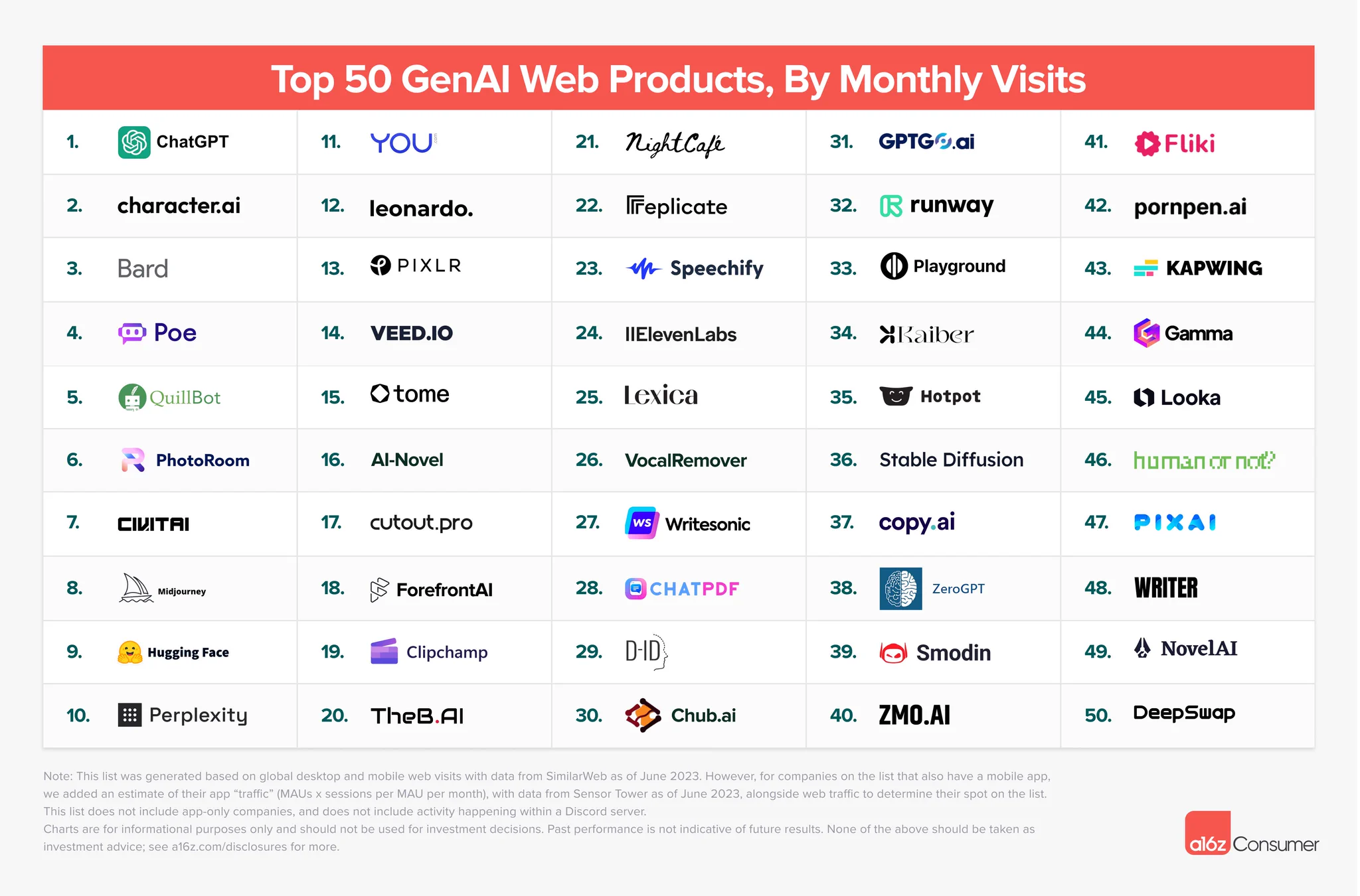
Generative AI has spawned thousands of new products. But outside of ChatGPT, what are everyday consumers using? What's growing, and what has flattened? We crunched the numbers to find the top 50 consumer web products by monthly visits - here's our learnings ⬇️
Generative AI has spawned thousands of new products.But outside of ChatGPT, what are everyday consumers using? What's growing, and what has flattened?We crunched the numbers to find the top 50 consumer web products by monthly visits - here's our learnings ⬇️ pic.twitter.com/5UR1MwB3RV— Olivia Moore (@omooretweets) September 13, 2023
Feature / Product / Business: A Framework for Sustainable ATProto Projects | ATmosphereConf VODs
The ATProto community built a ton of great features and products over the past year! For our next trick, let's mature them into products and businesses. In this talk, you'll get a practical framework for understanding whether what you're building should be a feature, product, or business, plus concrete funding models at each layer to keep your work going and growing. (More in this thread: https://bsky.app/profile/mosh.bsky.social/post/3mckiat2ne22q)

The Product Picnic
Writing on UX and product management to connect today's discourse with classic insights that the industry forgot.
