


Today we are thrilled to announce our official 1.0 release of Cosette, a SQL solver for automatically checking semantic equivalences of SQL…
Semantics and complexity of SPARQL
SPARQL is the standard language for querying RDF data. In this article, we address systematically the formal study of the database aspects of SPARQL, concentrating in its graph pattern matching facility. We provide a compositional semantics for the core part of SPARQL, and study the complexity of the evaluation of several fragments of the language. Among other complexity results, we show that the evaluation of general SPARQL patterns is PSPACE-complete. We identify a large class of SPARQL patterns, defined by imposing a simple and natural syntactic restriction, where the query evaluation problem can be solved more efficiently. This restriction gives rise to the class of well-designed patterns. We show that the evaluation problem is coNP-complete for well-designed patterns. Moreover, we provide several rewriting rules for well-designed patterns whose application may have a considerable impact in the cost of evaluating SPARQL queries.
Semantic Data Modeling, Graph Query, and SQL, Together at Last?
Our teams advance the state of the art through research, systems engineering, and collaboration across Google.
Relational foundations for functorial data migration | Proceedings of the 15th Symposium on Database Programming Languages
In this paper we present a simple database definition language: that of categories and functors. A database schema is a small category and an instance is a set-valued functor on it. We show that morphisms of schemas induce three ''data migration ...
Functorial data migration
In this paper we present a simple database definition language: that of categories and functors. A database schema is a small category and an instance is a set-valued functor on it. We show that morphisms of schemas induce three “data migration functors”, which translate instances from one schema to the other in canonical ways. These functors parameterize projections, unions, and joins over all tables simultaneously and can be used in place of conjunctive and disjunctive queries. We also show how to connect a database and a functional programming language by introducing a functorial connection between the schema and the category of types for that language. We begin the paper with a multitude of examples to motivate the definitions, and near the end we provide a dictionary whereby one can translate database concepts into category-theoretic concepts and vice versa.
🚀 Announcing readwise-vector-db: Supercharge Your Readwise Library with Local, Semantic Search
Graceful database schema evolution: the PRISM workbench: Proceedings of the VLDB Endowment: Vol 1, No 1
Supporting graceful schema evolution represents an unsolved problem for traditional information systems that is further exacerbated in web information systems, such as Wikipedia and public scientific databases: in these projects based on multiparty ...

Warnings for pattern matching
We examine the ML pattern-matching anomalies of useless clauses and non-exhaustive matches. We state the definition of these anomalies, building upon pattern matching semantics, and propose a simple algorithm to detect them. We have integrated the algorithm in the Objective Caml compiler, but we show that the same algorithm is also usable in a non-strict language such as Haskell. Or-patterns are considered for both strict and non-strict languages.
Algebraic data integration
In this paper, we develop an algebraic approach to data integration by combining techniques from functional programming, category theory, and database theory. In our formalism, database schemas and instances are algebraic (multi-sorted equational) theories of a certain form. Schemas denote categories, and instances denote their initial (term) algebras. The instances on a schema S form a category, S–Inst, and a morphism of schemas F : S → T induces three adjoint data migration functors: ΣF : S–Inst → T–Inst, defined by substitution along F, which has a right adjoint ΔF : T–Inst → S–Inst, which in turn has a right adjoint ΠF : S–Inst → T–Inst. We present a query language based on for/where/return syntax where each query denotes a sequence of data migration functors; a pushout-based design pattern for performing data integration using our formalism; and describe the implementation of our formalism in a tool we call AQL (Algebraic Query Language).
Relational lenses | Proceedings of the twenty-fifth ACM SIGMOD-SIGACT-SIGART symposium on Principles of database systems
As part of the Digital Library's transition to Open Access, new features for researchers are available in the Premium Edition. Click here to learn more.

ggsql: A grammar of graphics for SQL
Introducing ggsql, a grammar of graphics for SQL that lets you describe visualizations directly inside SQL queries.

Compiling Higher-Order Specifications to SMT Solvers: How to Deal with Rejection Constructively | Proceedings of the 12th ACM SIGPLAN International Conference on Certified Programs and Proofs
We present a decision procedure that combines reasoning about datatypes and codatatypes. The dual of the acyclicity rule for datatypes is a uniqueness rule that identifies observationally equal codatatype values, including cyclic values. The procedure ...

A taxonomy for next-generation reasoning models
Where we've been and where we're going with RLVR.

Mutual intelligibility for schema idiolects.

GitHub - idiolect-dev/idiolect: Mutual intelligibility for schema idiolects.
github.comself-hostable notion replacements

not necessarily feature-parity - i do not care about databases
siyuan-note/siyuan

Craft — Docs and Notes Editor
Anytype — A safe haven for digital collaboration

Obsidian - Sharpen your thinking
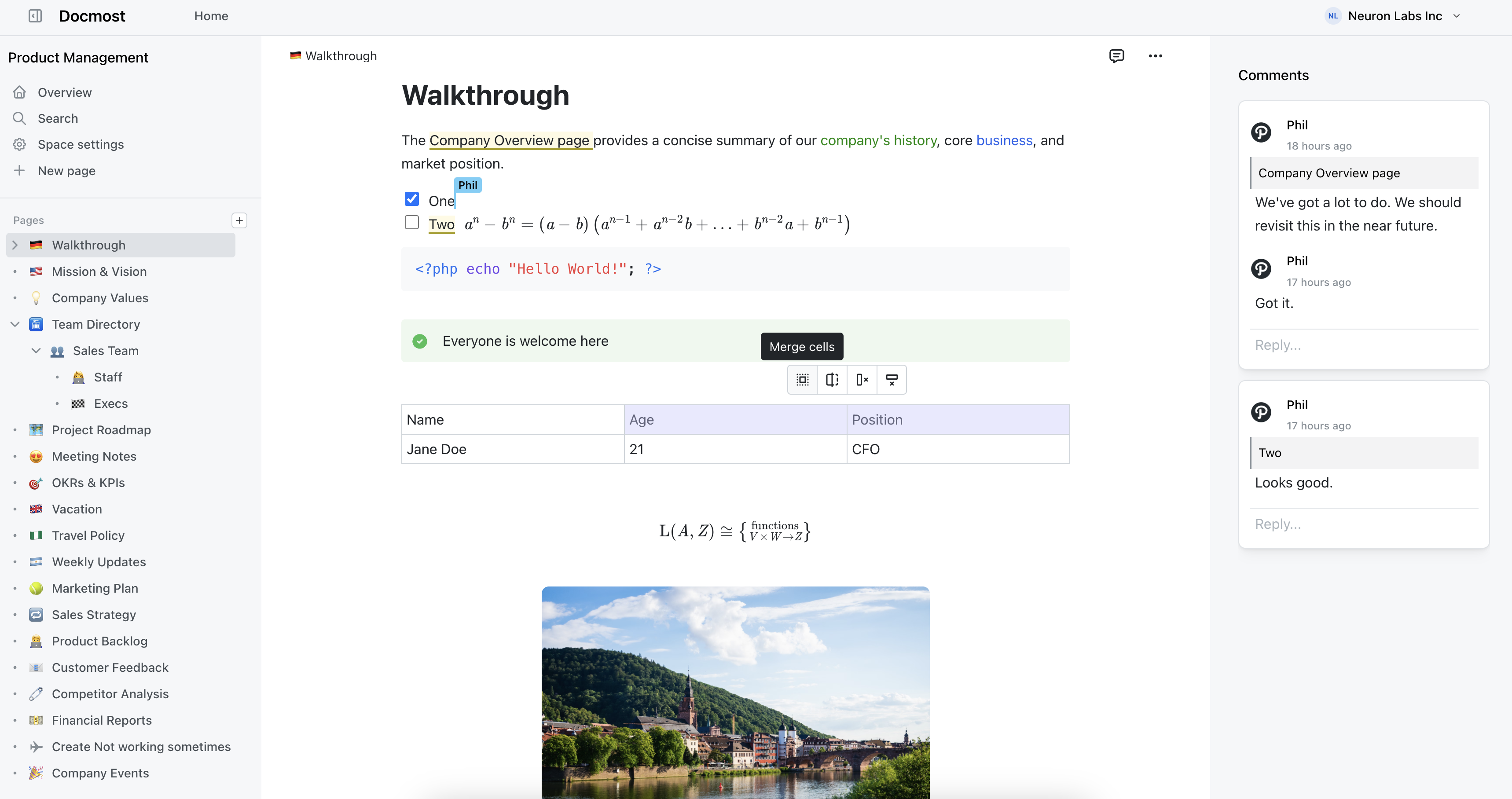
Enterprise-ready Wiki for Teams | Docmost
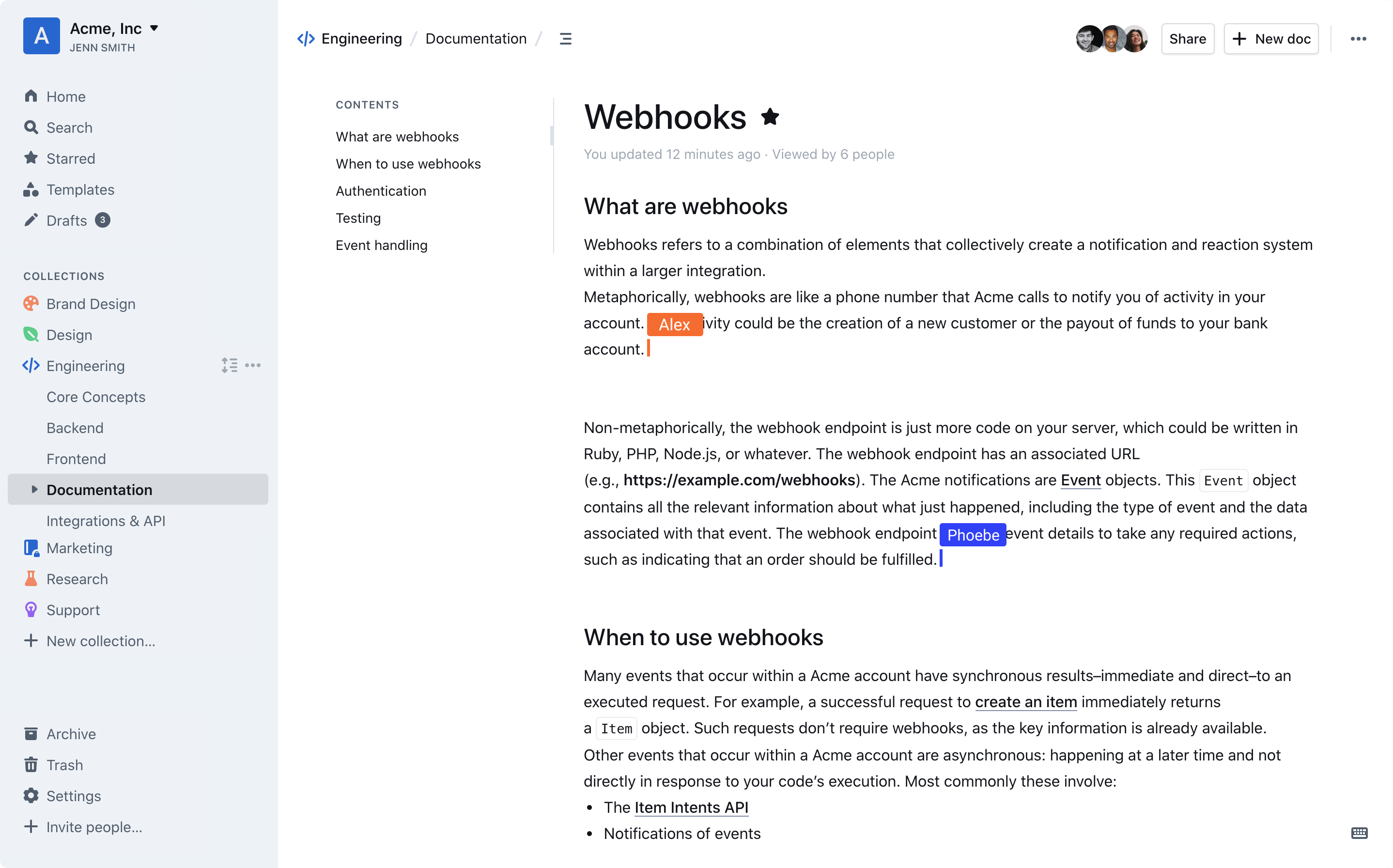
Outline – Team knowledge base & wiki
