


The not-so-dismal science of Twitternomics
Scientists no Longer Find Twitter Professionally Useful, and have Switched to Bluesky
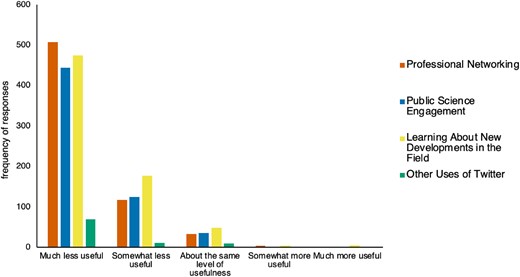
Synopsis Social media has become widely used by the scientific community for a variety of professional uses, including networking and public outreach. For the past decade, Twitter has been a primary home of scientists on social media. In recent years, new leadership at Twitter has made substantive changes that have resulted in increases in the prevalence of pseudoscience, conspiracy theory, and harassment on the platform, causing many scientists to seek alternatives. Bluesky has been suggested as a good alternative to Twitter, but the phenomenon of academics switching social media platforms has not previously been studied. Here we report on the results of a survey distributed to scientists on Twitter and Bluesky (n = 813). Results overwhelmingly confirm that changes to Twitter have made the social media platform no longer professionally useful or pleasant, and that many scientists have abandoned it in favor of Bluesky. Results show that for every reported professional benefit that scientists once gained from Twitter, scientists can now gain that benefit more effectively on Bluesky than on Twitter.
Social media promotion improves job market outcomes
Social media has transformed how academics disseminate research, but its effect on academic job outcomes remains unclear. Previous research has shown correlations between social media exposure and metrics like citation counts, but these relationships may be confounded by unobserved factors such as researcher quality or access to professional networks. We examine whether social media promotion causally affects job market outcomes in economics through a field experiment on Twitter (now X). We first collect tweets about job market papers from 519 candidates and post them from a dedicated account. We then randomize half of the posts to be quote-tweeted by established economists in the candidates’ fields, and measure the effects on both online visibility and hiring outcomes. We find that posts in the treatment group receive 441% more views and 303% more likes than those in the control group. Candidates whose posts were assigned to be quote-tweeted receive one additional flyout invitation compared to the control group average of 5.4 flyouts. Furthermore, women in the treatment group receive 0.9 more job offers than women in the control group, who receive 3 offers on average. Exploring mechanisms, we find that academic reputation drives these results, with stronger effects for quote-tweets from highly cited scholars and for candidates from top institutions. Our findings suggest social media promotion causally increases research visibility and improves academic job market outcomes.

How Twitter’s Algorithm Works: A High-level Breakdown
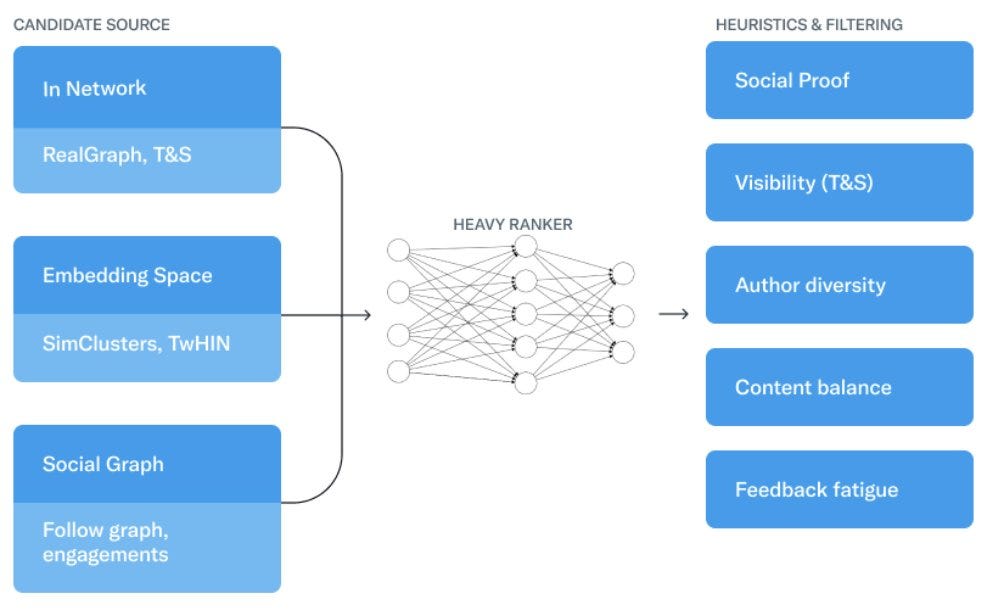
On March 31st, 2023, Twitter made an unprecedented move by releasing the source code for their algorithm. The move is unprecedented because…
Medium and Twitter founder: ‘We put junk food in front of them and they eat it’
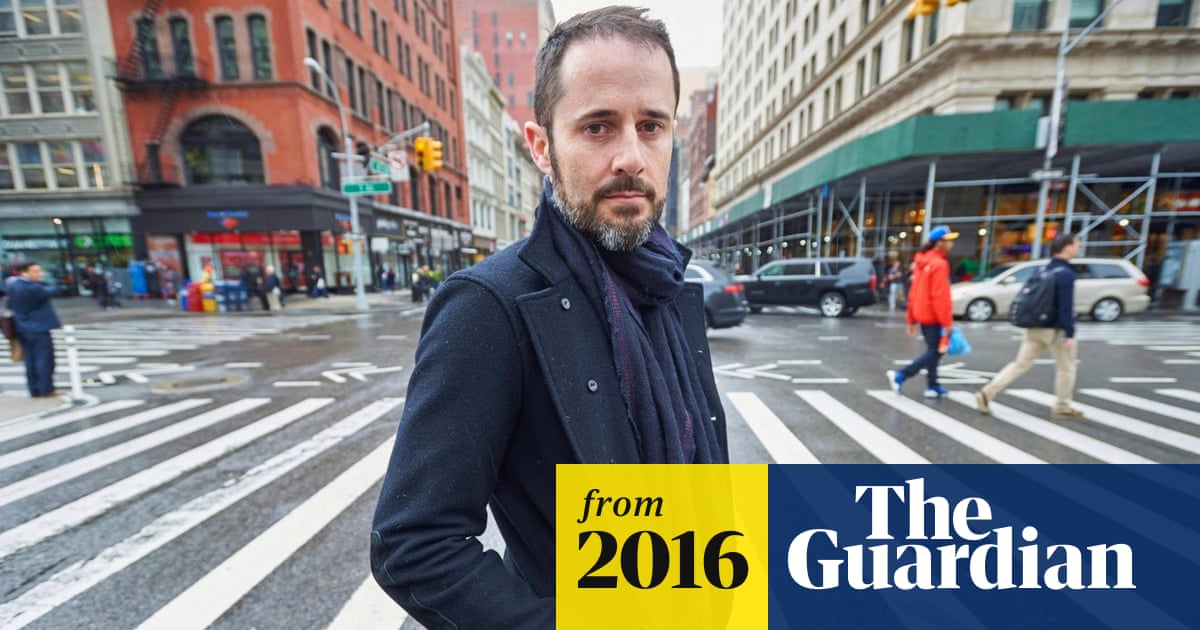
Ev Williams on feedback loops, giving a home to publishers, and finding critical mass
Evaluating Twitter’s algorithmic amplification of low-credibility content: an observational study
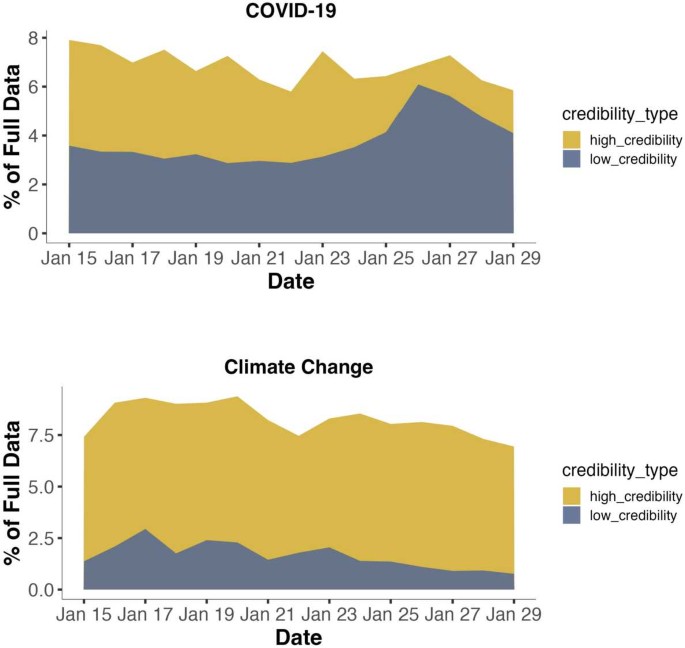
Artificial intelligence (AI)-powered recommender systems play a crucial role in determining the content that users are exposed to on social media platforms. However, the behavioural patterns of these systems are often opaque, complicating the evaluation of their impact on the dissemination and consumption of disinformation and misinformation. To begin addressing this evidence gap, this study presents a measurement approach that uses observed digital traces to infer the status of algorithmic amplification of low-credibility content on Twitter over a 14-day period in January 2023. Using an original dataset of ≈ 2.7 million posts on COVID-19 and climate change published on the platform, this study identifies tweets sharing information from low-credibility domains, and uses a bootstrapping model with two stratifications, a tweet’s engagement level and a user’s followers level, to compare any differences in impressions generated between low-credibility and high-credibility samples. Additional stratification variables of toxicity, political bias, and verified status are also examined. This analysis provides valuable observational evidence on whether the Twitter algorithm favours the visibility of low-credibility content, with results indicating that, on aggregate, tweets containing low-credibility URL domains perform better than tweets that do not across both datasets. However, this effect is largely attributable to a difference in high-engagement, high-followers tweets, which are very impactful in terms of impressions generation, and are more likely receive amplified visibility when containing low-credibility content. Furthermore, high toxicity tweets and those with right-leaning bias see heightened amplification, as do low-credibility tweets from verified accounts. Ultimately, this suggests that Twitter’s recommender system may have facilitated the diffusion of false content by amplifying the visibility of low-credibility content with high-engagement generated by very influential users.
Evaluating Twitter’s algorithmic amplification of low-credibility content: an observational study
Artificial intelligence (AI)-powered recommender systems play a crucial role in determining the content that users are exposed to on social media platforms. However, the behavioural patterns of these systems are often opaque, complicating the evaluation of their impact on the dissemination and consumption of disinformation and misinformation. To begin addressing this evidence gap, this study presents a measurement approach that uses observed digital traces to infer the status of algorithmic amplification of low-credibility content on Twitter over a 14-day period in January 2023. Using an original dataset of ≈ 2.7 million posts on COVID-19 and climate change published on the platform, this study identifies tweets sharing information from low-credibility domains, and uses a bootstrapping model with two stratifications, a tweet’s engagement level and a user’s followers level, to compare any differences in impressions generated between low-credibility and high-credibility samples. Additional stratification variables of toxicity, political bias, and verified status are also examined. This analysis provides valuable observational evidence on whether the Twitter algorithm favours the visibility of low-credibility content, with results indicating that, on aggregate, tweets containing low-credibility URL domains perform better than tweets that do not across both datasets. However, this effect is largely attributable to a difference in high-engagement, high-followers tweets, which are very impactful in terms of impressions generation, and are more likely receive amplified visibility when containing low-credibility content. Furthermore, high toxicity tweets and those with right-leaning bias see heightened amplification, as do low-credibility tweets from verified accounts. Ultimately, this suggests that Twitter’s recommender system may have facilitated the diffusion of false content by amplifying the visibility of low-credibility content with high-engagement generated by very influential users.
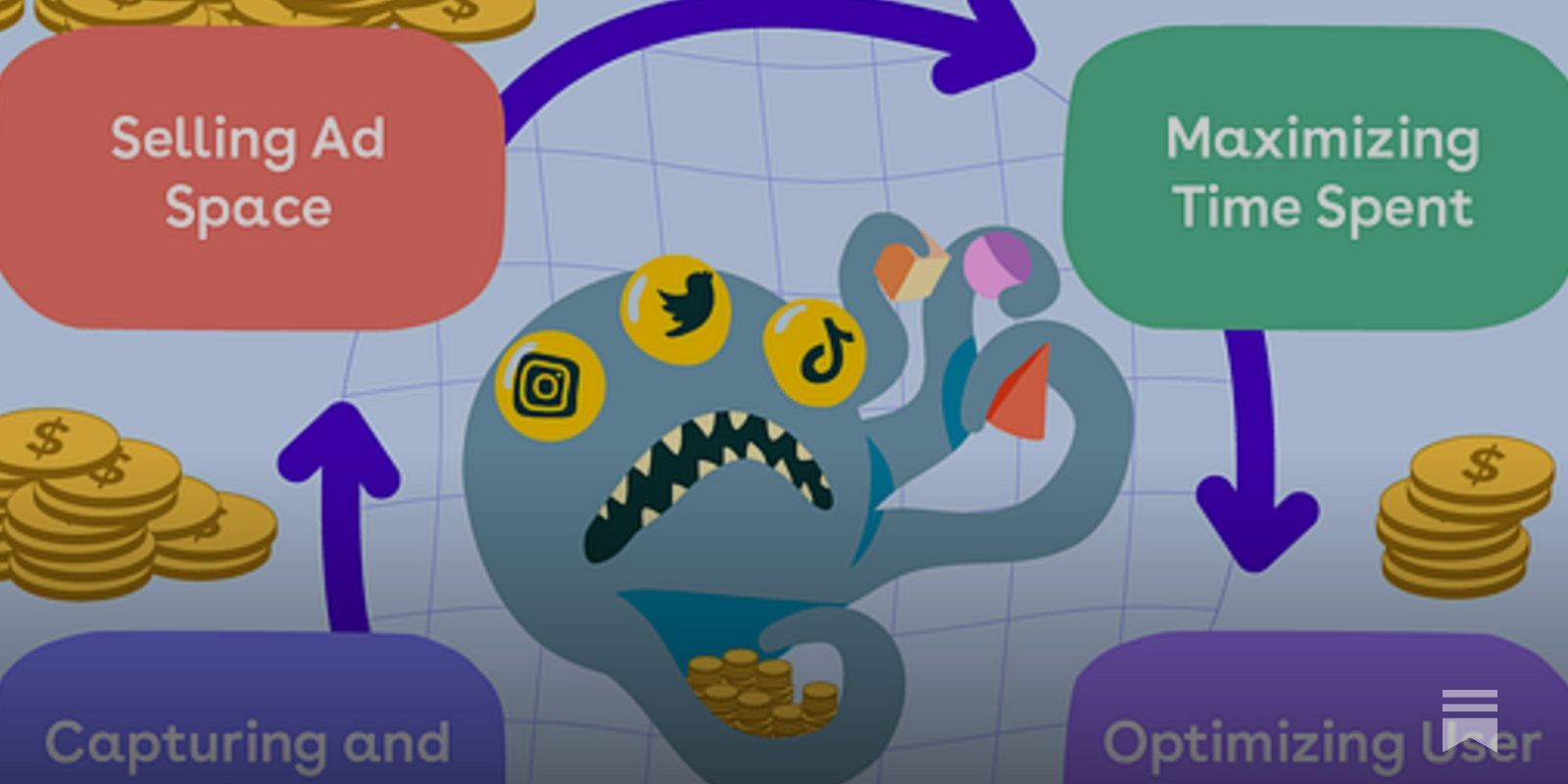
👊💰 We need a revolution in social media business models
Deepti Doshi on the business incentives underlying social media
🔭🖤🚀 Social media’s next evolution: decentralized, open-source, and scalable
How Blacksky grew to millions of users without spending a dollar
Scientists no Longer Find Twitter Professionally Useful, and have Switched to Bluesky
Synopsis. Social media has become widely used by the scientific community for a variety of professional uses, including networking and public outreach. For
Scientists no Longer Find Twitter Professionally Useful, and have Switched to Bluesky
Synopsis. Social media has become widely used by the scientific community for a variety of professional uses, including networking and public outreach. For
Social Media | The Paper Pilot
The Paper Pilot's digital garden of thoughts on philosophy, politics, and sociology
One of the issues that has come up again and again in my reporting on misinformation and social media is the massive influence social media companies have on research in the field. Last night a preprint dropped that tries to get at this with some numbers. My piece in @science.org (and 🧪🧵 coming):

Nearly a third of social media research has undisclosed ties to industry, preprint claims
www.science.orgI'm excited to finally have a preprint of this paper up, a few years in the making. In it we argue that industry-driven manipulation of social media research is well underway and that norms and institutions in the field are ill-prepared to resist tech's influence. arxiv.org/abs/2510.19894
Twitter died a long time ago and X isn't worth it. Before I made the jump, my ego was holding me back. I was too concerned with vanity metrics. I finally realized if you're posting stuff people want to follow, then they'll follow you, even when you leave. siliconrepublic.com/enterprise/kelsey-hightower-b…

Open-source champion Kelsey Hightower on the promise of Bluesky
www.siliconrepublic.com


