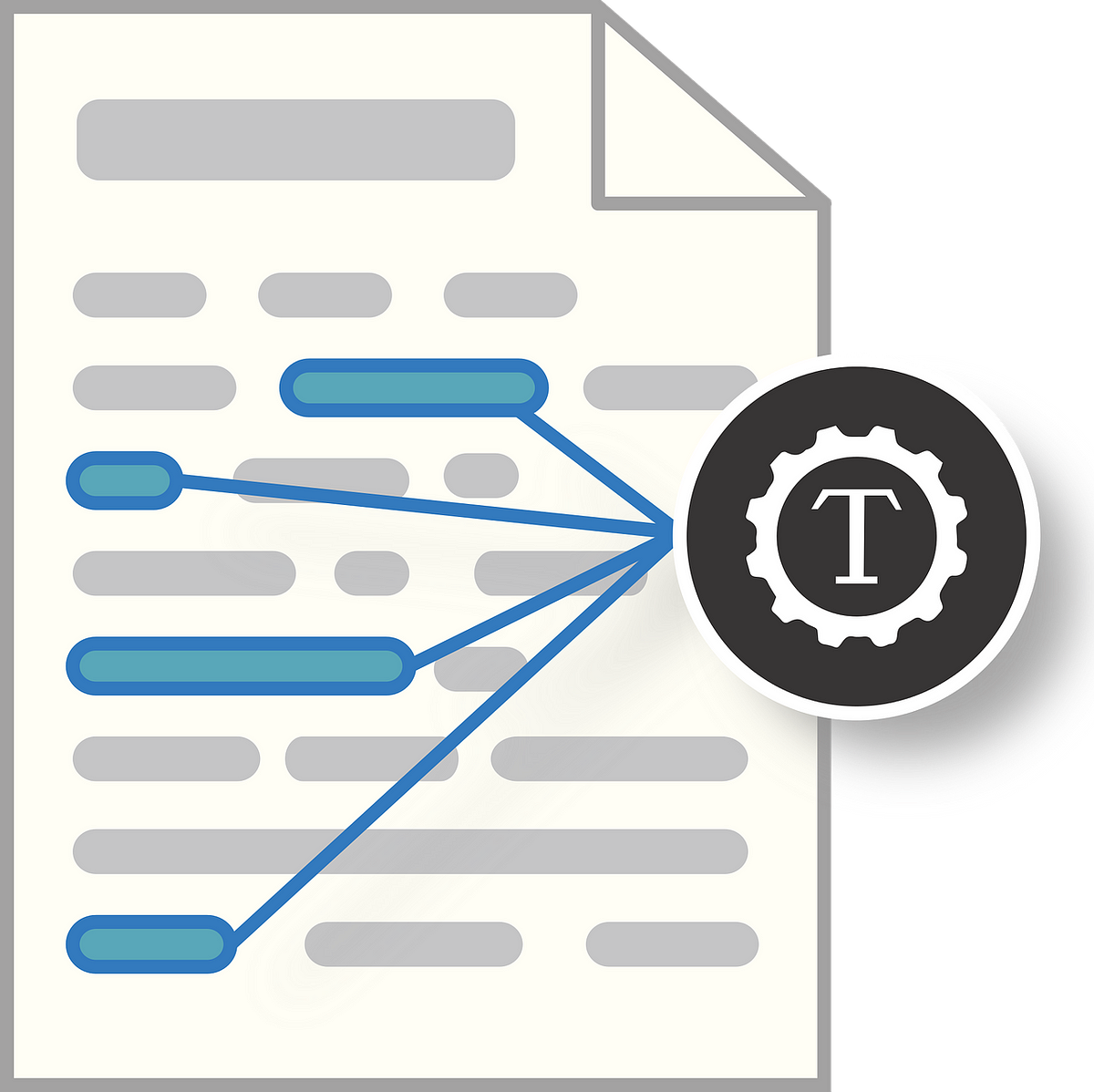
NER is used in many fields in Natural Language Processing (NLP)
Named-Entity Recognition on web pages
In a project, I had the goal of detecting named entities on the web page I am looking at without calling an external service, using NER. Named-Entity Recognition (NER) is a task that aims to extract entities from a text, like locations, persons, organizations, etc.
OWNER — Toward Unsupervised Open-World Named Entity Recognition
Named Entity Recognition (NER) is a crucial task in Natural Language Processing (NLP), traditionally addressed through supervised learning, which requires extensive annotated corpora. This requirement poses challenges, particularly in specialized domains with limited labeled data. In response, the field has shifted towards lower-resource approaches, such as few-shot and zero-shot learning, which reduce the dependency on annotated data. However, even zero-shot models require prior knowledge of entity types, limiting their applicability in exploratory scenarios. In this context, we introduce OWNER, our unsupervised and open-world NER model, designed to operate without annotated documents or predefined entity types. OWNER leverages Encoder-only Language Models like BERT to infer and organize entities into dynamic entity types through a two-step process: mention detection and entity typing. Mention detection employs a BIO sequence labeling approach to locate entities, while entity typing uses BERT-based embeddings, refined through contrastive learning, for clustering and naming entity types. This method allows OWNER to automatically identify and structure unknown entity types, offering advantages for exploratory dataset analysis and knowledge graph construction. Our experimental evaluation on 13 domain-specific datasets demonstrates that OWNER surpasses existing LLM-based open-world NER models and remains competitive with more supervised and closed-world zero-shot models. OWNER’s architecture provides a lightweight, easily deployable solution that advances the state of the art in unsupervised and open-world NER. The source code of OWNER is publicly available at https://github.com/alteca/OWNER, facilitating future research in this domain.
The Stanford NLP Group
Performing groundbreaking Natural Language Processing research since 1999.

Natural Language Processing With Python's NLTK Package – Real Python
In this beginner-friendly tutorial, you'll take your first steps with Natural Language Processing (NLP) and Python's Natural Language Toolkit (NLTK). You'll learn how to process unstructured data in order to be able to analyze it and draw conclusions from it.
DBpedia Abstracts: A Large-Scale, Open, Multilingual NLP Training Corpus
The ever increasing importance of machine learning in Natural Language Processing is accompanied by an equally increasing need in large-scale training and evaluation corpora. Due to its size, its openness and relative quality, the Wikipedia has already been a source of such data, but on a limited scale. This paper introduces the DBpedia Abstract Corpus, a large-scale, open corpus of annotated Wikipedia texts in six languages, featuring over 11 million texts and over 97 million entity links. The properties of the Wikipedia texts are being described, as well as the corpus creation process, its format and interesting use-cases, like Named Entity Linking training and evaluation.
Stanford CS336 Language Modeling from Scratch I 2025
Technical Report on the Pangram AI-Generated Text Classifier
We present Pangram Text, a transformer-based neural network trained to distinguish text written by large language models from text written by humans. Pangram Text outperforms zero-shot methods such as DetectGPT as well as leading commercial AI detection tools with over 38 times lower error rates on a comprehensive benchmark comprised of 10 text domains (student writing, creative writing, scientific writing, books, encyclopedias, news, email, scientific papers, short-form Q&A) and 8 open- and closed-source large language models. We propose a training algorithm, hard negative mining with synthetic mirrors, that enables our classifier to achieve orders of magnitude lower false positive rates on high-data domains such as reviews. Finally, we show that Pangram Text is not biased against nonnative English speakers and generalizes to domains and models unseen during training.

NLTK Book
This version of the NLTK book is updated for Python 3 and NLTK 3. The first edition of the book, published by O'Reilly, is available at http://nltk.org/book_1ed/. (There are currently no plans for a second edition of the book.)
Artificial Writing and Automated Detection
Artificial intelligence (AI) tools are increasingly used for written deliverables. This has created demand for distinguishing human-generated text from AI-generated text at scale, e.g., ensuring assignments were completed by students, product reviews written by actual customers, etc. A decision-maker aiming to implement a detector in practice must consider two key statistics: the False Negative Rate (FNR), which corresponds to the proportion of AI-generated text that is falsely classified as human, and the False Positive Rate (FPR), which corresponds to the proportion of human-written text that is falsely classified as AI-generated. We evaluate three leading commercial detectors—Pangram, OriginalityAI, GPTZero—and an open-source one —RoBERTa—on their performance in minimizing these statistics using a large corpus spanning genres, lengths, and models. Commercial detectors outperform open-source, with Pangram achieving near-zero FNR and FPR rates that remain robust across models, threshold rules, ultra-short passages, "stubs" (≤ 50 words) and ’humanizer’ tools. A decision-maker may weight one type of error (Type I vs. Type II) as more important than the other. To account for such a preference, we introduce a framework where the decision-maker sets a policy cap—a detector-independent metric reflecting tolerance for false positives or negatives. We show that Pangram is the only tool to satisfy a strict cap (FPR ≤ 0.005) without sacrificing accuracy. This framework is especially relevant given the uncertainty surrounding how AI may be used at different stages of writing, where certain uses may be encouraged (e.g., grammar correction) but may be difficult to separate from other uses.

Elias Stengel-Eskin, Aaron Steven White, Sheng Zhang, Benjamin Van Durme · Universal Decompositional Semantic Parsing · SlidesLive
Professional Conference Recording
Documenting Large Webtext Corpora: A Case Study on the Colossal Clean Crawled Corpus
Large language models have led to remarkable progress on many NLP tasks, and researchers are turning to ever-larger text corpora to train them. Some of the largest corpora available are made by scraping significant portions of the internet, and are frequently introduced with only minimal documentation. In this work we provide some of the first documentation for the Colossal Clean Crawled Corpus (C4; Raffel et al., 2020), a dataset created by applying a set of filters to a single snapshot of Common Crawl. We begin by investigating where the data came from, and find a significant amount of text from unexpected sources like patents and US military websites. Then we explore the content of the text itself, and find machine-generated text (e.g., from machine translation systems) and evaluation examples from other benchmark NLP datasets. To understand the impact of the filters applied to create this dataset, we evaluate the text that was removed, and show that blocklist filtering disproportionately removes text from and about minority individuals. Finally, we conclude with some recommendations for how to created and document web-scale datasets from a scrape of the internet.
Self-Driving Datasets: From 20 Million Papers to Nuanced Biomedical Knowledge at Scale
Manually curated biomedical repositories -- spanning bioactivity, genomics, and chemistry -- are expensive to maintain, lag behind primary literature, and discard experimental context, obscuring nuances needed to assess data correctness and coverage. We show that PubMed itself can be autonomously and cost-effectively turned into structured datasets that are larger, more nuanced, and more accurate than the curated databases they replace. We present three coupled contributions: (1) an LLM-based entity-tagging pipeline, grounded in nine biomedical ontologies, that tags 4.5B entities across 19 categories in a 22.5M-paper, 2.5T-token PubMed corpus; (2) hybrid sparse-dense retrieval supporting entity-filtered semantic queries over the tagged corpus; and (3) Starling, a multi-agent deep research system that, given only a natural-language task description, designs precision- and recall-targeted retrieval filters, induces an extraction schema, and emits structured records with nuance-rich fields and supporting passages. Across six tasks -- blood-brain barrier permeability, oral bioavailability, acute toxicity (LD50), gene-disease associations, protein subcellular localization, and chemical reactions -- Starling produces ~6.3M records (91K-3M per task); several are, to our knowledge, the largest public datasets for their property. Frontier-model rejection of our extractions is 0.6-7.7% across tasks, far below error rates we measure on widely used curated counterparts (e.g., 16.5% on BBB_Martins, 7.3% on Bioavailability_Ma). Beyond scale and accuracy, the supporting passages carry nuance tabular databases discard -- e.g., oral bioavailability may depend on fed vs. fasted state. Together, the corpus, retrieval, and agent establish a foundation for AI-driven therapeutic design. Code and datasets: https://github.com/starling-labs/starling.
Google for Developers Blog - News about Web, Mobile, AI and Cloud
Explore LangExtract: a Gemini-powered, open-source Python library for reliable, structured information extraction from unstructured text with precise source grounding.