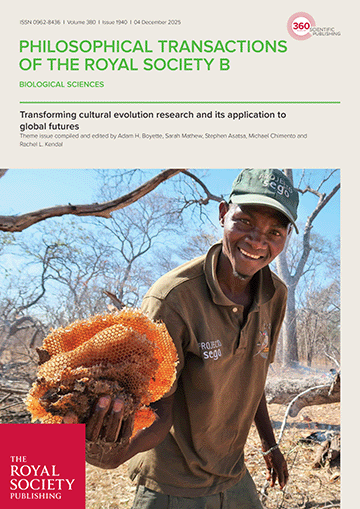
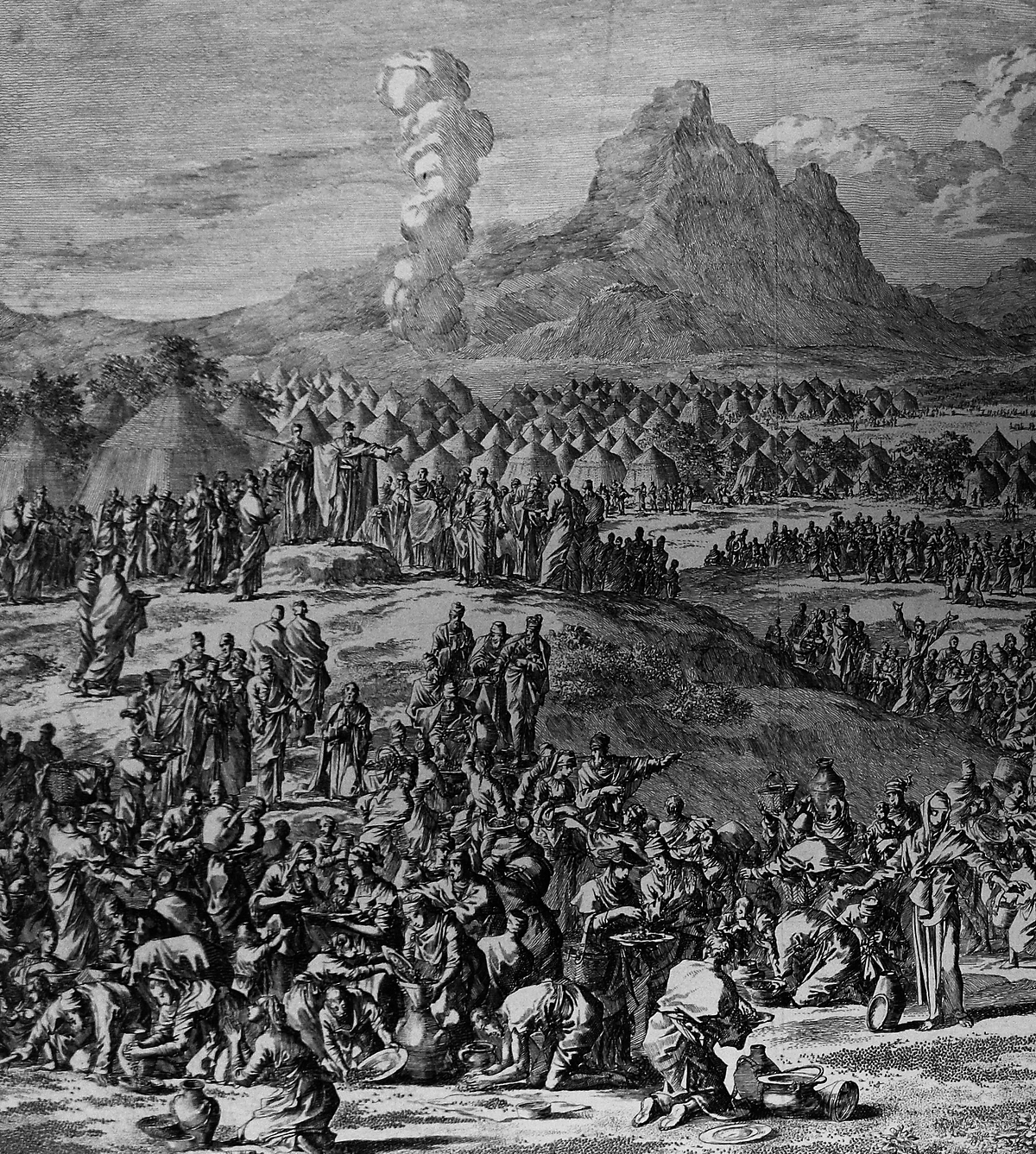
During liminal periods of all kinds, social hierarchies may be reversed or temporarily dissolved, continuity of tradition may become…
Grow like Trees: An Organic Approach to Societal Regrowth
2026 is the year that system breakdown became impossible to deny. Democratic norms, societal norms, rule of law, the fabric of the social contract tearing as we watch. Or hide, unwilling or unable to face the unravelling. The hopeful among us see opportunity through the dark. Tentatively or boldly we

Reconstructing the Social Construction of Reality
ABSTRACT What is the relationship between legitimation and institutionalization? We take a fresh look at a more complex and nuanced landscape than has previously been documented. Our approach is to view legitimation and institutionalization as separate, though related, processes. We engage in theory building to develop a typology suggesting four different ways in which the social construction of reality can be achieved: instantiating (mutual causal emergence, coming into being), realizing (legitimating toward institutionalization), aspiring (legitimating from institutionalization) and missing (mutual causal suppression, unrealized potential). Our typology contributes a new foundational framework for the sociology of knowledge for better explicating socially constructed reality, not only in periods of stability but also in the uncertainty of liquid times and states.

Our Overfitted Century
Cultural stagnation is because we're stuck in-distribution

Reimagining Ourselves at the End of Our World: Kinship, Interconnection, and Spirituality in the Metacrisis - The Great Simplification
Over the past decade, the world has become increasingly chaotic and uncertain – and so, too, has our cultural vision for the future. While the events we face now may feel unprecedented, they are rooted in much deeper patterns, which humanity has been playing out for millennia. If we take the time to understand past trends, we can also employ practices and philosophies that might counteract them – such as focusing on kinship, intimacy, and resilience – to help pave the way for a better future. How might we nurture the foundations of a different kind of society, even while the end of our current civilization plays out around us?

Sᴜɴʀɪsᴇ Oᴀᴛʜ on Twitter / X
Something I started noticing is that while stable institutions build on top of those things that last, the very top level of those ideals are often things which seem fleeting but point beyond themselves.A civilization does not stand on flowers, but crowns itself in them. https://t.co/HdooOEMs6X— Sᴜɴʀɪsᴇ Oᴀᴛʜ (@sunriseoath) November 8, 2025
How can open social protocols fail us in 2025 | shazow.net
Let’s compare the possible failure modes of various open social protocols: ActivityPub/Mastodon ATProto/Bluesky Farcaster/Warpcast Some scenarios I’d like to …
The replication crisis may also be a theory crisis
Theory protects from "personal intuitions and culturally biased folk theories."


Norm Dynamics: Interdisciplinary Perspectives on Social Norm Emergence, Persistence, and Change
Social norms are the glue that holds society together, yet our knowledge of them remains heavily intellectually siloed. This article provides an interdisciplinary review of the emerging field of norm dynamics by integrating research across the social sciences through a cultural-evolutionary lens. After reviewing key distinctions in theory and method, we discuss research on norm psychology—the neural and cognitive underpinnings of social norm learning and acquisition. We then overview how norms emerge and spread through intergenerational transmission, social networks, and group-level ecological and historical factors. Next, we discuss multilevel factors that lead norms to persist, change, or erode over time. We also consider cultural mismatches that can arise when a changing environment leads once-beneficial norms to become maladaptive. Finally, we discuss potential future research directions and the implications of norm dynamics for theory and policy.

Activists and hipsters without territory or a plan
There is almost no social movement of a kind that leads human industrial society into a new direction. This may be because the likely participants and leaders of a vanguard have no territory. The missing ingredient is cohesion. Enough cohesion can create Virtual Territory, or a network for the cultural revolution that's needed to replace the systematic destruction of our biosphere.
People adopt made-up social rules to be part of a group
It happens when the rule is useless and nobody will ever meet anyone affected by it.

Commoning as a Transformative Social Paradigm | David Bollier
Every so often I am invited to write a piece that in effect answers the question, “Why the commons?” I invariably find new answers to that question each time that I re-engage with it. My latest attempt is an essay, “Commoning as a Transformative Social Paradigm,” which I wrote for the Next System Project as part of its series of proposals for systemic alternatives.
The Society of Brevity is for those who believe most sentences can end sooner. We honor concision, condemn excess, and keep introductions short.
myles braithwaite's garden of ideas. a collection of thoughts, photos, and things they love.

Metanorms generate stable yet adaptable normative social order in a politically decentralized society
Abstract Norms are essential for social stability but can hinder adaptability in changing environments. Yet human societies have found ways to modify existing norms or create new ones in response to novel challenges. This paper proposes a framework for understanding adaptive norm evolution. First, drawing on a theory of legal order, we posit that societies balance normative stability and adaptability through metanorms—rules that govern the process by which norms are interpreted, changed and enforced. Second, we test this idea in the context of customary dispute resolution by elders among the Turkana, a pastoralist society in Kenya. Based on vignette experiments with 369 participants, we found that community members were significantly more willing to enforce decisions when elders aligned their conduct with metanorms. Elders are constrained in their ability to alter long-standing customs, but by following metanorms, they can create new rules for novel situations. These findings support our proposed mechanism: in the absence of centralized authority, metanorms governing normative institutions allow for adaptive norm change while preserving cultural continuity. We conclude by suggesting that group-level selection acts on cultural variation in metanorms, shaping the evolvability of normative systems and enabling societies to sustain adaptive legal order without coercive centralized power. This article is part of the theme issue ‘Transforming cultural evolution research and its application to global futures’.