


I come to Facebook to share all kinds of things with people I care about — from celebratory posts about practicing yoga for 60 days…
Facebook is asking random questions to learn more about you - Engadget
Facebook is trying to get its users talk more about themselves in between all their link shares, photos and videos. Its newest feature for web and mobile called "Did You Know" asks you random questions to tease out info you might never willingly tell anyone yourself. You'll find the new section when you visit your profile page, waiting for you to answer a few fun (perhaps silly) questions like who your favorite superhero is, your favorite sport, hidden talent, what day of the week you'd rather be and what your absolute dream job is (Friday and astronaut, of course.)

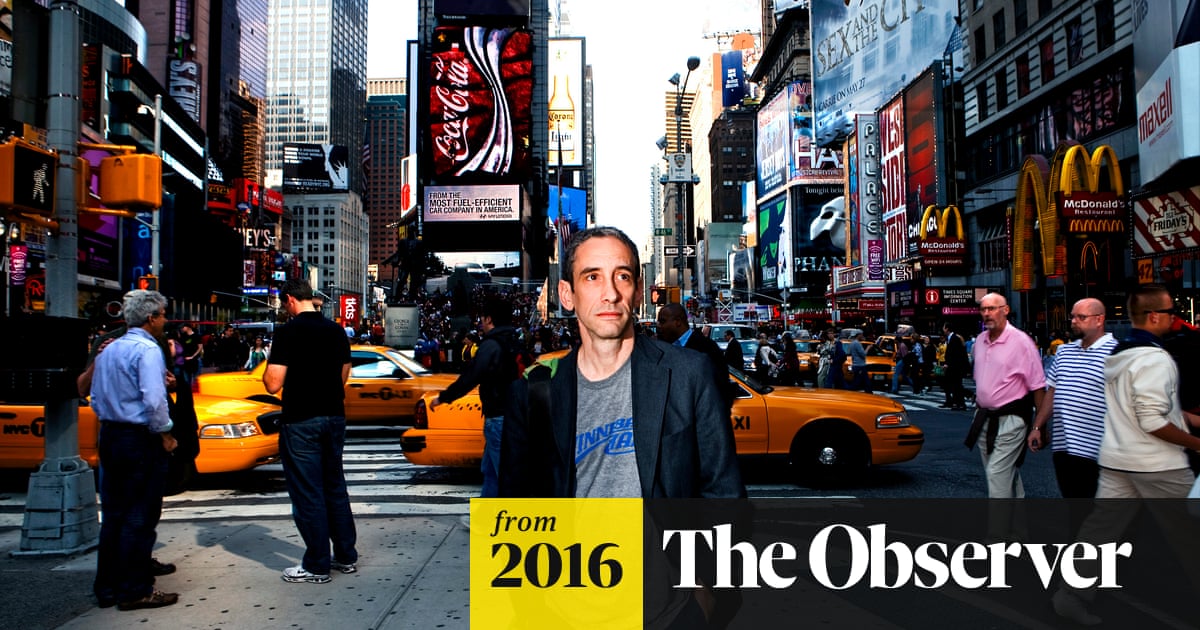
Douglas Rushkoff: 'I’m thinking it may be good to be off social media altogether'
The media critic on the malfunctioning tech economy, digital detoxes and why Facebook is unhygienic
Disquiet – Listening to culture. Playing with audio. Sounding out technology. Composing in code.
At the end of each week, I usually collate a lightly edited collection of recent comments I’ve made on social media, which I think of as my public scratch pad. I tag on what books I may have finished reading. Knowing I’ll revisit my social media posts, I’ve found, serves as a positive and mellowing influence on my online activity. I mostly hang out on Mastodon (at post.lurk.org/@disquiet), and I’m also trying out a few others. And I generally take weekends off social media.
Facebook’s Mental Health Problem
The most important thing I learned in 2015? That depression and social media do not go well together at all.

Death of the private self: how fifteen years of Facebook changed the human condition
In 2004, the social network site was set up to connect people. But now, with lives increasingly played out online, have we forgotten how to be alone?
“What Have I Done”: Early Facebook Employees Regret the Monster They Created
Emotions range from defensive to apoplectic. “I lay awake at night thinking about all the things we built in the early days and what we could have done to avoid the product being used this way,” says one early employee.

Former Facebook Exec: 'You Don’t Realize It But You Are Being Programmed'
This is the year everyone—including founding executives—began publicly questioning the impact of social media on our lives. Last month, Facebook’s first

Facebook Wrestles With the Features It Used to Define Social Networking (Published 2021)
Likes and shares made the social media site what it is. Now, company documents show, it’s struggling to deal with their effects.

Facebook’s Privacy Cake
Mark Zuckerberg’s announcement of A Privacy-Focused Vision for Social Networking is not some dramatic pivot: it is a growth opportunity for Facebook and a challenge for regulators.

Progress Update: Building Healthier Social Media - Bluesky
Over the next few months, we’ll be iterating on the systems that make Bluesky a better place for healthy conversations. Some experiments will stick, others will evolve, and we’ll share what we learn along the way.
Criticism of Facebook
Facebook (and parent company Meta Platforms) has been the subject of criticism and legal action since it was founded in 2004.[1] Criticisms include the outsize influence Facebook has on the lives and health of its users and employees, as well as Facebook's influence on the way media, specifically news, is reported and distributed. Notable issues include Internet privacy, such as use of a widespread "like" button on third-party websites tracking users,[2][3] possible indefinite records of user information,[4] automatic facial recognition software,[5][6] and its role in the workplace, including employer-employee account disclosure.[7] The use of Facebook can have negative psychological and physiological effects[8] that include feelings of sexual jealousy,[9][10] stress,[11][12] lack of attention,[13] and social media addiction that in some cases is comparable to drug addiction.[14][15]
Good-bye to All That Twitter
Two New York staffers find enlightenment, or at least more time for Facebook, on a turn-of-the-year social-media holiday.

Estimating the association between Facebook adoption and well-being in 72 countries
Social media's potential effects on well-being have received considerable research interest, but much of past work is hampered by an exclusive focus on demographics in the Global North and inaccurate self-reports of social media engagement. We describe associations linking 72 countries' Facebook adoption to the well-being of 946 798 individuals from 2008 to 2019. We found no evidence suggesting that the global penetration of social media is associated with widespread psychological harm: Facebook adoption predicted life satisfaction and positive experiences positively, and negative experiences negatively, both between countries and within countries over time. Nevertheless, the observed associations were small and did not reach a conventional 97.5% one-sided credibility threshold in all cases. Facebook adoption predicted aspects of well-being more positively for younger individuals, but country-specific results were mixed. To move beyond studying aggregates and to better understand social media's roles in people's lives, and their potential causal effects, we need more transparent collaborative research between independent scientists and the technology industry.

A healthier internet isn’t just wishful thinking — our friends at the @prosocialdesign.bsky.social have a whole library of research-backed design solutions for building prosocial spaces online, organized by our Civic Signals research! 🧵

Prosocial Design Network
www.prosocialdesign.orgHey everyone, I spent the last three years as a Trust and Safety professional researching traditional social media and decided to put words to my thoughts. I hope you find my findings enjoyable or intriguing.

Traditional Social Media as a Prison
whatshappeningonmyfeed.leaflet.pub
