


Tech helped Fake Markets took over Free Markets without media or politicians even noticing.
Why Free Markets Make Fools of Us
George Akerlof and Robert Shiller believe that once we understand human psychology, we will be a lot less enthusiastic about free markets and a lot more worried about the harmful effects of competition. In their view, companies exploit human weaknesses not necessarily because they are malicious or venal, but because the market makes them do it.

How the Tech World Turned Evil
Once upon a time, they were counterculture idealists bringing power to the people. Today they’re greedy monopolists who’d sooner destroy our democracy than be reined in by government in any way—and they have to be stopped.

Media and Social Capital
We survey the empirical literature in economics on the impact of media technologies on social capital. Guided by a simple model of information and collective action, we cover a range of different outcomes related to social capital—from social and political participation to interpersonal trust—in its benign and destructive manifestations. The impact of media technologies hinges on their content (information versus entertainment), their effectiveness in fostering coordination, and the networks they create as well as on individual characteristics and media consumption choices.

Media and Social Capital
We survey the empirical literature in economics on the impact of media technologies on social capital. Guided by a simple model of information and collective action, we cover a range of different outcomes related to social capital—from social and political participation to interpersonal trust—in its benign and destructive manifestations. The impact of media technologies hinges on their content (information versus entertainment), their effectiveness in fostering coordination, and the networks they create as well as on individual characteristics and media consumption choices.
The Antitrust Revolution, by Barry C. Lynn
Liberal democracy’s last stand against Big Tech

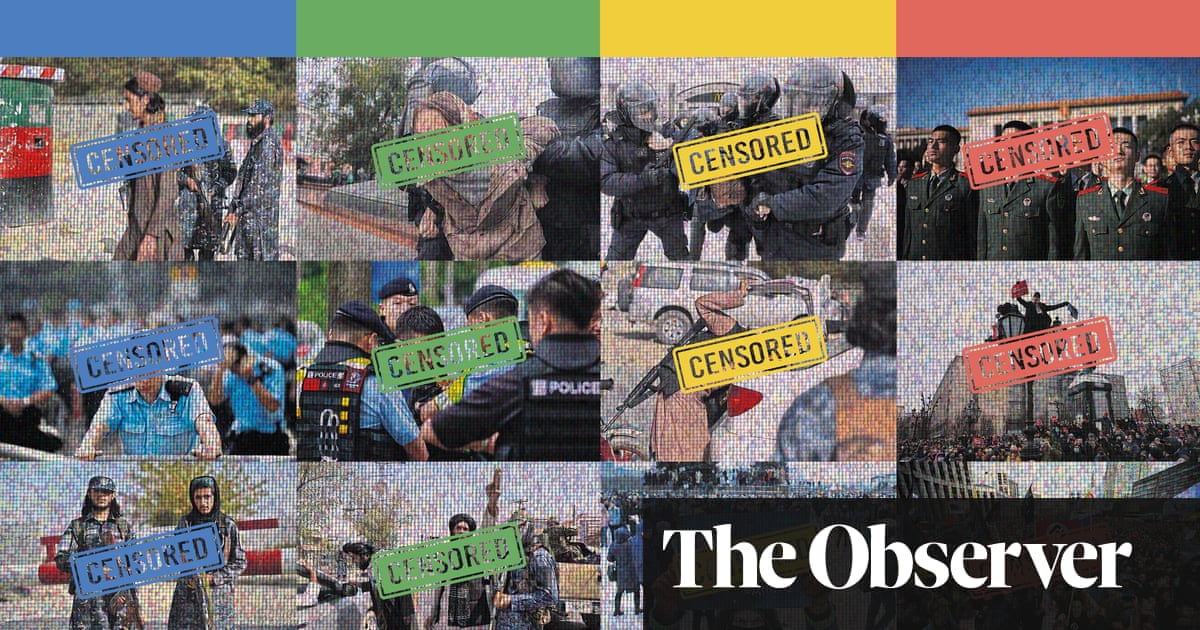
Revealed: Google facilitated Russia and China’s censorship requests
An investigation has exposed the tech firm’s cooperation with autocratic regimes to remove unfavourable content
Free Our Feeds
Social media is broken: controlled by a handful of billionaires who shape what people see, say, and believe. These platforms profit from division, exploit user data, and lock people into closed systems.
The Real Money In Modern ‘Journalism’ Now Involves Filling The Internet With ‘AI’-Generated Garbage
Last year both Gannett and Sports Illustrated were caught creating fake, “AI” generated journalists to create fake, plagiarism and mistake-prone “journalism.” In both instances …

Media Capture Watch — Mapping Big Tech's Influence on Journalism
An interactive investigation into Big Tech and AI companies' funding relationships with journalism and media organizations.
The Left Doesn't Hate Technology, We Hate Being Exploited
Techno-cynics are all just wounded techno-optimists.

Language Models Trained on State Media Sources Launder Propaganda
Tech Policy Press is a nonprofit media and community venture intended to provoke new ideas, debate and discussion at the intersection of technology and democracy. We publish opinion and analysis.

The Risks of Industry Influence in Tech Research
Emerging information technologies like social media, search engines, and AI can have a broad impact on public health, political institutions, social dynamics, and the natural world. It is critical to develop a scientific understanding of these impacts to inform evidence-based technology policy that minimizes harm and maximizes benefits. Unlike most other global-scale scientific challenges, however, the data necessary for scientific progress are generated and controlled by the same industry that might be subject to evidence-based regulation. Moreover, technology companies historically have been, and continue to be, a major source of funding for this field. These asymmetries in information and funding raise significant concerns about the potential for undue industry influence on the scientific record. In this Perspective, we explore how technology companies can influence our scientific understanding of their products. We argue that science faces unique challenges in the context of technology research that will require strengthening existing safeguards and constructing wholly new ones.

The Media's Pivot to AI Is Not Real and Not Going to Work
AI is not going to save media companies, and forcing journalists to use AI is not a business model.
Amazing site here via @timnitgebru.bsky.social - a map of big tech influence on media and media companies. imo this goes a decent way to explaining why coverage of AI specifically has been so shockingly bad recently. Very useful resource!! nananwachukwu.github.io/media-capture-watch/
Three notes: (1) this is not *just* marketing. These guys really do mean it. They are convinced they’ve built a vengeful digital god. (2) but also they’re a cult. They are not impartial scientific experts. (3) and one of the byproduct of their endless confidence is marketing hype.

Alejandra Caraballo
The alarms are all flashing red.
In case you didn't think Polymarket was sketchy enough. It paid influencers to use a fake site (poiymarket) to make fake bets that would then look like they won, and then to post viral videos to social media pretending they had won money. wsj.com/business/media/polymarket-soc…

They Looked Like They Were Getting Rich on Polymarket—but None of It Was Real
www.wsj.com

