

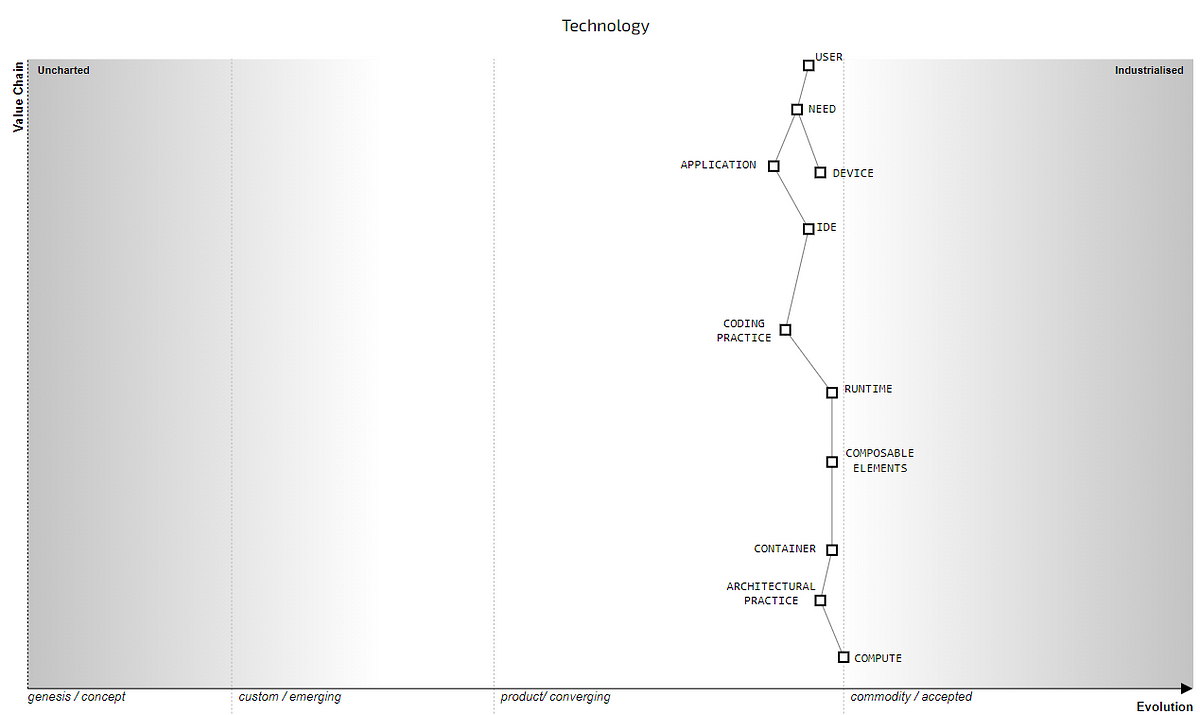
First, there isn’t much fuss … yet. But there will be.
The case against conversational interfaces
Conversational interfaces are a bit of a meme. Every couple of years a shiny new AI development emerges and people in tech go "This is it! The next computing paradigm is here! We'll only use natural language going forward!". But then nothing actually changes and we continue using computers the way w
Its Time for a New Programming Language
Today, when compared to any other point in programming history, we find ourselves spoiled for choice when it comes to programming…

Why Chatbots Are Not the Future of Interfaces
Unfortunately for the countless hapless people I've talked to in the past few months, this was inexorable. Ever since ChatGPT exploded in popularity, my inner designer has been bursting at the seams.
On-screen and now IRL: FSU researchers find evidence of ChatGPT buzzwords turning up in everyday speech
Within five days of ChatGPT’s release in 2022, the artificial intelligence chatbot gained more than a million users. Today, more than half of all adults

AI is teaching us to speak like bots, and it’s a problem - Fast Company
AI is creeping into our everyday conversations, making us less patient and teaching us to 'prompt' others instead of talking to them.
X : Do you think AI / vibe coding is not worthwhile? Me : Are you kidding? I was talking about conversational programming (what you call vibe coding) back in 2018. Of course, I think it's important.… | Simon Wardley | 44 comments
X : Do you think AI / vibe coding is not worthwhile? Me : Are you kidding? I was talking about conversational programming (what you call vibe coding) back in 2018. Of course, I think it's important. I think the approach we're using currently is flawed. X : Why? Me : Well, I could go on about the basics such as the medium is wrong (needs to be more image / whiteboard based rather than text) or how we're getting wrapped up in deterministic outputs (text based code) rather than realising the end outputs will eventually be non-deterministic models or we're still learning practices in this space especially with agents and how we rushing ahead into failure creating trust issues. There's a lot of messy stuff happening. But my real interest is with turning software engineering into an engineering discipline. X : Isn't it? Me : If I look at a map of decision making then testing (specifically TDD) is an engineering topic (see figure 1) but the development part is firmly a craft (see figure 2). If we want to make development an engineering subject then we need to learn from testing i.e. we should be building context specific tools (think a test suite) from lots of micro tools (think tests). See figure 3. X : And AI can help? Me : Oh, yes. In two parts - the construction of micro tools which helps us improve our ttA (time to answer) and in the construction of new hypothesis which helps us improve our ttQ (time to question). See figure 4. X : And is that happening? Me : Very slowly. Remember you have a multi billion dollar tool industry that doesn't want you creating tools and hence they're trying to flog you old tools with a skim of AI. X : But we need people selling pickaxes. Me : Sure. But they've been telling us that their pickaxes work everywhere ... making soup, you need a pickaxe with added AI. X : But coding is coding. Me : An electronic healthcare system is not the same as an online gambling site. The contexts are completely different. It's why the test suites are different and a test is nothing more than a micro tool. Why don't we compose our tool for that context out of micro tools ... just like testing? X : Because it's hard? Me: Pickaxe salespeople must love you. That's their marketing literature. Reminds me of the early days of Test Driven Development (TDD) where most people thought it was mad to build a test suite out of thousands of small tests. | 44 comments on LinkedIn

What we (don’t) talk about when we talk about AI
Everybody’s talking about it; everybody’s tired of talking about it. Why aren’t we making more progress in the discussion?

Conversational Design — MULE BOOKS
The interaction design book that explains why chatbots tend to suck

Human Problems: It’s Not Always The Technology’s Fault
We have met the enemy and he is us. When a teenage boy in Orlando started texting Character.AI’s chatbot, it started as an innocent use of a new tool. Sewell Setzer III customized the chatbot to ha…

Exploring Conversation Design: Applications and Benefits
Discover the what, why and how of Conversation Design, including its definition, applications, and benefits.
Best practices: conversation design
An introduction to IBM Research’s Natural Conversation Framework

Bret Victor - The Future of Programming
I think this talk gives lots of food for thought. Are we too entrenched in our ways, to think in other/better ways?

Why ChatGPT Keeps Interrupting You — Dr. Tom Shapland, LiveKit
Introducing Web Applets, Rupert Manfredi
A small matter of programming: perspectives on end user computing
A Small Matter of Programming asks why it has been so d…
i wouldn't wish it on anyone to deprive them of working through a concept that they want to get across clearly and persuasively to people. i feel bad for people who are so removed from thinking & writing that they don't even recognize what they're avoiding by having chatbots generate stuff for them.
