


This is an invitation to stand at the intersection of Self, Culture, and Science and imagine what flourishing in a life-affirming economy…
A psychologically rich life: Beyond happiness and meaning.
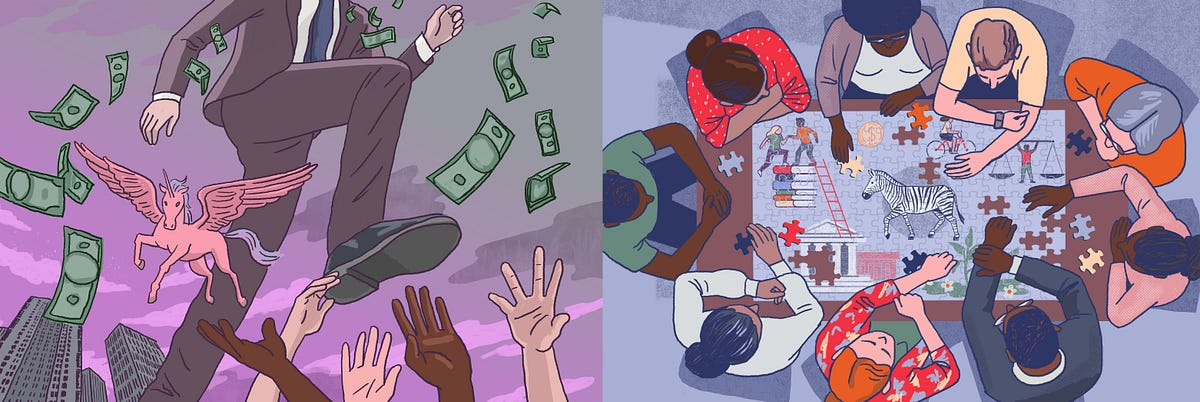
Pivot to People: It’s Time to Build the New Economy
Today’s calls for ethical, humane, responsible, regulated and beneficial technology, compounded with venture capital’s virtue signaling in…
How your bank balance buys happiness: The importance of “cash on hand” to life satisfaction.
The Case for Lowering Your Expectations
It may be the key to happiness and sustainable performance

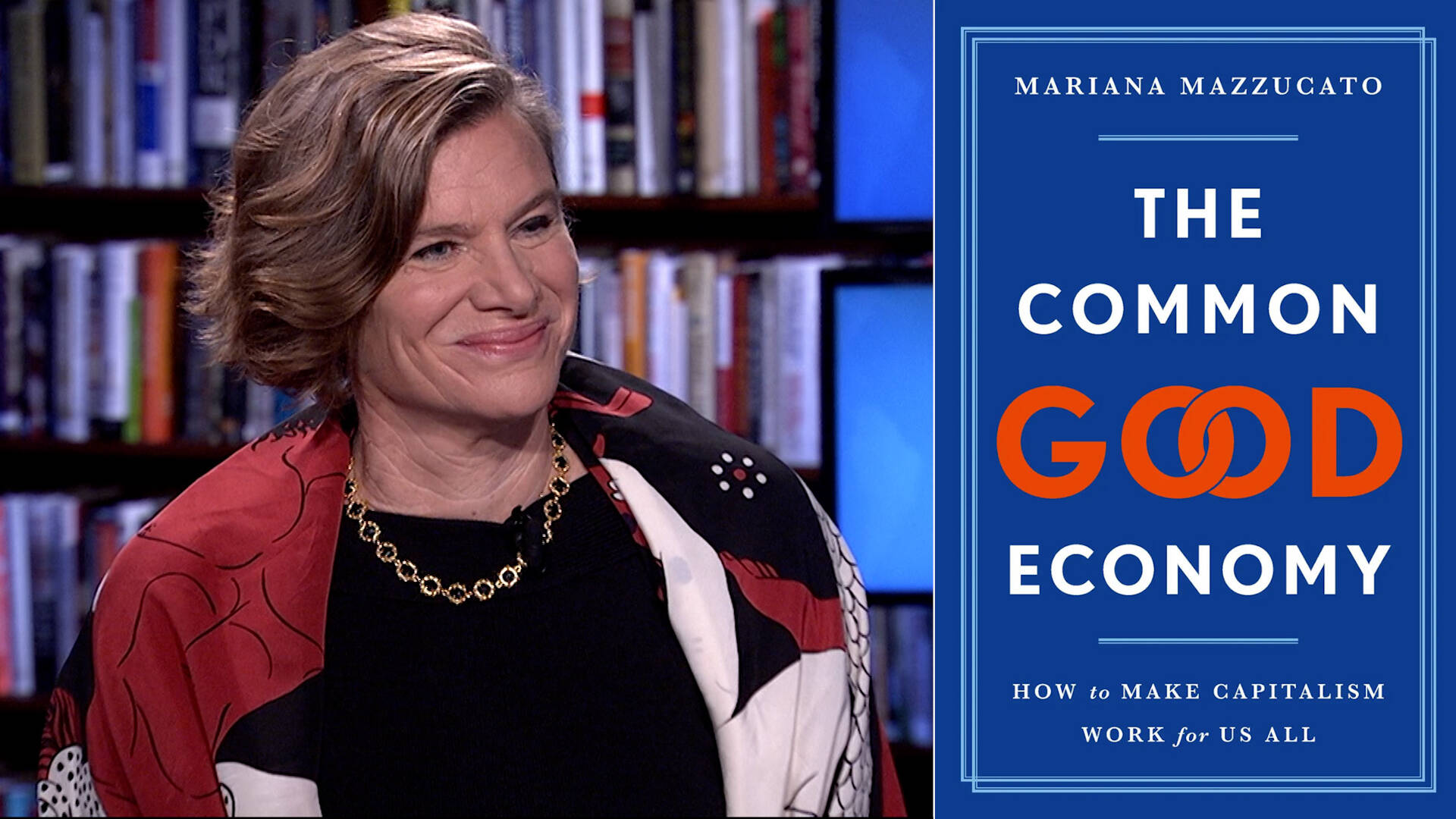
“The Common Good Economy”: Mariana Mazzucato on Fixing Capitalism
We speak with the economist Mariana Mazzucato, author of the new book The Common Good Economy: A New Compass.
Economics for the future – Beyond the superorganism
Our environment and economy are at a crossroads. This paper attempts a cohesive narrative on how human evolved behavior, money, energy, economy and th…
Ecocivilization: making a world that works for all
""One of the greatest thinkers of our age" (The Guardian) presents a new way of living-one modeled on nature's design instead of capitalism's-for fans of Guns, Germs, and Steel and Doughnut Economics It has often been said that it is easier to imagine the end of the world than it is to imagine the end of capitalism-and yet that is what the historical moment urgently calls for. Climate change has reached an emergency state, inequality continues to grow, and, for many, the future has never seemed more bleak. Incremental policy improvements are no longer enough-we need a deep transformation of our current civilization to continue to survive. In Ecocivilization, leading thinker Jeremy Lent reimagines the basis of our civilization, and argues for a new global system of living, one based on life-affirming principles modeled after nature's own design. What enfolds is a robust framework incorporating Lent's own expertise, and the lived experiences of those on the ground already putting ecological civilization's core tenants into practice-justice, mutuality, diversity, and symbiosis. From the global economy to universal housing and income, from infrastructure to agriculture, every major aspect of our society could be redesigned to work together as a coherent whole, setting the conditions for all people to flourish. Ecocivilization shows how this future on a regenerated Earth is not only desirable, but entirely feasible"--

A revolution in our sense of self | Nick Chater
Psychologists have tried to plumb the depths of human motivation to make sense of our behaviour. But our inner mental world is a fiction, sustained by constant improvisation
annotations: William Baumol : un entrepreneuriat réellement productif
Blog de sciences économiques et sociales de Martin Anota. Traductions, revues de presse.
Denizen
How might we promote and sustain human prosperity and well being in an economy of permanence? John Fullerton takes his cues from stable, healthy living systems to formulate eight principles for a regenerative economy.
The Monsters, Inc. Argument for Unconditional Basic Income
How to convert an economy based on fear to one based on joy

Learn Your Philosophical Beliefs | ClearerThinking.org
Find your direction in life with our philosophical compass, a tool to explore your beliefs, values and purpose!

Upside Down: A Primer for the Looking-Glass World
In a series of mock lesson plans and a "program of study" Galeano provides an eloquent, passionate, funny and shocking exposé of First World privileges and assumptions. From a master class in "The Impunity of Power" to a seminar on "The Sacred Car"—with tips along the way on "How to Resist Useless Vices" and a declaration of the "The Right to Rave"—he surveys a world unevenly divided between abundance and deprivation, carnival and torture, power and helplessness. We have accepted a "reality" we should reject, he writes, one where poverty kills, people are hungry, machines are more precious than humans, and children work from dark to dark. In the North, we are fed on a diet of artificial need and all made the same by things we own; the South is the galley slave enabling our greed.
My own private basic income
One person’s experience becoming a business owner shows how our economy is based on luck rather than merit and how it rewards people who own stuff rather than people who do stuff.

A new middle-class fraction with a distinct subjectivity: Tech workers and the transformation of the entrepreneurial self
With the rise of digital capitalism, a novel occupational segment has emerged: so-called ‘tech workers’. Members of this grouping render and encode the digital technologies that permeate contemporary social life. While there are many studies about highly precarious digital labourers, research on these digital professionals remains scarce. Based on 40 original interviews, the article explores the subjectivity of tech workers. Specifically, it asks whether understandings of middle-class employees as entrepreneurial selves with a holistic market orientation hold true for this grouping, or whether new cultures of subjectivation are emerging. The key finding from these interviews is that tech workers show contours of a post-neoliberal subjectivity. While the figure of the entrepreneurial self remains an alluring force, this study detected four transformative cultures of subjectivation: (1) a return of the critique of economic inequality; (2) a concern for diversity; (3) an ethic of mindfulness; and (4) a lifestyle that signals ordinariness. These distinct forms of subjectivity point to the formation of a new middle-class fraction. However, drawing on the sociology of critique, this article also considers how this transformation of subjectivity can be appropriated as yet another new spirit of capitalism.

Thought Cabinet - Creator Economy

Inspiration and voices related to the Creator Economy
Artistic Originals as a Capital Asset
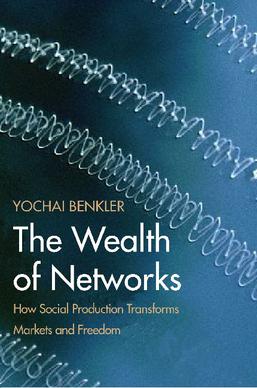
The Wealth of Networks
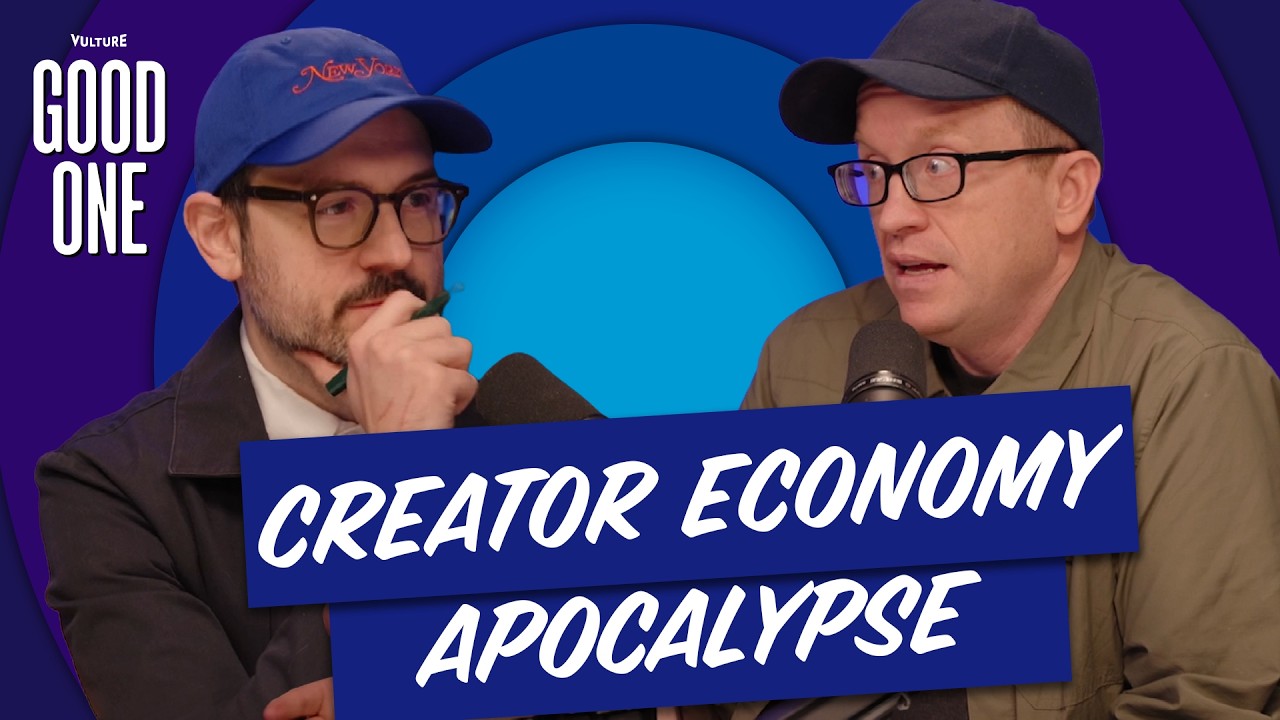
Preparing for the Creator Economy Apocalypse (with Chris Gethard)