author: Eric Harris-Braun
annotations: Une réévaluation du yuan chinois contribuerait à réduire les déséquilibres mondiaux
traduction française du billet de blog "Currency revaluation is income rebalancing" de Michael Pettis
annotations: La globalisation, la fragmentation et le système monétaire international
Traduction française de "Globalisation, fragmentation, and the international monetary system" de Barry Eichengreen
annotations: Que faire face à la sous-évaluation des monnaies asiatiques ?
Traduction française du billet de blog de Jeffrey Frankel, "Undervaluation of Asian currencies"
Writings and rehearsals by Nathan Schneider
Welcome. I’m a professor of media studies at the University of Colorado Boulder, where I direct the Media Economies Design Lab and teach and learn from our students. I’ve written a book each on online democracy, cooperative enterprise, the Occupy movement, and God, and I’ve edited ones about solidarity economies, crypto, and co-ops. Reporting articles for both magazines and academic journals keeps my notebooks filled. Working with others to build a democratic economy keeps me accountable.
Home - Schumacher Center for a New Economics
Our mission is to envision a just and regenerative economy; apply the concepts locally; then share the results for broad replication. Programs Library Lectures & Publications The Decentralism File Community Land Trust Local Currencies Reinventing The Commons All Programs eNewsletters All News “Since there is now increasing evidence of environmental deterioration, particularly in … Continued

I have forgotten how to read
For a long time Michael Harris convinced himself that a childhood spent immersed in old-fashioned books would insulate him from our new media climate, but he was wrong

annotations: Ni Triffin, ni Miran : pourquoi le statut de monnaie de réserve du dollar ne dépend plus du compte courant américain
Blog de sciences économiques et sociales de Martin Anota. Traductions, revues de presse.
Benoit Essiambre
It's your turn to have ultimate control over one of society's most powerful element, all of its money. You get to decide how much is available and how costly it is to borrow. Can you do a better job of controlling inflation than Christine Lagarde or Jay Powell? Can you limit unemployment and help your economy grow production? Play SimCB here.
Le dollar et le déficit commercial américain
traduction française du billet de blog "The dollar and the trade deficit" de Paul Krugman

Ceptr & Holochain - Currencies of Social Coherence. Holography and Distributed Hash Tables vs. Consensus Bottlenecks in Monolithic Blockchains.
“Perhaps the first thing that comes to mind when thinking about science fiction and money is the different kinds of currencies that are imagined for future worlds: the poscreds of Philip K. Dick’s Ubik, a currency required for every minute transaction such that the door becomes not an item you own but, rather, a provider of services for which you must continually pay, leaving protagonist Joe Chip trapped in his own apartment until someone pays his door to open; the bars of gold-pressed latinum used by the avaricious Ferengi on Star Trek, the only thing that cannot be replicated in this post-scarcity world, useless other than as an atavistic marker of wealth; the reputation- based currency of whuffie in Cory Doctorow’s Down and Out in the Magic Kingdom, used to replace the social role money plays in creating a hierarchy in another post-scarcity world.
Grassroots Economics — Community-Powered Economies
Empowering communities across the World with community currencies, ecosystem restoration, and commitment pooling since 2010.
annotations: La tiers-mondisation de l'Amérique
traduction française du billet de blog "The third-worlding of America" de Paul Krugman
annotations: Six croyances que j'ai à propos de l’inflation
Blog de sciences économiques et sociales de Martin Anota. Traductions, revues de presse.
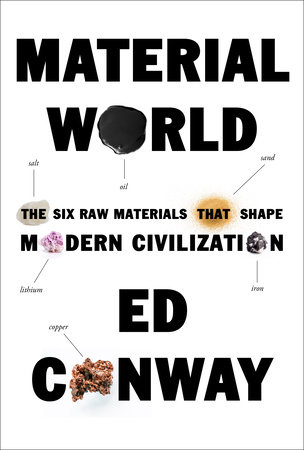
Material World by Ed Conway | Penguin Random House Canada
THE NEW YORK TIMES BOOK REVIEW EDITORS' CHOICE • AN ECONOMIST BEST BOOK OF THE YEAR • Sand, salt, iron, copper, oil, and lithium. These fundamental materials have created empires, razed civilizations, and fed our ingenuity and greed for thousands of years. Without them, our modern world would not exist, and the battle to control them will determine our future. • Finalist for the Financial Times and Schroders Business Book of the Year Award
Systems: How the Ultra-Wealthy Think About Money - Anil Dash
A blog about making culture. Since 1999.