


Pursuing value in an age of borderless-ness, experimental monetary policies, costless forks and unlimited innovation.


Ways to think about token pricing — Benedict Evans
AI is in a supply crunch today, but what happens when we come out of it? How and where will supply, demand, price, capacity and capex get back into equilibrium? Today, model labs can name their price, but why won’t they end up as low-margin commodity infrastructure?

CMV: The labor theory of value is flawed
72 votes, 407 comments. This might be an obscure topic, however, in some—largely Marxist circles— the approach seems to motivate much of the dialogue…
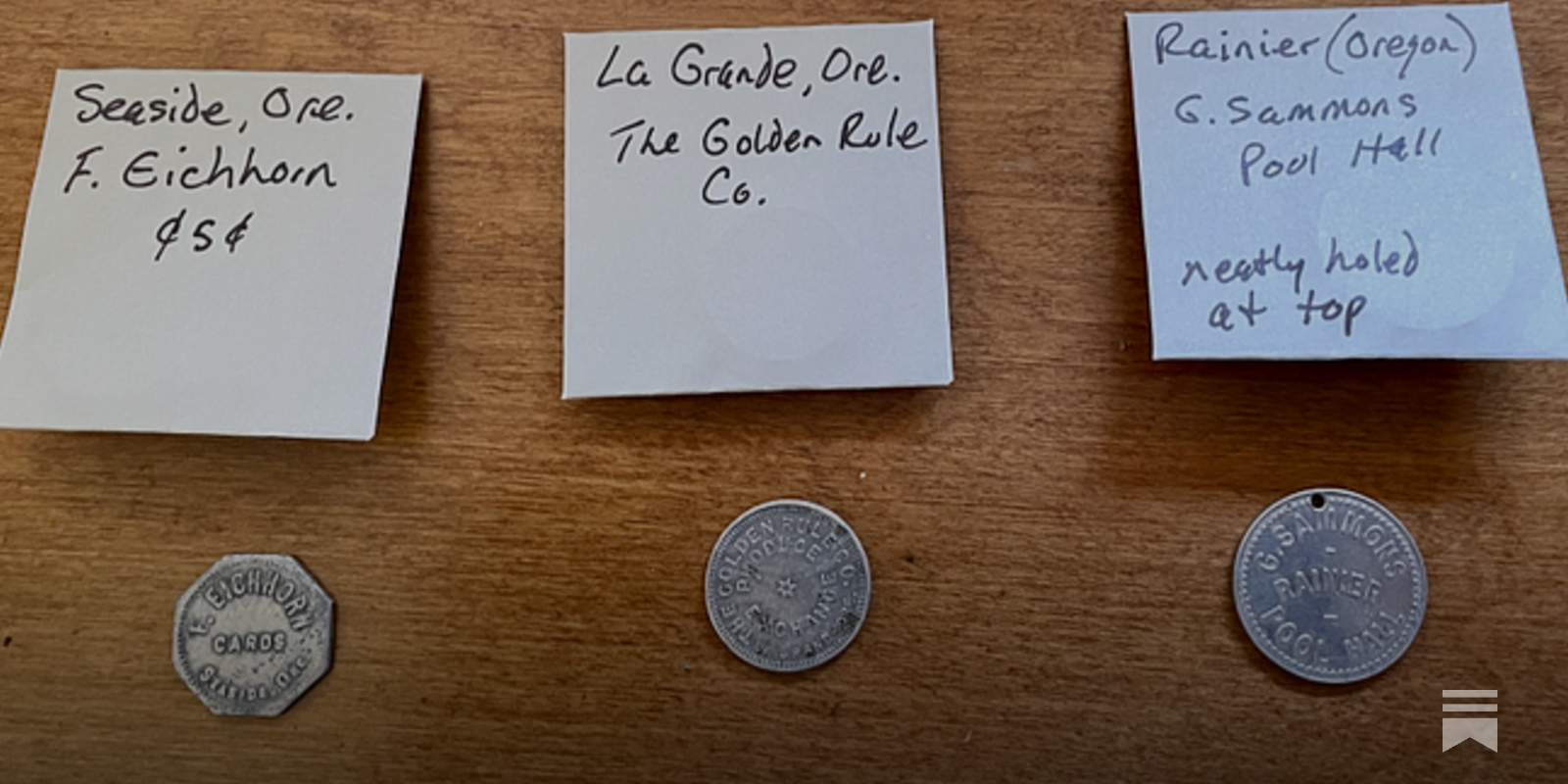
Collection Agency: A More Inconspicuous Coin Category
A deep dive into the world of tokens.
Affording Disposal Control: The Effect of Circular Take-Back Programs on Psychological Ownership and Valuation
A circular economy is a “closed-loop” system designed so that products flow back into the production cycle after use. With many companies implementing take-back programs as part of their sustainability strategy, a fundamental shift in consumption has occurred, with consumers considering disposal during and even before purchase decision making. Eight experiments reveal that consumers indicate a greater willingness to pay for circular program products. An increase in psychological ownership underlies the difference in product valuation. Specifically, the additional disposal control uniquely afforded by circular products increases the capacity of circular take-back program products to evoke psychological ownership. The process explanation is directly tested through mediation. Experimentally manipulating antecedents of psychological ownership (i.e., disposal control and psychological ownership) provides further support for the conceptual framework.

Monetary incentives, what are they good for?
This paper is a critical reflection on the use of monetary incentives in economic experiments. The argument is that incentives have their effect through their influence on one or more of three fact...

“Objective Economics” Isn’t.
Some time ago, in a Facebook argument, I encountered someone who repeated the old “exchange of unequals” argument (i.e., that people never exchange equivalents because each party values what they got more than what they traded for it). I responded that this argument confuses exchange value with use value and that, regardless of subjective valuation,...
Ceptr & Holochain - Currencies of Social Coherence. Holography and Distributed Hash Tables vs. Consensus Bottlenecks in Monolithic Blockchains.
“Perhaps the first thing that comes to mind when thinking about science fiction and money is the different kinds of currencies that are imagined for future worlds: the poscreds of Philip K. Dick’s Ubik, a currency required for every minute transaction such that the door becomes not an item you own but, rather, a provider of services for which you must continually pay, leaving protagonist Joe Chip trapped in his own apartment until someone pays his door to open; the bars of gold-pressed latinum used by the avaricious Ferengi on Star Trek, the only thing that cannot be replicated in this post-scarcity world, useless other than as an atavistic marker of wealth; the reputation- based currency of whuffie in Cory Doctorow’s Down and Out in the Magic Kingdom, used to replace the social role money plays in creating a hierarchy in another post-scarcity world.
Designing Social Flows - Chapter 6 on Designing Incentives
Culture-Hacking, Alt.Education, Targeted Currency Design, NextNet Technologies.
Putting nudges in perspective
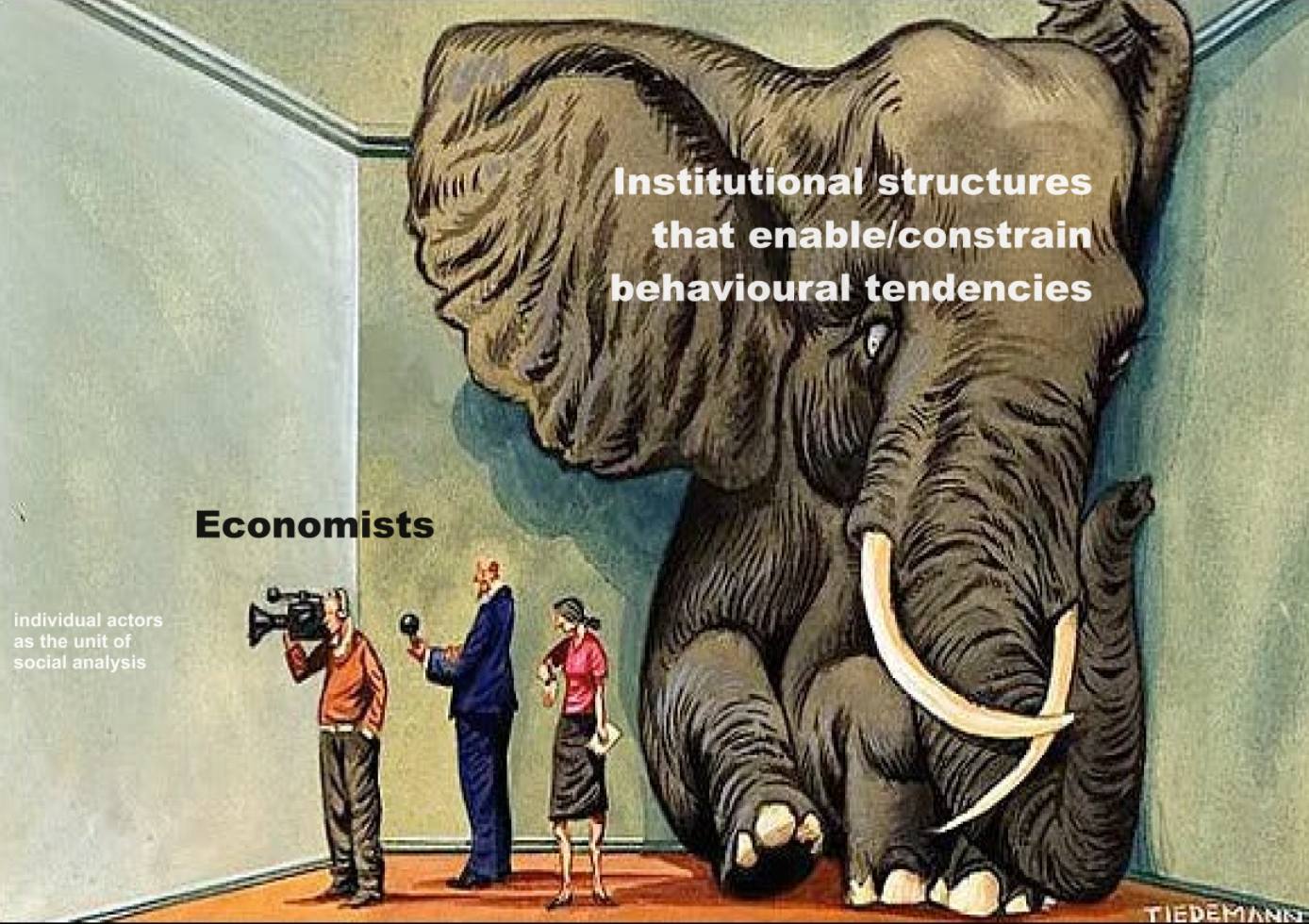
Conventional economic policy focuses on ‘economic’ solutions (e.g. taxes, incentives, regulation) to problems caused by market-level factors such as externalities, misaligned incentives and information asymmetries. By contrast, ‘nudges’ provide behavioural solutions to problems that have generally been assumed to originate from limitations in human decision making, such as present bias. While policy-makers have good reason for exploiting the power of nudges, we argue that these extremes leave open a large space of policy options that have received less attention in the academic literature. First, there is no reason that solution and problem need have the same theoretical basis: there are promising behavioural solutions to problems that have causes that are well explained by traditional economics, and conventional economic solutions often offer the best line of attack on problems of behavioural origin. Second, there is a wide range of hybrid policy actions with both economic and behavioural components (e.g. framing a tax or incentive in a specific way), and there exist many societal problems – perhaps the majority – that arise from both economic and behavioural factors (e.g. firms’ exploitation of consumers’ behavioural biases). This paper aims to remind policy-makers that behavioural economics can influence policy in a variety of ways, of which nudges are the most prominent but not necessarily the most powerful.
Economic idea — Offset documentation
In traditional monetary systems, money is issued by the state. Participants of the market can then use the money issued by the state to buy and sell goods and services in the market.
A broken pricing paradigm
A token is not a fixed unit of cost Variance in usage creates an interconnected pricing and scaling issue Anjali Shrivastava anjali.shrivastava99@gmail.com | @anjali_shriva THIS ESSAY IS NOW LIVE! A token is not a fixed unit of cost PART I: High variance in AI demand breaks unit economics and re...

Stablecoins, Tokens, and Global Dominance
Technology is reshaping capital flows and currency dominance; data integrity is essential for financial stability
