

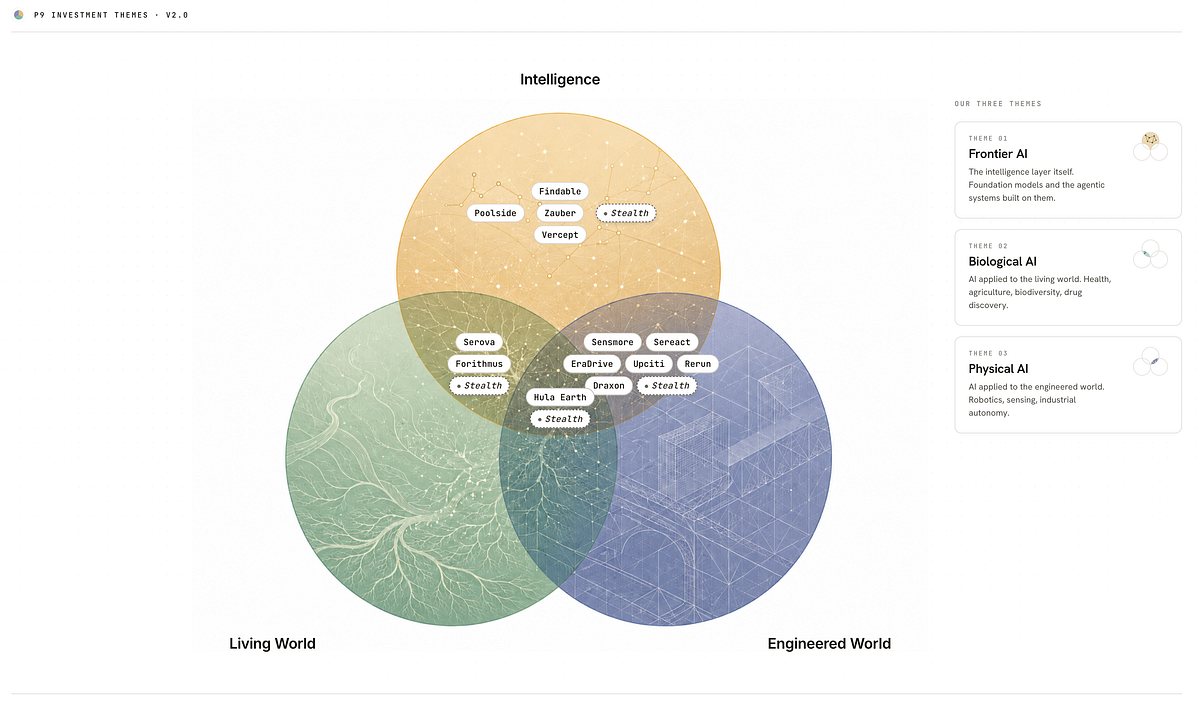
In case you quietly filed Point Nine under “boring SaaS investor” … well, first of all, I’m not going to blame you. We’ve been investing in…
In 2025, venture capital can’t pretend everything is fine any more
Venture capital is screwed. A bubble in AI is their last hope, and they’re betting everything on Sam Altman. It’s heartwarming. Today, we have the Pitchbook-NVCA Venture Monitor for Q1 2025. This i…

Paul Chiusano: The failed economics of our software commons, and what you can about it right now
[ econ tech ]
Hitting the High Notes
In March, 2000, I launched this site with the shaky claim that most people are wrong in thinking you need an idea to make a successful software company: The common belief is that when you’re …

It’s actually open source software that's eating the world
At Lightspeed we’ve been investing aggressively in open source software (OSS) businesses for the past 10 years. Recently, we’ve seen a significant increase in entrepreneurs pitching open source startups, and we’ve also seen greater competition for these deals. We pulled together some numbers in an attempt to measure the acceleration in interest in and funding for OSS businesses in the last few years. The results were staggering even to us.
The Money In Open-Source Software | TechCrunch
It’s no secret that open-source technology -- once the province of radicals, hippies and granola eaters -- has gone mainstream. According to industry estimates, more than 180 young companies that give away their software raised roughly $3.2 billion in financing from 2011 to 2014. Despite the growing popularity of open-source software, though, many open-source companies are not financially healthy.

Shaping the industry through independent reproduction of results within our companies
A friend who angel invests shared that some of his pre-seed investments are considering shutting down before even trying to raise their next round. This isn’t super surprising; many early-stage startups are struggling to hit the growth expectations to raise, which are extremely high at the moment, but what’s been interesting is why these companies are losing confidence: they’re just not sure there’s a need for software anymore, given how rapidly a good harness with a frontier model can build. This anxiety about the future isn’t limited to young startups; you can find it in startups of almost any size right now, boiling down to the fear that a lab might recreate your business tomorrow as a side project.

We Are in the Middle of a Wave of Interesting New Productivity Software Startups - Slashdot
VC fund A16z's Benedict Evans writes: We are in the middle of a wave of interesting new productivity software startups -- there are dozens of companies that remix some combination of lists, tables, charts, tasks, notes, light-weight databases, forms, and some kind of collaboration, chat or informati...

HR 2.0 is the poster child for the next wave of SaaS innovation | TechCrunch
The path for SaaS domination of a market segment has historically followed one of two routes: bringing previously offline workflows online, or moving on-premise software processes online. In short, SaaS would take over segments that previously were not SaaSified. Yet, the current wave of HR SaaS innovators the past few years is proving that there can be more to the story.

The Big Short, AI edition
Investors are buying protection against an AI bust, just like they did with mortgage-backed securities before 2008...
The $70B Open Source Software Paradox
It’s no news that over the last 10-15 years, particularly noticeable in the last 5 years, the enterprise software industry has gradually transformed from complex, expensive, closed-source (proprietary) software stacks to extensible/configurable,...

Project 2027
We spend over $300 billion a year renting government software. Decades of privatization cost us the muscle to build our own. Time to build it back. No more waiting: the rebuild starts now.
Roadmap: Open Source
After years of investing in open source software, we’re releasing our thinking on what positions these companies as emerging technology giants.
OpenAI Announces $122 Billion Additional ‘Committed Capital’, and Announces Their ‘Superapp’ Plan for the Future
I don’t see the path from here to there, where *there* is a justification for a trillion-dollar-ish valuation.

How markets coopted free software’s most powerful weapon (LibrePlanet 2018 Keynote)
Several months ago, I gave the closing keynote address at LibrePlanet 2018. The talk was about the thing that scares me most about the future of free culture, free software, and peer production. A …

You have to beat the models at something
In 2025, I wrote that software engineers ought to be assessed by “value over replacement”: not how much money they made for their company, but how much they…