

All high functioning teams must prioritize. Not once a month, not once a week — but rigorously, and ruthlessly.
Against optimization
One of the most inescapable edicts when leading a team is the order to optimize the system towards the organization’s goals.

Manage your priorities and energy.
Back when I was managing at Uber, I latched onto a thinking tool that I drilled into the teams I worked with: reach the right outcomes by prioritizing the company first, your team second, and yourself third. This “company, team, self” framework proved a helpful decision-making tool, and at the time I felt it almost always led to the correct decision. It also helped me articulate why I disagreed with some of my peers’ decisions, which violated this hierarchy by placing individual or team preferences over the company’s priorities.

Is Your Team Caught in the Solution Fixation Trap?
In the face of escalating complexities, organizations are increasingly relying on teams to tackle these intricate issues and drive pivotal organizational decisions. To extract maximum value from team dynamics, leaders must remain mindful of potential biases that may impact team dynamics and to actively steer and fine-tune team processes. Specifically, the authors urge leaders to address a decision-making bias they call the solution fixation trap, which emerges when a team rushes into discussing possible solutions before fully understanding the problem at hand. The authors discuss the study that helped them uncover this bias, explain what the solution fixation trap looks like, and discuss what leaders can do to protect their teams from it.

Paging Charity? How do I get my leaders to stop running teams Into the ground? - Stack Overflow
I'm a senior staff engineer, and I’m wondering what advice you might have for a person in my role in a large company to affect priorities and the speed at which work is "expected" to be executed.

How teams can master setting goals in an ever-changing environment - Inside Atlassian
Here are a few ways your team can set a course for their goal and stay on track no matter how—or how quickly—the goalposts move.


How To Do Less
You probably need to do fewer things right now. Prioritization, the other definition There’s two loose definitions of prioritization. Prioritization(1): Ordering a todo list. You make a giant list of things you could do, things you should do, things you’d like to do… and then you put a unique number...

Escape the tyranny of the to-do list: how to schedule your priorities, not your time
Building a company creates a busy schedule. There’s almost no way to avoid it.

Habits of High-Functioning Teams
I often struggle to explain what it means to be part of a high-functioning software team. Sure, there are mountains of literature, and an entire genre of LinkedIn thought leadership that professes all kinds of guidelines and heuristics about what makes teams work, but in my experience, it’s hard to internalize these ideas and follow someone else’s model if you’ve never seen what good looks like.
Superteams
FEATURED ON THE COVER OF HARVARD BUSINESS REVIEW SHORTLISTED FOR THE SABEW 2026 BEST IN BUSINESS BOOK AWARDS “An outstanding book.” —NPR “A valuable guide for teams and managers seeking to improve performance.” —The Wall Street Journal “A rare read that introduces fresh ideas about how to make groups more than the sum of their parts.” —Adam Grant, bestselling author of Think Again “The ultimate playbook for how to build exceptional teams.” —Fast Company What do the best teams do differently? To find out, award-winning social psychologist Ron Friedman surveyed thousands of teams and pinpointed the precise habits that separate the best from the rest. The results upend everything we think we know about teamwork. It turns out that the most successful teams aren’t the ones that collaborate most, get along best, or put in the longest hours. What really sets them apart is the way they manage their energy and attention, bring out the best in one another, and keep improving over time. Blending eye-opening discoveries with unforgettable stories, Superteams takes you inside the writers’ room of Succession and Bridgerton, the recording studio of ABBA and Fleetwood Mac, the kitchens of Michelin-starred restaurants, the laboratories of Nobel Prize-winning scientists, the locker rooms of NBA and NFL teams, and the boardrooms of the world's most innovative companies. You will learn: - A simple rule that instantly cuts meeting time in half - Why the secret to better teamwork is less teamwork - The one question that makes team decisions up to 30% smarter - The only office perk that improves performance (spoiler: it’s not coffee) - How personal productivity hacks make teamwork harder - Why feeling like the smartest person in the room is a red flag - Why top performers care more about disappointing their peers than their boss - How the best teams avoid burnout without working fewer hours - The science of truly restorative breaks, evenings, and vacations - How to build a team that keeps getting better (even when you’re not in charge) Smart, insightful, and relentlessly practical, this is your science-backed guide to turning your team into a Superteam.

relearn Leadership - the over-optimisation problem in organisations
Scheduling your priorities (and not your time) will supercharge your productivity - Fast Company
It’s time to ditch the endless checklists.

Metrics for the unmeasurable.
As organizations grow more complex, the folks running them interface with reality through increasingly incorporeal abstractions. On the smallest teams, leadership might be deep in the code on a daily basis. A bit larger, and you’re talking about tasks in sprints. Larger still, and you’re talking about collections of tasks, and adopting fancy terminology like ’epics.’ At a hundred plus engineers, you’re likely talking primarily in themes of work with focus on several key initiatives. Next, you might be talking about the investment frameworks for making prioritization decisions.
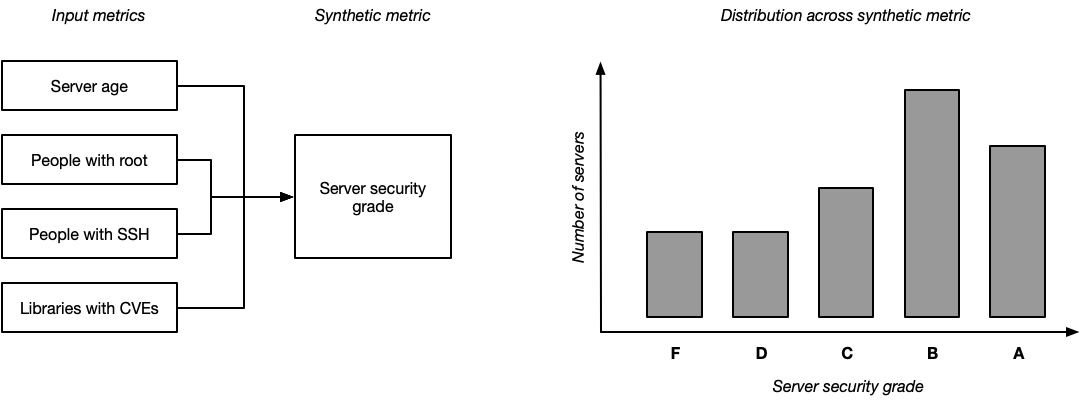
The Illusion of Decisiveness
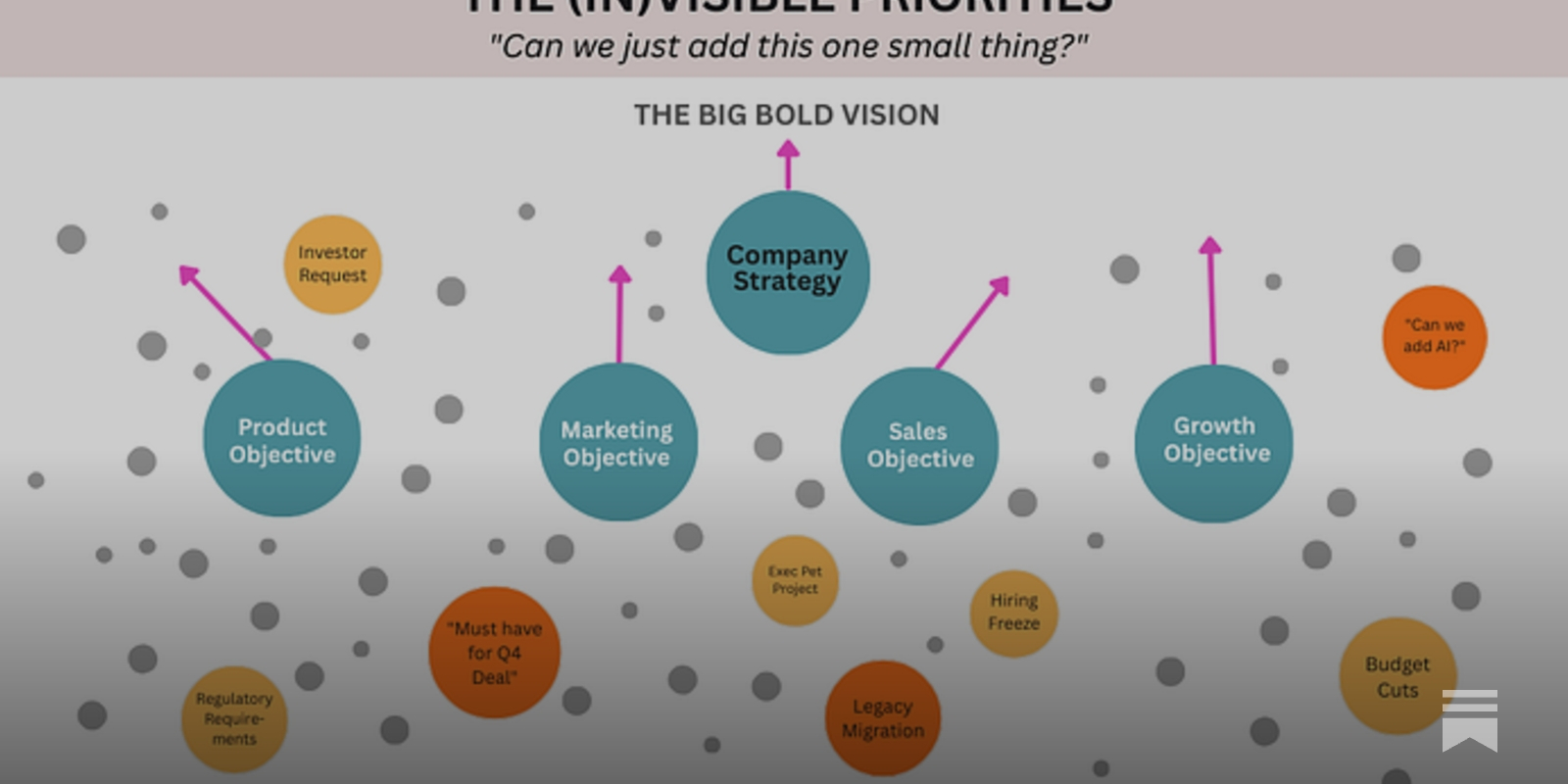
Why product teams spin in chaos despite a "clear" strategy
The Value of Getting Closer to the Work
Scaling The core problem of scaling a team is that not everyone can know everything. Scaling is the work of systematizing that – so that things are understandable, knowable. It’s turnin…

Develop Strategic Thinkers Throughout Your Organization
It’s the single most important skill a leader needs.
