


2006 wasn’t a great year for our brains. In July, Twitter launched to the world, and in September, Facebook added the News Feed. But…
Facebook Wrestles With the Features It Used to Define Social Networking (Published 2021)
Likes and shares made the social media site what it is. Now, company documents show, it’s struggling to deal with their effects.

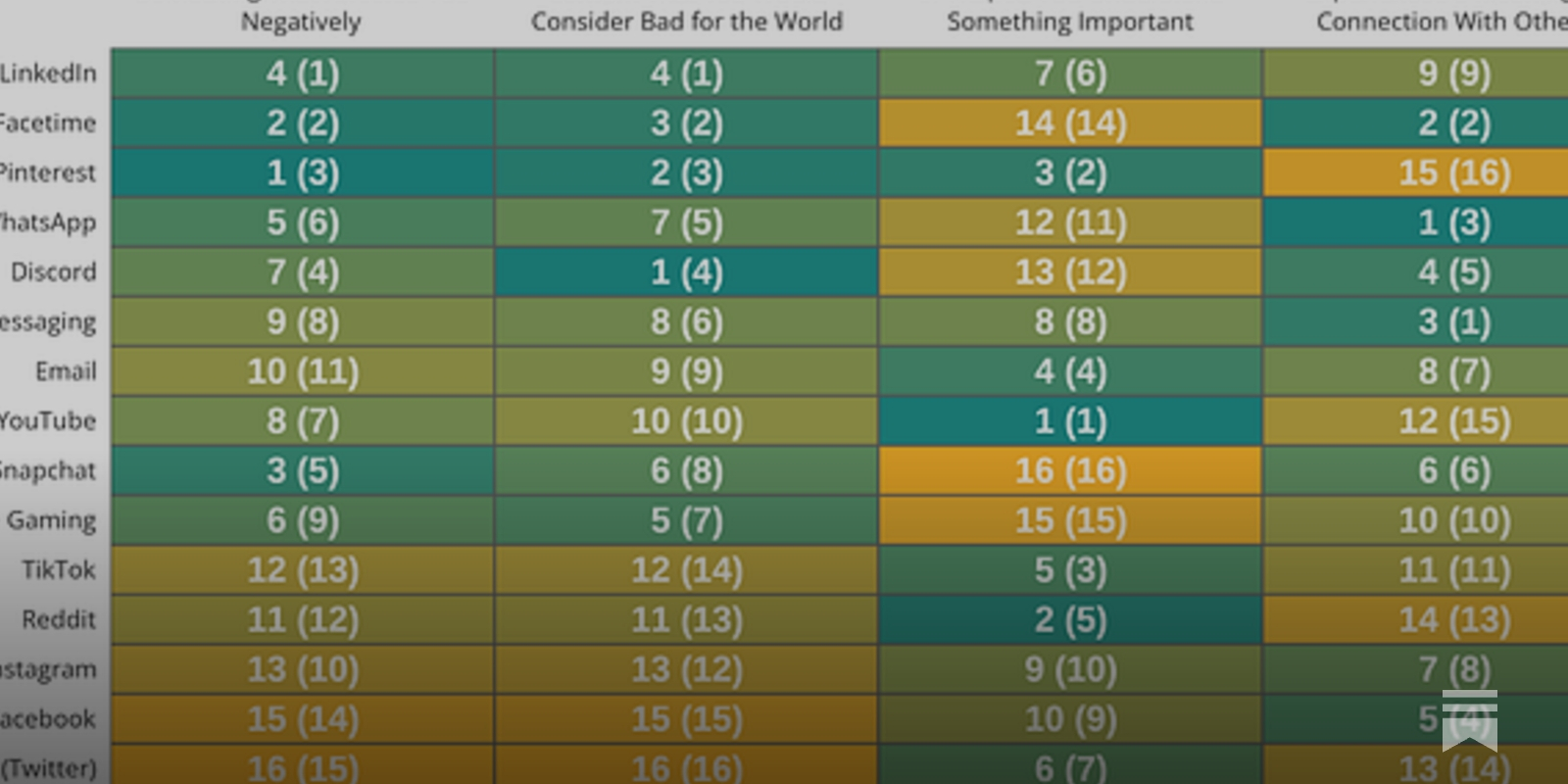
Social Media Experiences Across Nearly 2 Years Since Launching the Social Media Index
With new data through January 2025, we find that social media use is decreasing, bad experiences are mostly holding steady, and positive experiences are increasing on some platforms
Can We Build a Better Facebook? - JSTOR Daily
Is it time to turn our back on Facebook? And if so, what social network could possibly replace it?

Good-bye to All That Twitter
Two New York staffers find enlightenment, or at least more time for Facebook, on a turn-of-the-year social-media holiday.

Shifts in U.S. Social Media Use, 2020–2024: Decline, Fragmentation, and Enduring Polarization
The social media ecosystem appears to be in flux. Twitter’s rebranding to X has come to symbolize a broader reorganization of online publics – political reshuffling, user attrition, and uncertainty over the role of legacy platforms. Simultaneously, the shift from text-based, networked feeds toward algorithmically curated, short-form video has accelerated, with TikTok setting the pace for the wider ecosystem [18, 14, 16]. At the same time, everyday communication increasingly migrates from large, open networks to semi-private spaces such as group chats and messaging apps. Commentators describe a digital public sphere in transition: smaller, more fragmented, less dominated by traditional social networking sites, and rise of more broadcast-oriented forms of media – with some even suggesting that we are seeing the beginning of the end of the social media era.
Twitter Thoughts For You
I previously have written back in March 2022 about how I use Twitter, and back in April 2023 about Twitter and its then-new algorithms, which have changed again.
Do social media threaten democracy?
Facebook, Google and Twitter were supposed to save politics as good information drove out prejudice and falsehood. Something has gone very wrong

Death by a thousand likes: How Facebook and Twitter are killing the open web
Here’s one way to understand the symbiotic relationship between publications and platforms in the digital age. Publications depend on advertising dollars to keep producing content, so they need to hold readers’ attention. Big platforms like Facebook and Twitter already have plenty of attention, but they need vast quantities of content to fill up their newsfeeds. It seems natural, then, that publications have started relying on platforms to drive readership.
The Weird, Fragmented World of Social Media After Twitter - The Atlan…
archived 7 Aug 2023 02:41:57 UTC

How The Enshittification Of Social Media Is Decreasing The Switching Costs And Enabling Something New
In the last few weeks I’ve written about how Elon Musk’s “changes” to how Twitter is running have done an amazing job convincing people to join Mastodon. And I’ve also…

My 2024 thoughts on the state of social media
I see a continued fragmentation of social media as people leave X(Twitter).

Changes to the Facebook Algorithm Decreased News Visibility Between 2021-2024
Platforms, especially Facebook, are primary news sources in the US. In its widely criticized "War on News," Meta algorithmically deprioritized news and political content. We use data from 40 news organizations (5,243,302 Facebook posts, 7,875,372,958 user reactions) and 21 non-news pages (396,468 posts; 1,909,088,308 reactions) between January 1, 2016 and February 13, 2025 to examine how these changes influenced news visibility on the platform. Reactions to news declined by 78% between 2021 and 2024 while reactions to non-news pages increased, indicating targeted suppression of news visibility. Low-quality sources were especially suppressed, yet the 2025 end to "War on News" increased user reactions to news, especially low-quality ones. These changes do not reflect decreased news supply, Facebook user base, or interest in news over this period.

The year social networks were no longer social | TechCrunch
The term “social network” has become a meaningless association of words. Pair those two words and it becomes a tech category, the equivalent of a single

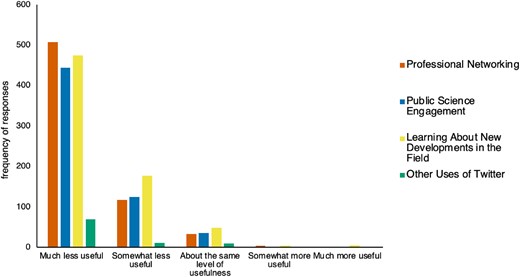
Scientists no Longer Find Twitter Professionally Useful, and have Switched to Bluesky
Synopsis. Social media has become widely used by the scientific community for a variety of professional uses, including networking and public outreach. For
Social media is no longer social. Most of it is passive viewing of videos and pictures from people we've never met. But we're still studying social media like it's 2010. We've entered the post-social media era — and research needs to catch up. osf.io/preprints/socarxiv/6nue7_v1 preprint w/ Richard Rogers
