


Medium aspires to empower individual voices and avoid the bureaucracy that often accompanies traditional organizational structures. As a…
Beyond the Holacracy Hype
Most observers who have written about holacracy and other forms of self-management take extreme positions, either celebrating these “bossless,” “flat” work environments for fostering flexibility and engagement or denouncing them as naive experiments that ignore how things really get done. To gain a more accurate, balanced perspective, the authors—drawing on examples from Zappos, Morning Star, and other companies—examine why these structures have evolved and how they operate, both in the trenches and at the level of enterprise strategy and policy. Self-organization models typically share three characteristics: Teams are the structure. Within them, individual “roles” are collectively defined and assigned to accomplish the work. Teams design and govern themselves, while nested within a larger structure. Leadership is contextual. It’s distributed among roles, not individuals, and responsibilities shift according to fit and as the work changes. Adopting self-management wholesale—using it to determine what should be done, who should do it, and how people will be rewarded across an entire enterprise—is hard, uncertain work, and the authors argue that in many environments it won’t pay off. But their research and experience also suggest that elements of self-organization can be valuable tools for companies of all kinds, and they look at circumstances where it makes more sense to blend the new approaches with traditional models.

Bringing organizational maturity to radical groups | willowbl00
I’m honored to have helped establish, or to help continue fostering, several radical groups that have survived past their origin moment and group. The challenges that come with the second or third generation of stewards while also navigating organizational momentum are unlike those of founding a group, and I’d like to chat about them with you here. Each section has a founding pattern, the results of that pattern, and what to do about it to mature more. None of the sections involve imposing hierarchy on a distributed organization.
The Four Factors for Organizations - Future Mending Radio
When I pick an organization for the podcast or the map at Futuremending.com, I’m not just picking businesses out of a hat – I have a system for evaluating orgs which I call the Four Factors for Organizations. The Four Factors are Multi-solving, Sharing, Sufficiency and Transparency.This episode is in two parts. The opening minutes are a bit of an emotional check-in to see how people are processing the unprecedented political turmoil in the United States. The second part of the podcast discusses the Four Factors for Organizations and why seeking out certain vectors of change makes more sense than trying to lay out a detailed plan for a better future. Read about the Four Factors: https://www.futuremending.com/whatMatt’s Blue Sky account: https://bsky.app/profile/mattliepaehlke.bsky.socialWired Magazine coverage of the crisis in the U.S. : https://www.wired.com/tag/elon-musk/Rebecca Solnit’s newsletter: https://meditations-in-an-emergency.ghost.io/welcome-to-meditations-in-an-emergency/ Google's AI Policy: https://www.theguardian.com/technology/2025/feb/05/google-owner-drops-promise-not-to-use-ai-for-weapons Future Mending Map: https://www.futuremending.com/toronto Music Credits:'Epilogue' by The Slow Motions. Used with permission of the artist.‘Fashion’ by Alex Productions. Creative Commons. https://www.youtube.com/watch?v=OV1miCgT7J4‘Miss you’ by Middle Child. Creative Commons. https://www.youtube.com/watch?v=dayIKHEIYqY‘Opening’ by Phillip Glass. Arr. by Karl Michelson. Performed by The Union Guitar Trio. Used with permission of the artists.Union Guitar Trio on Spotify - https://open.spotify.com/track/2E0NidLjIzBAO7t0BBPFUDUnion Guitar Trio on Apple Music - https://music.apple.com/us/artist/the-union-guitar-trio/1592543833Sound Effects:BBC News November 9th, 1989: https://www.youtube.com/watch?v=fjNz1lvXgzUwood hit low glass bowl 3.mp3 by ascap -- https://freesound.org/s/242388/ -- License: Attribution NonCommercial 4.0Brightness by sonically_sound -- https://freesound.org/s/632762/ -- License: Creative Commons 0

Opinion | The New Power Structure (Published 2018)
New organizations are forming and succeeding in an age of distrust.

The Fractal Organization
The world of management is in crisis - the old remedies no longer work and organizations are failing at an increasing rate. Although many talk of 'joined up thinking', few offer practical guidance on how to achieve this in organizations. <b><i>The Fractal Organization</i></b> sets down the practical implications of a well tested systemic approach to building organizations that are capable of surviving and flourishing in these turbulent times. <p>"An excellent read…Many organizations fail at the mercy of their own ignorance. The author has done an excellent job in making ‘the science of effective organization’ accessible to management, providing them with a new knowledge to deal with the uncertainties that the markets place upon them."<br /><b>Stephen J. Brewis, Business Architect, British Telecom</b></p> <p>"...one of the most interesting, thorough and rigorous guides to management that I have ever read, … introduces new insights in every chapter… carries a credibility which acts as a counterbalance to the sometimes difficult message which he conveys which is that a lot of mainstream management practice is at best ineffective and at worst downright destructive. I would recommend this book to anyone interested in management or systems thinking."<br /><b>Penny Marrington</b>, <b>Course Chair, Systems Group, Open University</b></p> <p>"In my opinion this book manages to present sound academic theory that is relevant and helpful to the practitioner in the business. I experienced several A-HA moments."<br /><b>Pauline Marsh, Strategy Director, CS&S International, BAE SYSTEMS</b></p> <p>"The insights of the Viable System Model have been open only to a select few for much too long. Hoverstadt has gone furthest in bringing these ideas to a wider audience…Management books have too often been serious but not practical, or practical but not serious. This book is both brilliantly serious and practical, and often entertaining too."<br /><b>Professor Peter Kawalak, Manchester Business School</b></p> <p>"Integrates mainstream management ideas with the systems ideas underpinning the VSM, and flows and reads well. As a starting point for developing understanding of the VSM in today's world this book improves greatly on all books that have gone before, I would certainly recommend it to colleagues, clients, and students."<br /><b>Dr. Robin Asby, Course Chair, Communication and Systems, Open University</b></p>
How Medium’s Curation, Distribution and Paywall Systems Work for Writers
A detailed look at how Medium works, and some of the recent changes we’ve made

Digital Strategy for Organisations
Digital power is created through the interplay of mobilizing and organizing. Open Social protocols bridge the gap.

The Future of Organizations is Responsive
How to Unlock Your Organization’s Potential to Change the World

Medium: Read and write stories.
On Medium, anyone can share insightful perspectives, useful knowledge, and life wisdom with the world.
Medium: Read and write stories.
On Medium, anyone can share insightful perspectives, useful knowledge, and life wisdom with the world.
Why People Obey: Theoretical Observations on Power and Obedience in Complex Organizations
Recent sociological studies of power in organizations, although oriented toward practical ends, offer promise for a general sociological theory of power. Empirically grounded organizational studies examine social life as practiced by actors and preserve the tension between structure and action. Exchange theory and structural theories of power, in contrast, are abstract and theoretical; by asserting the primacy of structures (structural theories) or action (exchange theory), they cannot account well for the dialectic of human agency and structural constraint. We suggest the theoretical implications of organizational analysis and compare this perspective with traditional sociological approaches to power.

Leaders are responsible for culture and strategy. Everything else is secondary.
Are you focused on serving a need or building a product? The difference matters more than you think.

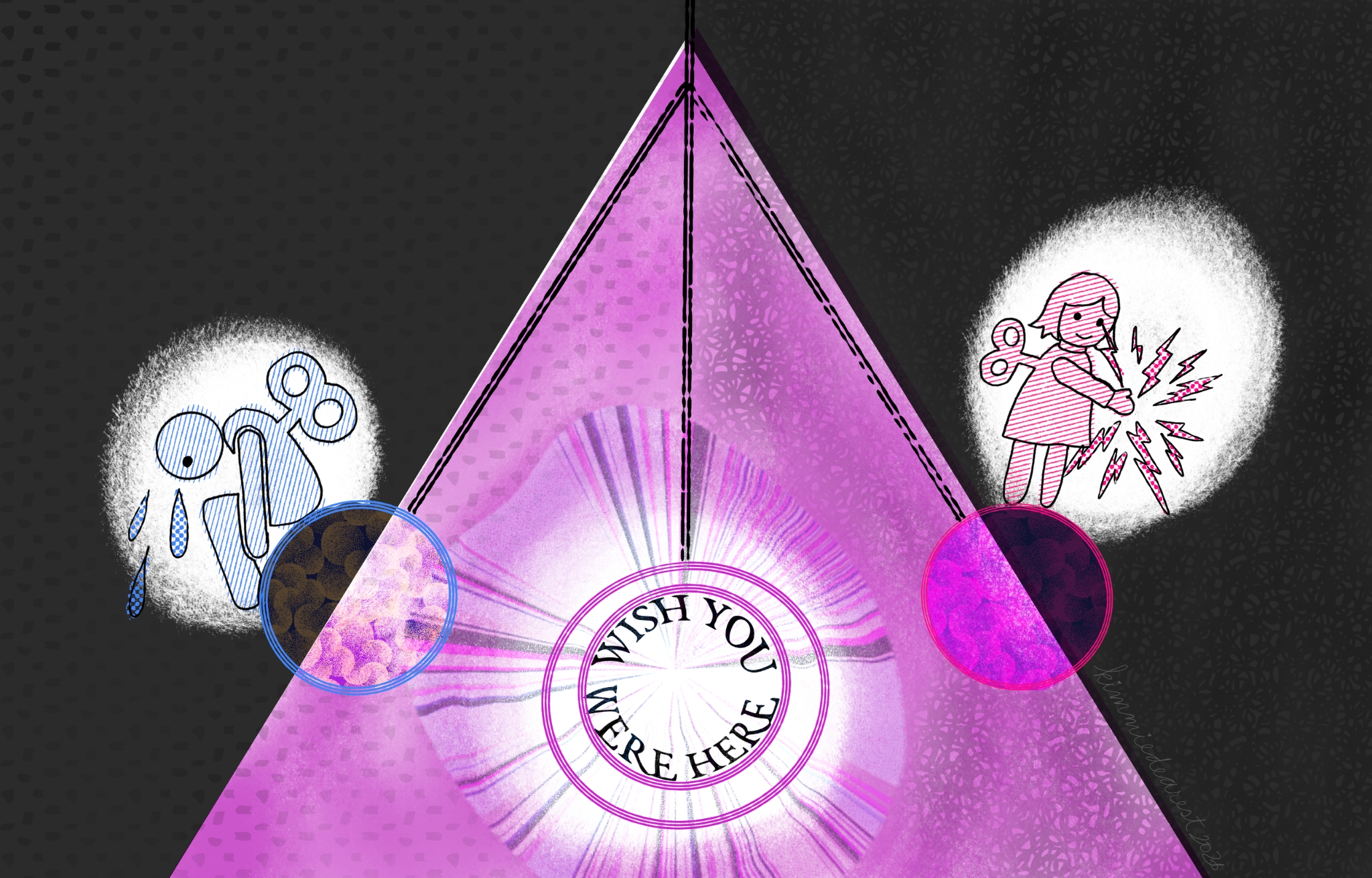
The Leadership Pendulum: How to Avoid the Extremes of Organizational Management
Movement leaders often err either on the side of passivity, for fear of replicating painful dynamics, or power-hoarding, for fear of sharing authority. Instead of swinging from one to the other side of the pendulum, we can cultivate balance–together.
Experiment with Organizational Change Before Going All In
Your intuition is never enough.

Order Out of Chaos: Patterns of Organization for Writing on the Job
The meaning of what you write isn’t only the the words. The sequence of information, the categories you use, the emphasis you imply through your hierarchy—all of these decisions have a huge i…
