Toward a practice-oriented typology of service design metaphors
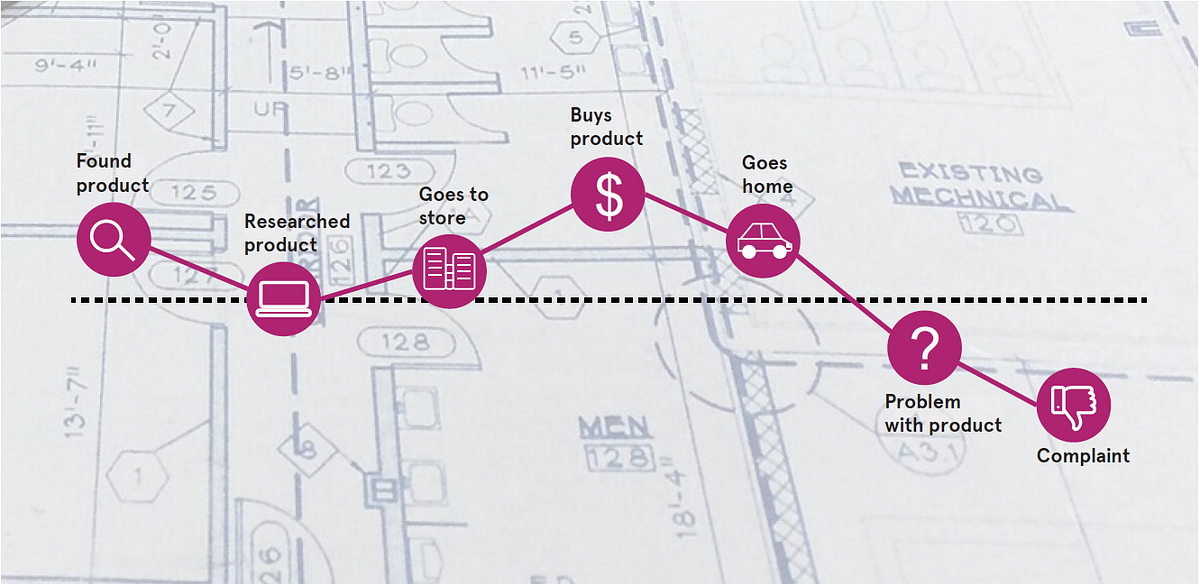
Service Blueprint | Service Design Tools
Map out the entire process of service delivery, above and below the line of visibility

Thinking in Triplicate — Mule Design
To align design and business, visualize the shared narratives

The book — Good Services
“This book is long overdue. It will become a must-read for the service design community, but this book is also for everyone working with services”

Your platform is not an ecosystem
Another day, another exhortation to join an “ecosystem” that’s anything but. I could pick a hundred examples, but one that recently caught my eye was an ad placed in the Financial Times by the Singapore stock exchange, SGX Group, promising “multiple growth avenues, one trusted ecosystem”. SGX wants companies to list on its exchange rather than, say, the Hong Kong one which has more or less the same exclusive offer. SGX promises “access (to) Asia through our trusted ecosystem anchored in Singapore.” Ecosystems can be a lot of things. ‘Trusted’, by which they mean centrally policed to achieve defined, lower-risk outcomes, is not one of them. Calling built environments ‘ecosystems’ is common everywhere from financial services to supply chains to – quite a stretch, here – a retirement living complex. But it’s most often used in the tech world to describe the relations between software, services and hardware typically owned by a single company. For example, it’s how Google describes everything that hangs off the Android operating system. These kinds of proprietary and deterministic architectures are called ecosystems so often that we’ve stopped noticing. And that’s kind of the point. We need to start seeing this metaphor again, and what it’s hiding in plain sight. But first, a reminder of what an ecosystem actually is.
Organisation Ecosystem: The Theory and the Practice | Sergio Caredda
Explores the organizational ecosystem concept, emphasizing interdependence, value creation, and the distinction between intentionality and emergence.

Habitat's road to release: 07 bridging traditional SaaS apps - building [at] habitat
building bridges to the (organizational) atmosphere
Embodied Experience Design: Thinking Through Tree Apprecation
Bringing together place-based technologies, embodied experience and trees
Design: A Happening Life
"When life is happening, design has meaning, and every design we encounter strengthens our recognition of the value of being alive."
Playbooks — Renaissance Philanthropy – A brighter future for all through science, technology, and innovation
Christopher Alexander’s A Pattern Language defines 253 methods for constructing beautiful and practical designs at every scale, from cities to rooms.

Lexicon Service Docs - at:// pizza thoughts
Riffing on some ways to make network services more legible to humans and machines
Tools for Systems Thinkers: The 12 Recurring Systems Archetypes
Archetypes are recurring patterns of behavior that give insights into the structures that drive systems. They offer a way of deciphering…


Inside Design Tokens: The Three Class Token Society
Design tokens are often grouped based on their phenomenal reference sequence. From basic, over semantic to component tokens. This article compares this organization with a model based architecture and figures out the advantages and disadvantages.

Switch semantic contexts to avoid stakeholder meddling
“Creating good user experience is not a design problem. It is a power struggle.” –Alan Cooper
Thinking in systems: a primer
Meadows’ Thinking in Systems, is a concise and crucial …